
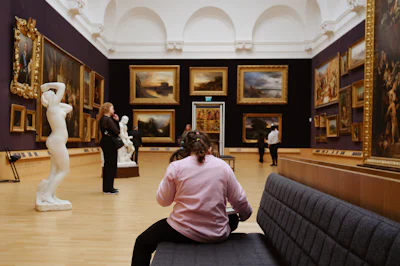
Fine art has always occupied an unusual position within the world of wealth. It can be an object of cultural importance, a deeply personal acquisition and, in selected cases, a store of value that travels across generations. For investing in fine art new collectors 2026, the challenge is not simply identifying what might appreciate. It is learning how quality, provenance, scarcity, artist reputation, condition, market liquidity and cultural relevance interact before a single work enters the collection.
Unlike publicly traded securities, art does not offer a continuous market price. Unlike watches or other collectible objects, the significance of a work can depend heavily on scholarship, exhibition history, provenance and the evolution of an artist’s reputation. That makes art collecting less about predicting a number and more about developing judgment.
The timing is also worth understanding. According to the 2026 Art Basel and UBS Global Art Market Report, global art-market sales rose 4% in 2025 to an estimated $59.6 billion, reversing two consecutive years of decline. Public auction sales increased 9%, while dealer sales rose 2%, although the recovery remained uneven and below the market’s 2022 peak.
For Emmanuel Noir readers, this distinction matters. The finest collection is rarely built by chasing whatever has recently risen fastest. It is built by understanding why a work matters, purchasing intelligently and allowing cultural significance, scarcity and quality to compound over time.
The journey belongs naturally within Collectors Corner, where the wider conversation extends beyond acquisition into provenance, rarity, heritage and the stewardship of objects that may outlive their original owners.
Quick Reference: Investing in Fine Art
| Consideration | What New Collectors Should Know |
|---|---|
| Primary objective | Build a culturally meaningful collection with disciplined long-term value potential |
| Best starting point | A segment, artist, movement or period you are prepared to study deeply |
| Core value drivers | Artist importance, provenance, condition, rarity, quality, medium, exhibition history and market demand |
| Typical purchase channels | Established galleries, reputable dealers, auction houses and carefully vetted private sales |
| Major costs | Purchase price, buyer’s premium where applicable, taxes, shipping, insurance, framing, conservation and storage |
| Liquidity | Generally lower than listed financial assets; selling can take time |
| Time horizon | Long term; art should not be approached as a guaranteed short-term trade |
| Essential due diligence | Provenance, condition, authenticity, attribution, title, comparable sales and transaction costs |
| Portfolio principle | Concentrate on quality and knowledge rather than simply accumulating volume |
| 2026 market context | Global sales recovered in 2025, but the market remains selective and uneven |
The first principle is therefore simple: buy the work, not merely the price history. A painting that has risen rapidly can still be a poor acquisition if its provenance is weak, its condition compromised or its market momentum dependent on temporary fashion. Conversely, a work with strong artistic importance and a comparatively modest entry point can become increasingly compelling as scholarship and collector recognition develop.
Key Specifications for a Fine Art Investment
Artist and artistic importance
The artist remains the central reference point, but name recognition alone is insufficient. Collectors should consider where a work sits within an artist’s career, whether it represents an important period, how it relates to the artist’s broader body of work and whether museums, scholars and serious collectors have established its significance.
A recognised artist with a coherent body of important work can offer a more defensible collecting proposition than an emerging name whose market has been driven almost entirely by speculation. This does not mean established artists are automatically safer. It means the collector has more evidence from which to make a judgment.
Rarity and availability: Investing in Fine Art
Rarity is meaningful only when there is corresponding demand.
An artist may have produced very few works in a particular medium, but scarcity alone does not create desirability. The strongest collecting opportunities often combine limited supply with artistic importance, a documented history and a collector base capable of sustaining demand.
This is one reason experienced collectors frequently study an artist’s catalogue rather than focusing on individual auction results. A work becomes more interesting when its rarity is connected to the artist’s creative development rather than simply being numerically scarce.
Provenance: Investing in Fine Art
Provenance is the documented ownership history of an artwork. It can help establish authenticity, attribution and title, while also revealing whether a work has passed through significant collections or exhibitions. Christie’s notes that provenance can include previous sale records, exhibition catalogues, museum inventory references, archival correspondence and other documentation.
For a new collector, provenance should never be treated as decorative catalogue language. It is part of the intellectual and legal foundation of an acquisition.
Condition: Investing in Fine Art
Condition can materially affect both desirability and value. Age-related wear is not necessarily a defect; it is often part of an artwork’s history. The more important question is whether deterioration, restoration, alteration or structural problems compromise the work’s integrity.
A serious collector should request the available condition documentation and, for significant purchases, consider independent specialist advice. Christie’s describes condition reports as written assessments of an artwork’s physical state, including matters such as damage, fading, restoration and repairs, while stressing that buyers should consider the report alongside an in-person examination where possible.
Medium, scale and execution: Investing in Fine Art
Oil paintings, works on paper, photography, sculpture, prints and mixed-media works each behave differently in the market and require different forms of care.
Medium can affect durability, scarcity, display requirements and collector demand. Scale matters too. A monumental canvas may carry significant cultural presence, but its storage, transportation and installation requirements can materially change the economics of ownership.
The sophistication of a collection is often visible in these details. The collector who understands why one work on paper matters more than ten decorative prints is already thinking beyond acquisition and toward connoisseurship.
Exhibition and publication history
Museum exhibitions, important publications and inclusion in recognised scholarly research can strengthen the context surrounding a work. These records help establish how a piece has been understood within the artist’s career and the wider history of art.
They should not, however, be reduced to a checklist. A prestigious exhibition is meaningful because of what it says about the work, not simply because its name appears in a catalogue entry.
Comparable market evidence
Auction results provide useful evidence, but they require interpretation.
A headline sale price can conceal differences in size, medium, condition, provenance, subject, period and quality. Two works by the same artist may appear comparable at first glance while occupying very different positions within the artist’s market.
The most useful comparisons therefore tend to be genuinely comparable works sold within a reasonable period, adjusted for the factors that serious specialists consider relevant.
Historical Background: Why Art Became a Collectible Asset
The idea of collecting art as a form of wealth preservation is centuries old, but the modern art market developed through a complex relationship between patrons, dealers, galleries, auction houses, museums and private collectors.
European aristocratic collections once served as expressions of dynastic power, cultural sophistication and political influence. During the twentieth century, the centre of gravity broadened as museums, international galleries, private foundations and a growing class of global collectors transformed the market into an increasingly international ecosystem.
The result is an asset class unlike almost any other.
A share represents a claim on a company. A bond represents a financial obligation. A work of art is simultaneously an object, an intellectual proposition and a cultural record. Its value can therefore be influenced by financial conditions, but also by scholarship, taste, institutional recognition and the changing narrative surrounding its creator.
That complexity explains both the attraction and the difficulty of investing in fine art new collectors 2026. There is no universal formula that converts an artwork into a predictable return.
From patronage to global collecting
The modern market now operates across galleries, fairs, auction houses, private sales and increasingly sophisticated digital platforms. Yet the highest-value end of the market remains strongly relationship-driven.
The 2026 Art Basel and UBS report found that the United States accounted for 44% of global art sales by value in 2025, followed by the United Kingdom at 18% and China at 14%. Together, those three markets represented 76% of global sales.
This geographic concentration matters for collectors because market access, specialist expertise, taxation, shipping infrastructure and auction calendars can all influence the practical experience of ownership.
What the 2026 market is telling collectors
The current market does not point toward indiscriminate optimism. It points toward selectivity.
Global sales recovered in 2025, but the market remained below its 2022 peak. Impressionist and Post-Impressionist sales showed particularly strong growth, while Modern art also rebounded. Contemporary art remained comparatively stable, illustrating how differently individual segments can behave within the same overall market.
Online sales also declined to $9.2 billion in 2025, according to Art Basel and UBS, as higher-value transactions moved back toward in-person channels. Online platforms remain useful for discovery and for more accessible purchases, but the data suggests that personal inspection, specialist relationships and physical viewing retain considerable importance when the stakes become higher.
For a first-time collector, that is an important lesson. The most sophisticated approach to art investment is rarely about finding the fastest-moving segment. It is about developing enough knowledge to distinguish enduring artistic importance from temporary market enthusiasm.
Art as part of a wider collecting strategy
Fine art can also be understood alongside other collectible assets. The principle is not that paintings should replace watches, cars, whisky or other tangible assets, but that each category behaves according to its own ecosystem of scarcity, expertise, provenance and liquidity.
Collectors already familiar with the economics of another passion asset may recognise the importance of patience and condition, but art introduces a deeper layer of cultural interpretation. A rare bottle can be compared through vintage, provenance and market records. A painting demands those disciplines while also requiring judgment about artistic significance.
That is why collectors building broader alternative-asset portfolios may find value in understanding how other collectible markets behave. Emmanuel Noir’s analysis of rare whisky as a collectible asset provides a useful adjacent perspective on scarcity, provenance and the distinction between collecting with conviction and simply following market momentum.
The central lesson remains timeless: art should first earn its place on the wall before it earns a place in an investment thesis. The collector who begins with knowledge, quality and provenance is far better positioned than one who begins with a price chart.
Design & Craftsmanship: Investing in Fine Art
Fine art does not have specifications in the conventional sense of a luxury watch or automobile. Its equivalent lies in the relationship between concept, material, execution, condition and historical context. For the collector, looking closely is therefore part of due diligence.
A painting can appear immediately compelling across a gallery, yet reveal a very different character when examined at close range. Brushwork, surface texture, changes in pigment, repairs, relining, varnish and alterations can all influence how a work should be understood. Works on paper introduce additional considerations involving paper quality, mounting, light exposure and conservation. Sculpture may require equally careful attention to casting history, edition information, materials and installation.
This is where collecting becomes connoisseurship. The objective is not to develop an intimidating vocabulary for its own sake, but to learn how to see.
The importance of the original work
Reproductions are valuable for research, but they flatten many of the qualities that distinguish an important original.
Scale changes the relationship between viewer and subject. Surface changes under natural and artificial light. Pigment has physical presence. A sculpture occupies architectural space rather than simply representing it on a screen.
For that reason, serious prospective buyers should view important works in person whenever practical. Digital catalogues and high-resolution photography are powerful research tools, but they should complement rather than replace physical inspection when the value of the acquisition warrants it.
Quality within an artist’s oeuvre
One of the most important concepts for new collectors is the difference between owning a work by an important artist and owning an important work by that artist.
The distinction can be enormous.
Artists often produce works of varying ambition, quality and significance. Some belong to breakthrough periods. Others represent transitional moments. Some may be technically accomplished but less central to the artist’s legacy. A sophisticated acquisition process therefore asks not simply, “Who made this?” but “Why does this particular work matter?”
That question can reveal opportunities that a superficial ranking of artists misses.
Medium and material integrity
Material choices can become part of the historical argument surrounding a work. An artist’s decision to work in oil rather than acrylic, bronze rather than steel, silver gelatin rather than another photographic process, or handmade paper rather than a commercial support may influence both interpretation and conservation.
Material integrity also matters financially. A work that has undergone extensive restoration may remain highly significant, but the collector should understand the nature and extent of intervention before determining what constitutes a fair price.
The objective is not to seek untouched objects at any cost. Many major works have histories of conservation. The objective is to understand those interventions clearly enough to make an informed judgment.
Framing, presentation and conservation
Presentation is sometimes dismissed as secondary to the artwork itself, yet framing can have both aesthetic and conservation consequences.
For works on paper especially, appropriate mounting and environmental control are essential. Excessive light, humidity fluctuations and unsuitable materials can gradually compromise fragile works. Paintings and sculpture likewise require thoughtful climate, handling and storage arrangements.
The acquisition price is therefore only the beginning of the ownership equation.
A collector should budget for professional shipping, insurance, framing where required, conservation, storage and installation. These expenses rarely make the headlines when an artwork changes hands, but they form part of its true cost of ownership.
Provenance as part of the object’s identity
An artwork’s ownership history can also add a remarkable dimension to its character.
A painting that once belonged to a significant collector, appeared in an important exhibition or was reproduced in a respected scholarly publication carries a documented history beyond its physical form. Such records can strengthen confidence in authenticity and title while contributing to the cultural narrative surrounding the work.
The best provenance is not simply a list of famous names. It is a coherent chain of ownership supported by documentation.
Collectors should therefore approach provenance with the same seriousness they would apply to the service history of an important automobile or the documentation accompanying a historically significant watch. The object and its records should tell the same story.
Performance & Ownership: Investing in Fine Art
The phrase “performance” feels unusual when applied to art, but every collectible has an ownership experience. Fine art simply measures that experience differently.
There is no quarterly dividend. There is no guaranteed coupon. Instead, the collector receives cultural and aesthetic utility while assuming responsibility for an object whose financial outcome may remain uncertain for years.
That makes ownership discipline essential.
The true cost of acquisition: Investing in Fine Art
The hammer price at auction is not necessarily the final price paid.
Depending on the transaction, buyers may encounter buyer’s premiums, taxes, shipping, insurance, storage, framing, conservation and other administrative costs. Private transactions can have their own legal and advisory expenses.
A new collector should therefore calculate an all-in acquisition cost before deciding whether an artwork represents compelling value.
This simple habit prevents one of the most common mistakes in collectible markets: comparing headline sale prices without accounting for the friction surrounding the transaction.
Liquidity is not guaranteed: Investing in Fine Art
Fine art can be valuable without being liquid.
A collector may own a work with an established market and still need considerable patience to achieve a successful sale. Finding the right buyer, selecting the appropriate sales channel, timing the market and presenting the work effectively can take months or longer.
Auction houses offer international reach and transparent public results, but commissions and timing matter. Galleries and private dealers can provide discretion and specialist relationships, although pricing may be less immediately transparent.
This is why fine art should generally be considered a long-term collectible rather than a cash-equivalent asset.
Storage and insurance
Ownership continues long after the transaction.
Works should be protected against inappropriate temperature, humidity, light exposure, physical damage and unauthorised handling. Insurance should reflect the nature and value of the collection and should be reviewed as acquisitions and valuations change.
Collectors with substantial holdings may also wish to work with specialist art logistics and storage providers rather than treating valuable works as ordinary household possessions.
The principle is straightforward: preservation is part of investment discipline. A work that deteriorates through poor storage has not merely suffered an aesthetic problem; its future marketability may also be affected.
Tax and estate planning: Investing in Fine Art
Tax treatment varies significantly by jurisdiction and by the circumstances of the transaction. Import duties, sales taxes, capital-gains treatment, estate planning and charitable or foundation structures can all become relevant as collections grow.
International collectors face additional complexity when works cross borders.
For significant acquisitions, specialist legal, tax and insurance advice should therefore form part of the process rather than an afterthought. No general article can substitute for advice tailored to the collector’s residence, ownership structure and intended use of the artwork.
Building records from the beginning: Investing in Fine Art
New collectors should establish a digital and physical archive for every important acquisition.
Keep invoices, certificates, provenance documentation, condition reports, exhibition records, publications, correspondence and professional appraisals together. Photograph the work and its installation where appropriate. Record dimensions, medium, title, artist, date, edition information if applicable and any conservation history.
This may feel excessive after a first purchase. It becomes invaluable after ten.
A well-documented collection is easier to insure, conserve, value, lend, transfer and eventually sell. Documentation is therefore not administrative clutter. It is part of the asset.
The collector’s research process
A disciplined acquisition can be divided into five stages:
- Study the artist. Understand the career, market, major periods and institutional recognition.
- Study the work. Establish why the specific piece is important within the artist’s oeuvre.
- Study the history. Verify provenance, exhibition history, publications and ownership.
- Study the market. Compare genuinely relevant works and understand recent transactions.
- Study the transaction. Calculate the total acquisition cost, ongoing ownership requirements and potential exit routes.
This process is deliberately slower than impulse buying. That is precisely its advantage.
Market Position & Competition: Fine Art Versus Other Collectible Assets
Fine art occupies a distinctive position among alternative assets because its value is simultaneously financial and cultural. That dual identity creates opportunities, but it also makes simplistic comparisons unreliable.
A watch can be assessed through reference number, condition, production history and market depth. A classic automobile can be evaluated through chassis history, originality, specification and concours significance. Rare whisky can be examined through distillery, bottling, age, provenance and scarcity. Fine art incorporates similarly objective evidence, yet overlays it with questions of artistic importance and historical interpretation.
The result is a market in which expertise can create an unusually large information advantage.
Fine art versus luxury watches
Luxury watches offer comparatively accessible entry points, established secondary-market infrastructure and highly identifiable references. Collectors can often compare multiple examples of the same model, examine recent transaction data and inspect condition through relatively standardised criteria.
Fine art is less standardised. Two works by the same artist may have radically different values because of subject, period, scale, medium, provenance and quality.
Collectors entering art from the watch world should therefore resist transferring the entire watch-collecting methodology to paintings. The discipline of research translates well; the valuation framework does not.
For readers already developing a watch collection, Emmanuel Noir’s guide to luxury watch collecting provides a useful parallel on the importance of research, condition, provenance and deliberate acquisition.
Fine art versus classic cars
Classic cars provide another instructive comparison.
Originality, documented ownership, mechanical condition, specification and competition history can all influence a vehicle’s value. For a specific example of how these factors shape collector appeal, 1970 Chevrolet muscle cars worth collecting offer a particularly revealing case. For readers looking beyond that individual model year, the most valuable classic cars to buy examines how these same principles influence the wider collector-car market. Yet cars also impose significant practical ownership costs, including storage, maintenance, transportation and insurance.
Fine art usually has fewer mechanical variables, but conservation can be highly specialised. A painting may require a conservator’s expertise rather than a mechanic’s, while transportation can demand museum-grade handling.
The common denominator is provenance.
In both markets, an undocumented object can carry greater uncertainty than an otherwise comparable example with a credible, continuous history.
Fine art versus rare whisky
Rare whisky is perhaps closer to fine art in one important respect: scarcity alone does not guarantee enduring demand.
A limited bottle may attract attention because of a small release, but its long-term significance depends on the distillery, bottling, provenance, condition, reputation and collector demand. The same principle applies to art. The Macallan Fine & Rare valuation case study explores how these factors intersect in a celebrated whisky collection, while distinguishing exceptional auction results from the wider risks of collectible ownership.
A low production number is not a substitute for quality.
That is why experienced collectors tend to distinguish between rarity, scarcity and significance. They overlap, but they are not interchangeable.
Fine art versus traditional financial assets
Public equities and bonds offer liquidity, regular price discovery and comparatively straightforward transaction mechanisms. Fine art offers none of those characteristics to the same degree.
Its appeal lies elsewhere.
Art can provide aesthetic utility, cultural participation, privacy and the possibility of long-term appreciation. A collector can live with the asset, lend it to an exhibition or pass it to the next generation. Those attributes are difficult to capture in a conventional portfolio model.
At the same time, art produces no guaranteed income stream and carries transaction costs that can be substantial relative to the value of smaller purchases.
The sophisticated position is therefore not that art is “better” than financial assets. It is that art serves a fundamentally different purpose and should be evaluated accordingly.
What actually creates competitive advantage
For the new collector, the strongest competitive advantage is rarely access to a secret investment formula.
It is knowledge.
A collector who knows an artist’s important periods, understands provenance, recognises quality differences, compares appropriate market evidence and builds relationships with reputable specialists can make decisions with greater confidence than someone relying on generic lists of “best investment artists.”
This is where the art market becomes particularly compelling.
The collector is not simply buying an asset. The collector is acquiring expertise.
The 2026 collector’s advantage: selectivity
The current market environment rewards selectivity rather than indiscriminate expansion.
A recovering market can tempt new participants to chase rising auction results. Yet strong results in one artist or segment do not automatically predict future performance. The more durable approach is to identify works that remain compelling even if the market narrative changes.
That means asking a more demanding question before every acquisition:
Would I still want to own this work if its market value remained unchanged for the next decade?
If the answer is no, the collector may be pursuing speculation rather than collecting.
For Emmanuel Noir, that distinction is fundamental. The finest collections are not assembled from predictions alone. They are shaped by taste, scholarship, patience and an appreciation for objects whose meaning can endure beyond the market cycle.
Buying Considerations: Investing in Fine Art
The most important decision in investing in fine art new collectors 2026 is not which artist to buy. It is how to construct a repeatable acquisition process that prevents emotion, urgency and market noise from overwhelming judgment.
A first acquisition should be treated as the beginning of a collecting thesis rather than an isolated purchase. Decide what you want the collection to represent, define a realistic budget, establish the periods and artists that interest you, and then spend time studying before committing capital.
The strongest collectors often become specialists almost by accident. They begin with curiosity, discover a particular artist or movement, and gradually develop enough knowledge to recognise quality that the broader market may overlook.
1. Define the collection before defining the purchase
A collection should have an intellectual centre. That centre might be postwar abstraction, twentieth-century photography, contemporary painting, a particular national school, works on paper or a single artist’s development. For collectors whose interest extends into photographic practice itself, high end camera systems for luxury photography provide a useful foundation for understanding the instruments behind serious image-making. The subject can evolve, but beginning with some form of structure makes it easier to distinguish a meaningful acquisition from an attractive distraction.
For a new collector, concentration can also be educationally efficient. Studying twenty artists superficially is rarely as useful as studying five deeply.
2. Set an acquisition budget
The art budget should be money that can remain committed for an extended period without compromising other financial priorities.
Do not assume that a higher purchase price automatically means a better investment. Some of the most educational acquisitions can occur at relatively accessible levels, allowing the collector to develop judgment before taking on greater financial exposure.
A sensible budget should also include the costs beyond the artwork itself:
- buyer’s premium where applicable
- taxes and duties
- shipping and specialist art handling
- framing
- insurance
- conservation
- storage
- professional advice
- future selling costs
Auction premiums deserve particular attention. For example, Christie’s current published schedule, effective September 1, 2025, applies a 27% buyer’s premium to the hammer price up to £1 million/US$1.5 million, with lower percentages applied above the stated thresholds. Rates can vary by auction category and jurisdiction, so collectors should always consult the conditions applicable to the specific sale.
3. Choose the right buying channel
There is no universally superior place to buy art.
Galleries can offer access to artists, context and long-term relationships. Auction houses provide public price discovery and an extensive historical record of transactions. For readers preparing to participate in a sale, our guide to buying art at auction explains how to research a lot, assess provenance and condition, calculate the full acquisition cost, and set a disciplined bidding limit. Art fairs can compress an enormous amount of market exposure into a single visit. Private dealers can provide discretion and access to works that never reach public auction.
The 2026 Art Basel and UBS research reinforces the importance of the physical market. Global online sales declined to $9.2 billion in 2025, while higher-value transactions increasingly moved back toward in-person channels.
For a new collector, that does not mean abandoning digital research. It means understanding the difference between discovering a work online and being ready to acquire it without seeing it in person.
4. Build relationships before you need them
Art collecting is unusually relationship-driven.
A serious gallery, dealer or auction specialist can become a source of market intelligence, exhibition information and access to works that never appear in public databases. The relationship becomes more valuable as the collector’s knowledge grows.
Approach these relationships as a long-term exchange rather than a hunt for preferential treatment. Ask intelligent questions. Attend exhibitions. Study catalogues. Follow an artist’s career. Learn how specialists discuss quality.
Reputation develops in both directions.
5. Verify provenance and authenticity
Before committing significant capital, establish what documentation accompanies the work and whether the provenance is sufficiently coherent.
Important questions include:
- Who previously owned the work?
- When and where was it acquired?
- Does the ownership history contain unexplained gaps?
- Has the work appeared in recognised exhibitions?
- Is it listed in the relevant catalogue raisonné where applicable?
- Are certificates or authentication records available?
- Has the work undergone conservation?
- Is there any known dispute concerning ownership or title?
The answers will differ according to artist, period and medium. That is precisely why due diligence should be tailored to the work rather than reduced to a generic checklist.
6. Compare the right works
The most dangerous comparison is often the easiest one.
A collector sees three auction results for an artist and assumes they establish a market range. Yet the works may differ substantially in size, medium, date, subject, condition, provenance and exhibition history.
Instead, build a comparable-sales matrix.
For each relevant transaction, record:
| Factor | What to Examine |
|---|---|
| Artist | Career significance and market depth |
| Date | Where the work sits within the artist’s development |
| Medium | Relative scarcity and collector preference |
| Dimensions | Scale relative to comparable works |
| Subject | Desirability and relevance within the oeuvre |
| Condition | Originality, restoration and conservation |
| Provenance | Ownership quality and continuity |
| Exhibition history | Institutional and scholarly relevance |
| Publication history | Catalogue raisonné and respected scholarship |
| Sale price | Hammer price and/or total price |
| Transaction costs | Premiums, taxes and other charges |
| Sale date | Current relevance of the comparison |
The purpose is not to create false mathematical precision. It is to create enough context to avoid buying based on a single headline result.
7. Consider the exit before the entry
A collector should know how a work could eventually be sold before purchasing it.
That does not mean planning an exit immediately. It means understanding the work’s likely market.
Ask whether the artist has meaningful auction activity, established gallery representation, institutional recognition and an identifiable collector base. Consider whether the work would appeal to the same audience in five or ten years.
A beautiful work with no identifiable resale ecosystem may still be a wonderful acquisition. It simply should not be treated as though liquidity were guaranteed.
8. Use specialist advice for significant acquisitions
As values rise, independent expertise becomes increasingly valuable.
An art adviser, conservator, specialist appraiser, lawyer or tax professional may each address a different part of the transaction. The objective is not to surround every purchase with unnecessary bureaucracy. It is to match the depth of due diligence to the financial and historical significance of the work.
A first $2,000 purchase and a $200,000 painting do not require identical processes.
The sophistication lies in knowing when the stakes have changed.
Where to begin researching
For collectors ready to explore established auction markets, Sotheby’s fine art marketplace can provide useful exposure to artists, categories, sale histories and current offerings.
Christie’s auction marketplace is another major reference point for researching established artists and understanding how works are presented within the international auction ecosystem. Collectors should use auction catalogues as research tools rather than treating estimates as guaranteed valuations.
These resources are particularly valuable when used alongside gallery visits, museum exhibitions, specialist conversations and independent research. The objective is to triangulate information rather than outsource judgment to any single platform.
Comparison Table: Fine Art Collecting Versus Other Luxury Assets
| Factor | Fine Art | Luxury Watches | Classic Cars | Rare Whisky |
|---|---|---|---|---|
| Cultural significance | Very high | High for historically important references | High for historically significant models | High for important distilleries and releases |
| Price transparency | Moderate | Relatively high | Moderate | Moderate to high |
| Liquidity | Moderate to low | Moderate to high for sought-after pieces | Moderate | Moderate |
| Condition sensitivity | Very high | High | Very high | High |
| Provenance importance | Very high | High | Very high | High |
| Storage requirements | High | Moderate | Very high | Moderate |
| Transaction costs | Can be high | Moderate | High | Moderate |
| Specialist knowledge | Very high | High | High | High |
| Personal enjoyment | Very high | Very high | Very high | High |
| Income generation | Generally none | Generally none | Generally none | Generally none |
| Long-term horizon | Usually essential | Often beneficial | Often beneficial | Usually beneficial |
| Main risk | Misjudging artistic quality or market demand | Overpaying or buying compromised examples | Restoration, originality and market cycles | Authenticity, provenance and changing demand |
The table reveals why art should not be sold as a simple substitute for conventional investments. Each collectible market has a different combination of liquidity, expertise, carrying costs and cultural value.
Fine art’s distinctive advantage is that its financial proposition can coexist with genuine cultural ownership. A successful acquisition can become part of a family environment, a lending programme, a foundation or a long-term collection while remaining an asset with a market.
Its principal disadvantage is the difficulty of valuation.
Pros & Cons: Investing in Fine Art
Pros
Cultural and aesthetic value. Unlike most financial assets, a work of art can be experienced every day.
Potential long-term appreciation. Exceptional works by historically significant artists can command substantial demand over long periods, although appreciation is never guaranteed.
Portfolio diversification. Art behaves differently from listed financial assets and can occupy a distinct role within a broader wealth strategy.
Scarcity. Important works are inherently limited, and truly exceptional examples may become increasingly difficult to source.
Legacy potential. A carefully assembled collection can become a family cultural asset rather than simply a balance-sheet entry.
Intellectual return. Collecting encourages deeper engagement with history, culture, scholarship and visual language.
Cons
Low liquidity. Selling may require considerable time and careful market positioning.
High transaction friction. Premiums, taxes, shipping, insurance, conservation and selling costs can materially affect returns.
No guaranteed income. A painting does not produce dividends or interest.
Valuation complexity. Unlike securities, artworks do not have a continuously observable market price.
Authenticity and provenance risk. Documentation and attribution require careful scrutiny.
Conservation risk. Damage, unsuitable restoration or poor environmental conditions can affect both integrity and value.
Market concentration. Demand can be heavily concentrated around particular artists, periods and geographic markets.
Who Should Buy Fine Art? Investing in Fine Art
Fine art can make sense for a collector who values ownership as much as financial outcome.
The ideal buyer is patient, curious and willing to develop expertise. They should have sufficient financial capacity to hold an artwork through market cycles without being forced to sell at an inconvenient moment.
The strongest candidate is often someone who can articulate why a work belongs in the collection before explaining why it might appreciate.
That distinction matters.
A collector who loves the history of modernism, understands a particular artist’s development and has the financial freedom to hold a significant work for ten years may be approaching the market from a fundamentally stronger position than someone simply looking for the next price record.
Fine art can also suit collectors building a broader alternative-asset strategy. In that context, the objective should be thoughtful diversification rather than an assumption that every collectible will outperform equities, bonds or cash.
Who Should Skip Fine Art? Investing in Fine Art
Fine art is probably unsuitable for anyone who needs predictable liquidity or expects reliable short-term returns.
It should also be approached cautiously by buyers who are unwilling to study provenance, condition and market structure. The art market can punish superficial confidence.
New collectors should be especially careful if their purchase decision begins with a phrase such as “everyone is buying this artist.” Momentum can be informative, but it is not due diligence.
Similarly, anyone financing an acquisition beyond their comfortable means should reconsider. The emotional attachment to a physical object can make financial discipline more difficult, not less.
The best time to buy a significant work is when the collector can afford to own it patiently, not when the market creates a sense of urgency.
A Practical First-Collection Strategy
For someone beginning in 2026, a measured three-stage approach can work well.
Stage one: research. Spend several months following a small group of artists, visiting galleries and exhibitions, reading catalogues and tracking auction results without buying.
Stage two: acquisition. Make a first purchase that is meaningful enough to teach you about ownership, but not so expensive that a mistake would compromise your finances.
Stage three: refinement. Use the experience of the first acquisition to narrow the collection’s direction. Over time, quality should generally become more important than quantity.
This approach creates something more valuable than a portfolio of objects: it creates a collector’s eye.
The 2026 market provides an encouraging backdrop for disciplined participation. Global sales recovered in 2025, rising 4% to an estimated $59.6 billion, while public auction sales rose 9%. Yet the recovery remained below the 2022 peak, reinforcing the case for selectivity rather than euphoria.
For the new collector, that may be the most attractive environment of all. A market that rewards quality and knowledge is considerably more interesting than one in which almost everything rises together.
Frequently Asked Questions: Investing in Fine Art
Is fine art a good investment for new collectors in 2026?
Fine art can be a compelling long-term collectible for new collectors, but it should not be treated as a guaranteed investment. The strongest opportunities tend to combine artistic significance, scarcity, credible provenance, strong condition and sustained collector demand. The 2025 global art-market recovery provides a constructive backdrop, but individual artists and works can behave very differently.
What type of art is best for a first-time collector?
There is no universally superior category. A first-time collector should generally begin with an artist, movement or medium they are genuinely prepared to study. Established artists can offer deeper market histories, while emerging artists may provide lower entry points but typically involve greater uncertainty.
How much money should a new collector spend on art?
There is no appropriate universal figure. The correct amount is one that can remain committed for the long term without compromising other financial priorities. New collectors should also reserve funds for buyer’s premiums, taxes, shipping, insurance, framing, storage and conservation where necessary.
Should I buy art at auction or through a gallery?
Both channels can be appropriate. Auctions offer visible transaction histories and broad market exposure, while galleries can provide deeper artist knowledge, relationships and access to works before they reach the secondary market. For important acquisitions, comparing both channels can help establish context.
How long should I plan to hold a fine-art investment?
A long holding period is generally more appropriate than a short-term trading mindset. There is no guaranteed timetable for appreciation, and selling can involve meaningful costs and delays. A collector should be comfortable owning the work even if the market remains unchanged for years.
Conclusion: Investing in Fine Art
Investing in fine art new collectors 2026 is ultimately an exercise in judgment rather than prediction.
The market can provide opportunities, but the strongest foundation is not a list of artists expected to rise. It is an understanding of why particular works matter, how provenance and condition affect desirability, how comparable sales should be interpreted and what it genuinely costs to acquire, preserve and eventually sell a work.
The 2026 environment is particularly instructive. Global art sales recovered in 2025, yet the market remained selective and below its previous peak. That combination creates a compelling argument for patience. Collectors do not need to participate in every fashionable segment; they need to recognise quality when it appears.
Fine art also rewards a different kind of wealth. A painting can sit quietly in a private residence while carrying a history that extends across artists, patrons, museums and generations. Its financial value is only one dimension of ownership.
For the new collector, the most intelligent acquisition is therefore rarely the work with the loudest market narrative. It is the work whose artistic importance, provenance, condition and cultural meaning remain persuasive even when the market becomes quiet.
Emmanuel Noir Verdict
Fine art can deserve a place within a sophisticated collection, but only when knowledge comes before speculation.
For new collectors in 2026, quality, provenance, condition and patience remain more dependable principles than chasing fashionable names or recent auction records.
The finest acquisition is ultimately one you would be proud to own even if its market value stood still for a decade.
“The finest collections are not built by predicting what everyone else will want tomorrow, but by recognising what deserves to matter long after today’s market has moved on.”
— Emmanuel Noir
Affiliate Disclosure
EmmanuelNoir.com may earn a commission when readers purchase or engage with certain services through affiliate links included in this article. Affiliate relationships do not determine our editorial conclusions, and Emmanuel Noir maintains independent judgment over the recommendations presented.