
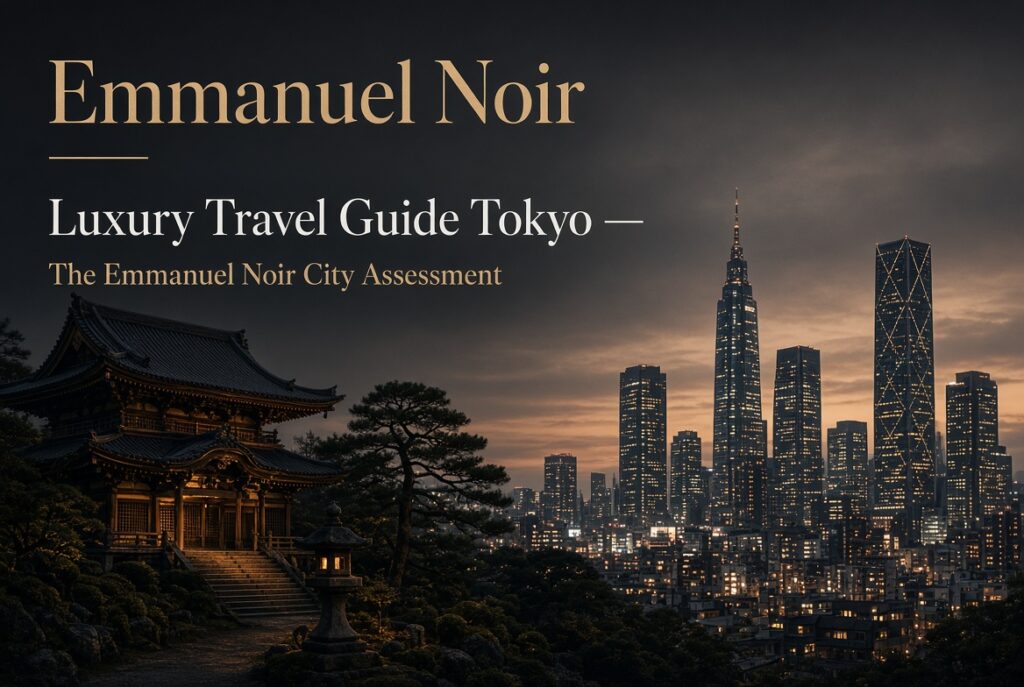
Tokyo is a city of extraordinary contrasts: centuries-old rituals unfold beneath illuminated skyscrapers, discreet neighbourhood restaurants preserve culinary traditions, and the world’s most exacting design sensibilities find expression in everything from Japanese tailoring to architectural minimalism. For the discerning traveller, a luxury travel guide Tokyo experience begins with understanding these contrasts rather than simply moving between the city’s most celebrated addresses.
Few destinations offer Tokyo’s combination of cultural depth, operational precision, gastronomic ambition and contemporary sophistication. Yet its greatest rewards rarely come from spending indiscriminately. They emerge through considered choices: the right hotel in the right neighbourhood, an understanding of seasonal customs, reservations made well in advance, and enough time to appreciate the details that distinguish an exceptional journey from an expensive itinerary.
Tokyo is not one singular experience. It is a constellation of distinct worlds, from the polished avenues of Ginza and the private dining rooms of its finest restaurants to the quiet temple grounds of Asakusa and the residential streets where everyday Japanese life continues largely beyond the tourist gaze.
This guide approaches the Japanese capital as both a destination and a study in refined living. It examines where to stay, how to navigate the city, which cultural and culinary experiences deserve priority, and how to allocate a luxury travel budget with discernment. For readers exploring our wider Luxury Travel collection, Tokyo also offers a compelling benchmark for evaluating what truly separates exceptional hospitality from expensive surroundings.
The central question is not whether Tokyo can deliver extravagance. It can. The more interesting question is whether a traveller can experience its rarest qualities without losing sight of the culture, craftsmanship and restraint that make the city distinctive. That is the standard against which this Emmanuel Noir assessment measures Tokyo.
Quick Reference: Tokyo at a Glance


A capital of layered identities: contemporary architecture, refined retail and living cultural heritage.
Destination
Tokyo, Japan — a vast metropolitan region with distinct central districts and neighbourhood identities.
Recommended duration
Five to seven days for a first luxury visit; longer for serious dining, shopping, art and cultural exploration.
International gateways
Haneda Airport and Narita International Airport. Haneda is generally closer to central Tokyo; the most suitable arrival depends on flights, hotel location and ground transport.
Currency
Japanese yen (JPY). International cards are widely accepted in many established businesses, although cash remains useful for smaller establishments and certain traditional venues.
Language
Japanese. English support varies by venue; hotel concierge teams can help coordinate specialist bookings and communicate with traditional establishments.
Best travel periods
Spring and autumn are especially appealing for seasonal scenery and comfortable exploration. Cherry-blossom timing varies each year, while summer brings substantial heat and humidity.
Getting around
Rail and subway networks provide the backbone of urban movement. Taxis and pre-arranged private transfers add convenience for luggage, late evenings and carefully coordinated itineraries.
For current seasonal guidance, neighbourhood information and practical visitor advice, consult the official Tokyo tourism guide.
The figures that matter most in planning are not limited to hotel rates or restaurant bills. Journey times, reservation availability, seasonal demand and the distance between neighbourhoods all influence how much of Tokyo a visitor can enjoy without turning each day into a logistical exercise.
Key Specifications: Planning a Luxury Journey Through Tokyo
The defining advantage of Tokyo is the range of experiences available within a single destination. A morning can begin with traditional architecture, continue through contemporary art and Japanese design, and conclude with an exceptional omakase dinner. The challenge lies in choosing a coherent itinerary rather than attempting to experience everything.
| Planning consideration | Emmanuel Noir assessment |
|---|---|
| Ideal first visit | Five to seven nights |
| Best base for luxury retail and dining | Ginza or Marunouchi |
| Best base for contemporary culture | Aoyama, Omotesando or selected areas of Shibuya |
| Best for traditional atmosphere | Asakusa, with careful hotel selection |
| Best for major transport connections | Tokyo Station and Marunouchi |
| Culinary priority | Reserve destination restaurants before arrival |
| Cultural priority | Combine major landmarks with specialist-led experiences |
| Accommodation strategy | Choose by neighbourhood, service philosophy and daily itinerary |
| Transport strategy | Use rail for most urban journeys and private transfers selectively |
| Booking strategy | Secure high-demand dining, special exhibitions and guided experiences early |
These are planning recommendations rather than fixed rankings. The ideal base depends on whether the journey centres on shopping, dining, art, traditional culture or a combination of all four.
What Makes Tokyo Different From Other Luxury Capitals?
Paris excels at fashion heritage and grand urban architecture. London combines historic institutions with a distinctive contemporary cultural scene. Dubai offers a highly visible expression of modern hospitality and scale. Tokyo brings an unusually broad range of these dimensions together while retaining a cultural identity of its own.
Its luxury proposition rests on five interlocking strengths.
- Precision: Hospitality, retail and transport often demonstrate exceptional attention to detail.
- Craftsmanship: Traditional artisanship and contemporary product design coexist across numerous disciplines.
- Culinary depth: The dining landscape extends from internationally celebrated restaurants to highly specialised neighbourhood establishments.
- Cultural continuity: Historic temples, gardens, performance traditions and craft practices remain part of the living city.
- Constant reinvention: Architecture, fashion, art and technology continually reshape the urban experience.
For the luxury traveller, the significance of these qualities is cumulative. A perfectly timed transfer, a thoughtfully prepared meal or the knowledge of a specialist guide can contribute more to a memorable journey than an additional expensive reservation.
Historical Background: From Edo to the Modern Japanese Capital


Tokyo’s contemporary sophistication becomes more meaningful when viewed against its history. The city developed through successive periods of political change, cultural flourishing, destruction and reconstruction. Its present character reflects these layers rather than a clean break between old and new.
Edo: The Foundations of a Cultural Capital
In 1603, Tokugawa Ieyasu established the Tokugawa shogunate in Edo, the settlement that would become Tokyo. Under the shogunate, Edo developed into a major political and commercial centre. By the early eighteenth century, its population had grown to approximately one million, making it one of the world’s largest cities at the time.
A distinctive urban culture emerged. Kabuki theatre, ukiyo-e woodblock printing, seasonal festivals, fashion and sophisticated forms of urban entertainment flourished. Merchants and artisans helped shape an aesthetic that valued presentation, social nuance and attention to detail.
These traditions offer an illuminating historical context for the modern city’s appreciation of craftsmanship. Contemporary Tokyo may express refinement through precision engineering, architecture and exceptional service, but its relationship with skilled work and considered presentation has deeper roots.
1868: The Birth of Tokyo
The Meiji Restoration brought the Tokugawa political order to an end in 1868. Edo was renamed Tokyo, meaning “Eastern Capital,” and the imperial court moved there from Kyoto. The city subsequently became a focal point for Japan’s modernisation.
Western architectural influences, new transport infrastructure and changing commercial districts transformed the urban landscape. Ginza, in particular, became associated with modern retail and Western-inspired architecture during the Meiji era.
Tokyo’s identity consequently developed through an ongoing exchange between Japanese traditions and international influences. That dialogue remains visible today in its fashion houses, galleries, hotels and architectural landmarks.
For a deeper understanding of this evolution, the official Edo-Tokyo Museum historical overview provides context on the city’s development from the Edo period to the present. The museum reopened on 31 March 2026 following a major renovation, making it a particularly relevant cultural stop for visitors planning a history-led itinerary
Destruction, Reconstruction and Reinvention
Tokyo’s history also includes profound upheaval. The Great Kantō Earthquake of 1923 devastated large parts of the city, while the Second World War brought extensive destruction through aerial bombardment. Post-war reconstruction transformed Tokyo once again, laying foundations for its expansion into a major international business, cultural and technological centre.
The city’s modern form is therefore inseparable from its capacity to rebuild. Historic districts, contemporary towers, transport infrastructure and carefully preserved cultural sites exist alongside one another, creating a metropolitan landscape that rewards visitors who look beyond the obvious landmarks.
The Contemporary Capital: Tradition Without Stagnation
Modern Tokyo is neither a preserved historical city nor simply a futuristic metropolis. Its character lies in the coexistence of both.
A visitor can explore the traditional atmosphere of Asakusa, study contemporary architecture in Omotesando, browse specialist retailers in Ginza and encounter carefully maintained gardens within the wider metropolitan environment. Each district reveals a different interpretation of Japanese urban life.
That diversity has an important implication for luxury travel: Tokyo should be planned by experience, not merely by attraction. Grouping activities by neighbourhood, reserving time for unstructured exploration and understanding the cultural context of each visit produce a more rewarding itinerary than crossing the city repeatedly to collect famous addresses.
The next section examines how to translate this historical and cultural foundation into a carefully composed stay, beginning with the neighbourhoods, hotels and design details that define Tokyo’s most compelling luxury experiences.
Design & Craftsmanship: The Details That Define Luxury in Tokyo


Tokyo’s relationship with luxury is often quieter than its international reputation suggests. Behind the illuminated storefronts and spectacular architecture lies a more considered aesthetic: an appreciation of materials, disciplined execution, proportion and the value of work performed with extraordinary care.
For visitors accustomed to the grand visual language of European luxury, this distinction matters. Tokyo’s finest experiences do not always announce themselves through scale. Sometimes their defining qualities emerge through a perfectly balanced room, a carefully selected piece of timber, an impeccably prepared meal or a service interaction that anticipates a need before it becomes a request.
Japanese Design: Restraint With Intention
Japanese design is frequently associated with minimalism, but reducing it to empty space and neutral colours misses its depth. In its strongest expressions, restraint is purposeful. Materials receive room to speak; proportions create balance; and details that might otherwise disappear become central to the experience.
This philosophy appears in contemporary hotel interiors, traditional inns, specialist boutiques and carefully designed restaurants. Natural stone, timber, paper, ceramics and subdued lighting can establish a sense of calm without requiring conspicuous ornament.
Yet Tokyo does not have a single design language. The city also embraces bold contemporary architecture, experimental retail environments and vivid expressions of youth culture. The most rewarding luxury itinerary allows these different sensibilities to coexist.
For travellers interested in interiors, architecture and considered living, this makes the city an unusually rich source of inspiration. A visit can reveal how traditional materials and modern engineering work together, while demonstrating that sophistication depends as much on execution as on appearance.
Ginza: The Architecture of Exceptional Retail

Ginza remains one of Tokyo’s defining luxury districts. Its appeal extends beyond designer boutiques to architecture, department-store culture, specialist retailers and an unusually concentrated selection of restaurants.
The district is particularly suited to travellers who value a carefully planned shopping experience. Major international houses operate alongside Japanese retailers whose approach to presentation, customer service and product curation can be distinctly different from their counterparts elsewhere.
A considered visit begins with a shortlist rather than an indiscriminate shopping circuit. Identify the houses and categories that genuinely interest you, allow time to examine products properly, and arrange appointments when a particular collection or service warrants advance planning.
Department stores also deserve attention. Their carefully organised floors, food halls and specialist counters can reveal a different dimension of Japanese retail culture, from seasonal presentation to regional food traditions.
For collectors, Ginza’s specialist watch and jewellery retailers may be worth exploring. However, availability, pricing, tax treatment and international warranty terms should be confirmed directly before committing to a significant purchase.
Omotesando and Aoyama: Contemporary Luxury With a Japanese Perspective

Where Ginza conveys established commercial sophistication, Omotesando and neighbouring Aoyama offer a more architectural, fashion-conscious atmosphere. Tree-lined avenues, distinctive flagship buildings, independent boutiques and design-led cafés make these districts particularly appealing to travellers who appreciate the intersection of fashion, architecture and contemporary culture.
The experience is less about ticking off individual shops and more about observing how brands express their identities through space. Building façades, interior layouts, materials and the relationship between retail and public life all contribute to the district’s character.
A leisurely afternoon here pairs naturally with contemporary art, a coffee stop or a carefully selected lunch reservation. Avoid filling every hour with appointments; the opportunity to discover an unexpected gallery or an especially compelling storefront is part of the attraction.
The Craft Traditions Behind Modern Japanese Luxury

Japan’s reputation for craftsmanship extends across ceramics, lacquerware, textiles, metalwork, woodwork and many other disciplines. These traditions are not interchangeable, and each has its own materials, techniques, regional histories and standards of excellence.
For the discerning traveller, a specialist workshop or guided craft experience can provide more lasting insight than a conventional shopping excursion. Watching a craftsperson work reveals the time, skill and decisions concealed within a finished object.
When arranging such a visit, look for transparent information about the maker, the techniques demonstrated, the experience’s language and whether participants can engage directly with the craft. Avoid assuming that every workshop welcomes unannounced visitors or offers a commercial demonstration.
The same principle applies to purchasing traditional objects. Ask about materials, provenance, maintenance and the maker’s process. A beautifully made object becomes more meaningful when its story and practical requirements are understood.
Performance & Ownership: How to Experience Tokyo Well
Luxury travel is not measured solely by the quality of a hotel or the rarity of a reservation. It is also a question of how effortlessly the journey unfolds: how much time is spent moving between destinations, how well the schedule accommodates unexpected discoveries, and whether the experience leaves room for genuine engagement with the city.
Tokyo rewards preparation. Its transport network is extensive, but the metropolitan area is enormous. Two places that appear close on a map may require a complicated station transfer or a substantial walk, particularly when navigating large interchanges.
Arriving in Tokyo: Haneda or Narita?
The first decision concerns the airport. Haneda generally offers the more convenient arrival for central Tokyo, while Narita can make sense when flight availability, ticket pricing or a particular international connection favours it. Travellers planning a premium-cabin journey can also consult our guide to booking first class with points before finalising their flights and ground transfers.
Your final transfer should reflect your hotel, luggage and arrival time.
- Private transfer: Best suited to travellers arriving after a long-haul flight, travelling with substantial luggage or prioritising a seamless hotel arrival.
- Taxi: Convenient for direct journeys, although fares can become substantial over longer distances.
- Airport rail: Often an efficient alternative for travellers comfortable navigating stations and transferring to their hotel.
- Hotel-arranged transport: Worth considering when the property offers a clearly priced, well-coordinated arrival service.
Book a private transfer in advance if predictability matters more than spontaneity. Confirm the vehicle class, luggage capacity, waiting arrangements and cancellation terms rather than assuming every premium booking includes the same service.
Choosing the Right Neighbourhood


A hotel is more than a place to sleep. In Tokyo, its location shapes the character of the entire visit.

Marunouchi and Tokyo Station
Best for transport and composed city access
Broad streets, business-class hotels, proximity to Tokyo Station and access to the Imperial Palace area make this a strong base for travellers who value efficiency and a polished urban atmosphere.
Ginza
Best for shopping and sophisticated dining
Particularly compelling for visitors planning luxury retail appointments, department-store visits and evenings at established restaurants.

Aoyama and Omotesando
Best for design, fashion and contemporary culture
A natural fit for travellers who prefer architectural discovery, independent boutiques, galleries and a more design-led interpretation of the city.

Asakusa
Best for historic atmosphere
Traditional streets and cultural landmarks create a different relationship with Tokyo. Choose accommodation carefully if your itinerary centres on Ginza, western Tokyo or late-night dining.
Shinjuku and Shibuya are also worth considering, especially for travellers who prioritise nightlife, major transport connections and contemporary urban energy. Neither is automatically the best choice for every luxury itinerary: the precise hotel location matters more than the district name alone.
The Hotel Question: Service, Privacy and Location


Tokyo’s premium accommodation spans internationally recognised luxury hotels, contemporary design properties and Japanese hospitality concepts inspired by the ryokan tradition. Each offers a different proposition.
A large international hotel may excel at concierge coordination, extensive facilities and predictable service standards. A design-led property may place greater emphasis on architecture and atmosphere. A Japanese-style inn can provide a more culturally immersive stay, although its dining conventions, room formats and service rhythms may differ considerably from those of a conventional luxury hotel.
Three questions should guide the decision:
- What does the room deliver? Examine room dimensions, layout, views, bathroom design, sound insulation and whether the advertised category matches your expectations.
- How strong is the service? Look for evidence of responsive concierge support, dining assistance and well-organised transport.
- Does the location serve the itinerary? A beautiful property loses some of its appeal if every planned activity requires an inconvenient cross-city journey.
The most expensive room is not always the best choice. A well-positioned suite with excellent service can offer more practical value than a larger room in a location that complicates the stay.
For readers who want to develop a more systematic approach to choosing hotels, transport and experiences, our luxury holiday planning guide provides a broader framework for coordinating the elements of a high-quality trip.
Dining: Where Preparation Matters Most


Tokyo’s dining culture rewards curiosity and advance planning. The city accommodates an extraordinary spectrum of Japanese and international cuisines, from intimate sushi counters to elaborate kaiseki menus and contemporary tasting experiences.
However, prestige alone should not determine a reservation. Consider the cuisine, the chef’s approach, the length of the meal, the atmosphere and whether the experience suits the wider itinerary.
For a highly sought-after restaurant, reserve as early as its published policy permits. Ask the concierge to confirm dietary restrictions, cancellation conditions, seating times and whether the restaurant accepts international visitors directly or requires a hotel introduction.
Equally, leave room for less formal meals. Department-store food halls, neighbourhood ramen counters, specialist cafés and regional Japanese dishes can provide memorable experiences without the cost or ceremony of destination dining.
This balance matters. An itinerary consisting exclusively of elaborate reservations can become exhausting, while an entirely unstructured approach may leave the most sought-after experiences inaccessible.
Transport and Daily Rhythm
Tokyo’s rail and subway systems make independent exploration practical for many visitors. Use a reliable navigation application, check station exits before departure and allow additional time for unfamiliar interchanges.
Taxis are particularly useful when a destination lies far from a convenient station, when travelling between evening reservations, or when weather makes walking unpleasant. Private transport is most valuable when it solves a specific logistical problem rather than becoming the default for every journey.
A well-composed day generally concentrates activities within one or two neighbouring districts. This reduces unnecessary transit and creates opportunities to explore streets, shops and cafés that were not part of the original plan.
The same principle applies to the wider journey: plan the essentials, then protect the freedom to discover something unexpected.
Market Position & Competition: How Tokyo Compares With the World’s Luxury Capitals


Tokyo occupies a distinctive position in international luxury travel. Its appeal does not depend on reproducing the grand hotels of Paris, the historic exclusivity of Mayfair or the monumental hospitality of Dubai. Instead, it offers a different combination of cultural depth, precision, design and extraordinary everyday variety.
The strongest comparison is therefore not a ranking of cities, but an assessment of what each destination does particularly well.
| Luxury destination | Defining strengths | Best suited to | Principal consideration |
|---|---|---|---|
| Tokyo | Culinary range, craftsmanship, design and cultural depth | Travellers seeking layered experiences and exceptional attention to detail | Requires thoughtful neighbourhood planning |
| Paris | Haute couture, art, historic architecture and established luxury houses | Fashion enthusiasts, collectors and lovers of European heritage | Reservations and popular attractions require planning |
| London | Historic institutions, bespoke services, Mayfair retail and cultural variety | Travellers who value established luxury networks and British heritage | Costs can accumulate across accommodation and dining |
| Dubai | Contemporary hotels, private experiences, large-scale hospitality and shopping | Travellers prioritising resort-style service and modern spectacle | Outdoor activities can be less appealing during the hottest months |
| Singapore | Efficient infrastructure, premium hospitality and a concentrated dining scene | Travellers seeking a highly organised urban stay | Offers a different scale and historical texture from Tokyo |
These are broad editorial distinctions, not absolute judgments. Each city contains a wide range of experiences, and the best choice depends on the traveller’s interests, timing and expectations.
Tokyo Versus Dubai: Two Different Expressions of Luxury
Tokyo and Dubai both appeal to internationally mobile travellers, yet their strongest qualities differ.
Dubai often foregrounds scale, contemporary architecture, resort facilities and highly visible hospitality. Tokyo places greater emphasis on cultural layering, specialist expertise and the interplay between tradition and modernity.
For readers considering both destinations, our luxury travel guide to Dubai explores another distinctive model of premium travel, offering a useful point of comparison when deciding which city better matches a particular journey.
Neither destination needs to imitate the other. Tokyo is the stronger proposition for travellers who want a sustained encounter with Japanese culture, culinary specialisation and design. Dubai may be more suitable for a journey centred on resort amenities, contemporary spectacle and a different style of personalised hospitality.
Is Tokyo Worth the Investment?
For the right traveller, Tokyo offers compelling value across a wide range of price points. That does not mean the city is inexpensive, nor does it guarantee that every premium experience justifies its price.
The strongest returns on a luxury travel budget tend to come from decisions that materially improve the experience:
- Selecting a hotel that reduces unnecessary travel.
- Reserving a restaurant that genuinely matches your culinary interests.
- Commissioning a knowledgeable guide for a specialist cultural experience.
- Paying for private transport when it solves a meaningful logistical challenge.
- Allowing sufficient time to explore rather than purchasing more activities than the schedule can accommodate.
Conversely, a high room rate, an internationally recognised restaurant or a prestigious shopping address should not automatically be treated as a guarantee of an exceptional experience.
Tokyo’s greatest luxury may be its breadth. It allows travellers to move between refined hospitality, specialist craftsmanship, contemporary culture and ordinary neighbourhood life without requiring every moment to be expensive.
That breadth makes the city particularly rewarding for visitors who arrive with clear priorities and remain open to discovery.
Buying Considerations: How to Plan a Luxury Trip to Tokyo
Tokyo rewards travellers who make a few important decisions well. The choice of hotel, the timing of the visit, the location of restaurant reservations and the balance between guided experiences and independent exploration all influence the quality of the journey.
A sophisticated itinerary does not need to be extravagant at every turn. It needs to direct resources towards the experiences that matter most to you.
1. Choose the Right Season for Your Priorities


Seasonality changes Tokyo’s atmosphere, hotel demand and the practicalities of sightseeing. The right travel window depends on whether you prioritise gardens, seasonal food, shopping, cultural events or quieter streets.
Spring is particularly attractive for cherry blossoms and seasonal scenery. However, blossom timing varies from year to year, and the most popular periods can bring elevated accommodation demand and crowded public spaces. Avoid treating a predicted flowering date as a guarantee.
Autumn offers appealing foliage, seasonal cuisine and generally comfortable conditions for walking, although exact weather and foliage timing vary. Popular weekends and major events can still affect hotel availability.
Summer brings festivals and lively evenings, but heat and humidity can make extended outdoor sightseeing tiring. Plan indoor visits, shaded breaks and air-conditioned transport accordingly.
Winter can provide a calmer atmosphere outside major holiday periods, with illuminations, seasonal dining and crisp days. Some gardens and outdoor attractions may offer different experiences from those available in spring or autumn.
For a first visit, spring and autumn are strong starting points. Nevertheless, the best season is the one that aligns with your interests, schedule and tolerance for crowds.
2. Establish a Realistic Luxury Travel Budget
Tokyo can accommodate different spending levels, but premium accommodation, sought-after dining and private services can raise costs quickly. Establish a budget before booking so that individual purchases do not crowd out the experiences you value most.
The following figures are illustrative planning ranges, not live quotations. Actual costs depend on dates, exchange rates, availability, room category and personal choices.
| Expense | Indicative planning allowance |
|---|---|
| Premium hotel | ¥40,000–¥100,000+ per room, per night |
| Luxury hotel or suite | ¥100,000–¥300,000+ per room, per night |
| Casual dining | ¥1,500–¥4,000 per person |
| Refined restaurant meal | ¥8,000–¥25,000+ per person |
| Destination tasting menu | ¥25,000–¥60,000+ per person |
| Urban rail and subway | ¥1,000–¥2,500 per person, per day |
| Private airport transfer | Obtain a date-specific quotation |
| Private specialist guide | Obtain a quotation based on duration and expertise |
These ranges are deliberately broad. High-demand dates, exceptional suites and celebrated restaurants can exceed them, while excellent meals and comfortable accommodation are also available below the indicative figures.
A practical budget should separate accommodation, dining, transport, shopping and experiences. Add a reserve for unexpected costs and confirm whether quoted prices include taxes, service charges and any additional fees.
3. Select a Hotel That Improves the Whole Journey


For a luxury stay, the right hotel should support the itinerary rather than simply impress on arrival.
Before booking, evaluate five factors:
- Location: Estimate journey times to your planned restaurants, shops and cultural attractions.
- Room quality: Check the actual room category, floor area, bed configuration and view.
- Service: Assess concierge availability, dining assistance and transport arrangements.
- Facilities: Decide whether a spa, pool, fitness centre or destination restaurant will genuinely be used.
- Booking conditions: Read cancellation terms, payment policies and any restrictions on changes.
A hotel with a slightly lower room rate may prove the better choice if it saves substantial travel time. Equally, a more expensive property can be justified when its service, privacy or location materially improves the experience.
Compare the total stay rather than the nightly headline price. Breakfast, airport transport, dining credits and other inclusions may affect the overall calculation, but only when they match your actual needs.
4. Compare Accommodation Options Before Committing
The luxury hotel market in Tokyo includes established international properties, Japanese hospitality concepts and design-focused hotels. A comparison should consider the experience delivered rather than relying on brand recognition alone.

Aman Tokyo
For quiet sophistication and architectural restraint
Consider this style of property if spacious interiors, panoramic city views, wellness facilities and a composed atmosphere matter more than a busy social scene.

The Peninsula Tokyo
For established full-service hospitality
A relevant option for travellers who value attentive service, central access and the convenience of a full-service luxury hotel.

HOSHINOYA Tokyo
For a Japanese-inspired hospitality experience
Worth investigating if traditional ryokan influences, Japanese design and a more culturally distinctive hotel experience appeal to you.
These properties illustrate different approaches to luxury rather than a definitive ranking. Confirm current facilities, room categories, meal arrangements and availability directly before booking.
For broader accommodation research, compare Tokyo hotel availability and rates across different neighbourhoods and dates.
This is the intended Emmanuel Noir pretty-link destination. Confirm that the redirect is configured and that the relevant affiliate tracking is active before publication.
For a more curated approach, travellers can also explore design-led hotels through Mr & Mrs Smith and compare the available properties against their preferred neighbourhood, service style and travel dates.
This is also an intended pretty-link destination; verify the redirect and partner tracking before publication. Neither booking option guarantees the lowest rate or the best room. Compare cancellation policies, inclusions and the property’s direct offer before making a final decision.
5. Decide Which Experiences Deserve Advance Reservations
Tokyo’s most memorable experiences do not all require advance booking, but certain categories deserve early attention. Spa treatments are among the experiences worth planning ahead, particularly when wellness is an important part of the stay. Travellers considering a broader wellness-led journey can also explore our guide to the world’s best luxury spa retreats for inspiration beyond the city.
| Experience | Recommended approach | Why it matters |
|---|---|---|
| Highly sought-after restaurants | Reserve as early as permitted | Limited seating and strict cancellation policies |
| Specialist private guides | Book ahead | Expertise, language and availability vary |
| Traditional craft workshops | Confirm directly | Small groups and workshop schedules can limit capacity |
| Major exhibitions | Check official ticketing | Popular exhibitions may use timed entry |
| Luxury shopping appointments | Arrange when necessary | Specialist consultations or particular products may require coordination |
| Gardens and cultural landmarks | Check seasonal information | Opening arrangements and access may vary |
| Spa treatments | Reserve preferred times | Popular treatment slots can fill quickly |
The principle is straightforward: reserve experiences that depend on scarce capacity, then leave the rest of the itinerary flexible.
A well-connected hotel concierge can be valuable, especially when coordinating multiple reservations or communicating with venues that have specific booking requirements. However, do not assume a concierge can secure a fully booked restaurant or bypass its policies.
6. Shop With a Clear Point of View


Tokyo’s retail scene is especially rewarding for travellers who know what interests them. Luxury watches, Japanese fashion, fine stationery, ceramics, specialist cosmetics and carefully made everyday objects all provide different ways to engage with Japanese design and craftsmanship.
For substantial purchases, compare the final price rather than the displayed price alone. Confirm product authenticity, warranty coverage, return conditions, international servicing arrangements and the requirements for any tax-free shopping procedure applicable to your visit.
A purchase should also suit your collection or wardrobe. Rarity, presentation and the attraction of buying abroad do not automatically establish long-term value.
The most considered shopping itinerary includes time for inspection, comparison and reflection. If a purchase is significant, ask questions, retain the documentation and avoid committing under pressure.
7. Protect Time for Unplanned Discovery
The final planning consideration is the simplest, yet often the most neglected: do not schedule every hour.
Tokyo rewards visitors who walk a little farther, explore a side street or pause when an unexpected discovery captures their attention. A neighbourhood café, a specialist stationery shop or a small gallery may become more memorable than another landmark photographed in passing.
A strong itinerary should therefore include a few fixed anchors each day, such as a hotel departure, a booked cultural experience and an evening reservation. Between them, allow enough flexibility to respond to the city.
That balance is a hallmark of sophisticated travel planning. Preparation creates access; restraint creates room to enjoy it. The same principle applies to a journey at sea, where a considered route matters as much as the destinations themselves. Our Greek Islands superyacht charter itinerary guide explores how to balance island visits, time aboard and the flexibility required for a rewarding charter.
Comparison Table: Which Tokyo Luxury Experience Is Right for You?
Tokyo’s breadth can make planning difficult. The following comparison helps match the style of visit to your priorities, budget and preferred pace.
| Travel style | Best approach | Main advantage | Potential drawback |
|---|---|---|---|
| The luxury traditionalist | Premium hotel, destination dining and private cultural tours | High service standards and carefully coordinated experiences | Costs can rise quickly |
| The design enthusiast | Base yourself near Aoyama or Omotesando; explore architecture, fashion and galleries | Strong connection to contemporary Japanese creativity | Requires selective planning to avoid excessive shopping |
| The culinary traveller | Prioritise restaurant reservations and neighbourhood food discoveries | Access to an exceptionally varied dining culture | Popular restaurants may require advance planning |
| The collector | Research specialist retailers, galleries and craft workshops | Opportunities to discover distinctive objects and expertise | Authenticity, provenance and pricing require due diligence |
| The cultural explorer | Combine historic districts, gardens, museums and guided experiences | Greater understanding of Japan’s cultural context | Some attractions require additional travel time |
| The first-time visitor | Stay centrally and group activities by neighbourhood | Easier logistics and a balanced introduction to the city | Less time for remote districts and spontaneous detours |
For many first-time visitors, a hybrid approach is the strongest choice: a well-positioned hotel, a handful of carefully selected reservations, one or two specialist cultural experiences and sufficient unstructured time to explore.
A Suggested Five-Day Luxury Itinerary
01
Arrival and Ginza
Settle into the hotel, explore the immediate neighbourhood, visit selected boutiques and enjoy a relaxed dinner. Keep the first evening flexible in case of flight delays or fatigue.
02
Traditional Tokyo
Explore Asakusa and Senso-ji, then add a museum, garden or guided cultural experience. Finish with a restaurant reservation suited to your interests.
03
Design, Fashion and Contemporary Culture
Spend the day around Aoyama and Omotesando, exploring architecture, Japanese design and selected retailers. Leave time for an unplanned discovery.
04
Craftsmanship and Culinary Discovery
Arrange a specialist workshop, gallery visit or collector-focused shopping experience. Reserve the evening for a carefully chosen Japanese dining experience.
05
Personal Favourites and Departure Preparation
Return to a favourite district, complete considered purchases and enjoy a leisurely final meal. Allow ample time for luggage, airport transfers and departure procedures.
This itinerary is a framework, not a fixed schedule. Opening days, seasonal events, restaurant availability and flight times may require adjustments. For a longer visit, add neighbourhoods and experiences according to your interests instead of increasing the pace.
Pros and Cons of Luxury Travel in Tokyo
The Advantages
- Remarkable breadth: Few cities combine specialist dining, design, shopping, cultural heritage and contemporary urban life so extensively.
- Attention to detail: Many established hospitality and retail businesses demonstrate a strong commitment to service and presentation.
- Excellent public transport: Rail connections make independent exploration practical across much of the city.
- Strong craftsmanship culture: Visitors can discover both traditional techniques and contemporary interpretations of Japanese design.
- Flexible spending: Exceptional experiences exist at several price points, allowing travellers to prioritise rather than spend indiscriminately.
- Distinctive cultural depth: Historic sites and living traditions offer substance beyond the city’s visual appeal.
The Disadvantages
- Scale and complexity: Tokyo is enormous, and poorly planned routes can waste valuable time.
- Peak-season demand: Cherry-blossom periods, holidays and major events can affect hotel rates and availability.
- Language considerations: English-language support varies, particularly at small specialist venues.
- Reservation restrictions: Some sought-after restaurants and experiences have strict booking or cancellation policies.
- Weather extremes: Summer heat and humidity can make long days outdoors uncomfortable.
- Decision fatigue: The sheer number of possible experiences can dilute the trip if the itinerary becomes overloaded.
The disadvantages are manageable with preparation, but they should not be dismissed. Tokyo is most rewarding when the itinerary respects the city’s scale and the traveller’s own energy.
Who Should Choose Tokyo?
Tokyo is particularly well suited to travellers who appreciate substance as much as presentation.
It is an excellent choice for:
- Luxury travellers seeking attentive hospitality alongside cultural depth.
- Design and fashion enthusiasts interested in Japanese creativity, architecture and specialist retail.
- Culinary explorers prepared to research restaurants and embrace unfamiliar dishes.
- Collectors and craftsmanship enthusiasts who enjoy learning about the origins, techniques and provenance of objects.
- Experienced international travellers who appreciate a destination that rewards preparation without requiring every moment to be organised.
- First-time visitors to Japan willing to devote several days to understanding the capital rather than treating it as a brief stopover.
Tokyo can also be an effective starting point for a wider Japanese journey. Travellers with additional time may consider extending their itinerary to Kyoto, Hakone or other destinations, depending on their interests and preferred pace.
Who Should Skip Tokyo—or Approach It Differently?
Tokyo is not the ideal destination for every traveller or every occasion.
Consider another destination, or adjust your expectations, if:
- You want a predominantly beach-based holiday with minimal urban activity.
- You dislike large cities, public transport or busy commercial districts.
- You prefer spontaneous access to every restaurant without making reservations.
- You expect all luxury experiences to resemble European grand hotels and formal service traditions.
- You have only a day or two available and want to experience several distant districts without rushing.
Travellers with limited time can still enjoy Tokyo, but should concentrate on one neighbourhood, select a small number of priorities and resist the temptation to cover the entire city.
Likewise, visitors who prefer privacy and slower rhythms can build a rewarding trip around a carefully chosen hotel, gardens, private cultural experiences and a smaller number of restaurant reservations.
The objective is not to experience the maximum number of attractions. It is to experience Tokyo in a way that feels coherent, personal and genuinely rewarding.
Frequently Asked Questions: Luxury Travel Guide Tokyo
1. How many days do you need for a luxury trip to Tokyo?
Five to seven days provides a strong introduction to Tokyo’s principal neighbourhoods, dining culture, luxury retail and historic attractions. Five days can accommodate a well-planned first visit, while seven or more days allow additional time for specialist experiences, galleries, gardens and less-visited districts. Travellers who want to explore beyond the capital should allocate extra time rather than compressing several destinations into an exhausting itinerary.
2. What is the best area to stay in Tokyo for luxury travellers?
Ginza suits travellers who prioritise luxury shopping and sophisticated dining. Marunouchi offers convenient transport connections and a polished central setting. Aoyama and Omotesando appeal to visitors interested in contemporary architecture, fashion and design. Asakusa provides a more traditional atmosphere. The best choice depends on the experiences you intend to prioritise and the time you want to spend travelling between them.
3. What is the best time of year to visit Tokyo?
Spring and autumn are popular choices because of their seasonal scenery and generally comfortable sightseeing conditions. Spring brings the possibility of cherry blossoms, although the timing changes annually and popular areas can become crowded. Autumn offers foliage and seasonal cuisine. Summer can be hot and humid, while winter brings cooler weather and seasonal illuminations. Check current forecasts and event calendars before confirming travel dates.
4. Is Tokyo expensive for luxury travellers?
Tokyo can be expensive, particularly when the itinerary includes premium suites, destination restaurants, private guides and specialist shopping. However, the city also offers excellent dining and cultural experiences at more moderate prices. The most effective strategy is to establish a budget, identify the experiences that justify additional spending and compare the full cost of accommodation and transport rather than relying on headline prices alone.
5. Which luxury hotels should you consider in Tokyo?
Aman Tokyo, The Peninsula Tokyo and HOSHINOYA Tokyo illustrate three different approaches to premium hospitality: architectural restraint, established full-service luxury and Japanese-inspired design, respectively. Compare current room categories, locations, facilities, dining arrangements and cancellation conditions before deciding. The most suitable hotel is the one whose service philosophy and location complement your itinerary.
6. Is Tokyo suitable for a first-time visitor to Japan?
Yes. Tokyo offers an accessible introduction to contemporary Japanese life, traditional cultural sites, food, design and transport. Its scale can initially feel daunting, but a central hotel, a reliable navigation application and an itinerary organised by neighbourhood make exploration manageable. Visitors who want a deeper understanding of Japanese history may also wish to include Kyoto or another destination on a longer trip.
7. Should you hire a private guide in Tokyo?
A private guide can add considerable value when the objective involves specialist knowledge, cultural interpretation, food traditions, architecture or craft workshops. For straightforward sightseeing, independent exploration may be sufficient. Before booking, verify the guide’s experience, language capabilities, itinerary, duration, transport arrangements and fees. The strongest guided experiences provide access to knowledge rather than merely escorting visitors between landmarks.
8. Is Tokyo good for luxury shopping?
Tokyo is an excellent destination for luxury shopping, particularly in Ginza, Omotesando and Aoyama. Travellers can explore international fashion houses, Japanese designers, specialist retailers and traditional craft products. For significant purchases, confirm authenticity, warranty coverage, return policies, final pricing and applicable tax-free shopping requirements. Do not assume that purchasing an item in Japan automatically makes it a better investment.
9. Is Tokyo a good destination for food enthusiasts?
Tokyo is especially rewarding for food enthusiasts because its dining scene spans sushi, tempura, ramen, yakitori, kaiseki and numerous international cuisines. High-demand restaurants may require advance reservations, and some establishments have specific booking or cancellation conditions. A balanced itinerary should combine a few carefully selected destination meals with neighbourhood restaurants and informal discoveries.
10. How can travellers make a luxury Tokyo itinerary more efficient?
Choose a hotel that supports your priorities, group activities by neighbourhood and reserve only the experiences that genuinely require advance planning. Use rail for many urban journeys, taxis or private transfers when they solve a specific logistical problem, and allow time between appointments. Avoid scheduling several distant districts on the same day. Efficiency should create more time for discovery, not simply more activities.
Conclusion: Tokyo, Experienced With Discernment
Tokyo’s appeal lies in its ability to offer several different worlds without surrendering its own identity. It is a capital of meticulous craftsmanship and restless innovation, historic traditions and contemporary design, intimate dining rooms and expansive urban landscapes.
For the luxury traveller, this combination creates possibilities that extend well beyond shopping or five-star accommodation. A carefully chosen hotel can establish the right rhythm. A conversation with a craftsperson can reveal the thinking behind an object. A memorable meal can introduce an unfamiliar culinary tradition. Even a walk through an ordinary neighbourhood can illuminate aspects of Japanese life that a tightly scheduled sightseeing tour might overlook.
The secret is not to pursue every celebrated address. It is to understand what matters to you, select experiences accordingly and leave sufficient space for the unexpected.
A successful luxury travel guide to Tokyo must therefore do more than catalogue hotels, restaurants and attractions. It must help the traveller recognise where additional expenditure creates genuine value, where cultural understanding enriches an experience and where restraint produces a more rewarding journey.
Tokyo rewards that approach. Its sophistication is not confined to its most expensive establishments; it emerges through the care, precision and thoughtfulness that can be found across the city.
For Emmanuel Noir, that is the distinction between visiting a celebrated destination and experiencing it with discernment.
The Emmanuel Noir Verdict

Tokyo, Japan
Luxury Travel Assessment
Highly Recommended
Best for culture, craftsmanship, dining and contemporary design
The defining strength
Tokyo combines extraordinary cultural depth with exceptional breadth across hospitality, gastronomy, retail and design.
The greatest consideration
The city’s scale demands thoughtful planning. Poorly organised days can consume valuable time in transit, while peak-season demand may complicate reservations and accommodation choices.
The smartest investment
Prioritise a well-positioned hotel, carefully selected dining experiences and specialist guidance where it adds genuine insight. Spend selectively rather than assuming the highest price guarantees the best experience.
The ideal traveller
Someone who appreciates craftsmanship, cultural context, culinary discovery and sophisticated urban living—and who values substance as much as presentation.
Final assessment
Tokyo belongs on the shortlist of the world’s most compelling luxury city destinations. Its greatest distinction is not extravagance alone, but the depth and precision with which it rewards an attentive traveller.
Tokyo does not need to imitate another luxury capital to justify its place among the world’s essential destinations. Its character is entirely its own: complex, disciplined, inventive and endlessly revealing to those prepared to look beyond the obvious.
“True luxury is not measured by how much a journey costs, but by how deeply it allows you to experience a place.”
— Emmanuel Noir
Affiliate Disclosure
Emmanuel Noir may earn a commission when readers book accommodation or make purchases through qualifying affiliate links in this article. This does not increase the price paid by the reader in every case, although the final price and any applicable fees depend on the provider and booking terms. Our editorial assessments remain focused on relevance, quality and reader value; affiliate relationships do not guarantee a recommendation or a particular ranking.