
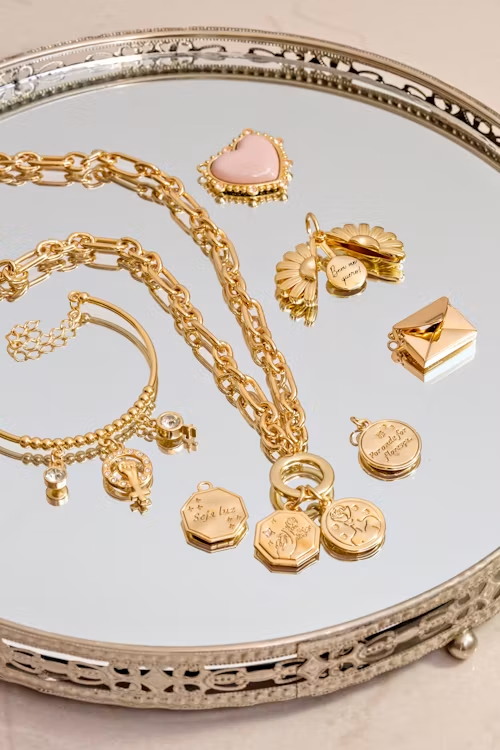
Every serious gold jewelry collector lover needs a gold jewelry investment guide. Gold has never needed to shout. Its appeal lies in permanence: a material that survives fashion cycles, carries cultural memory and, when transformed by exceptional craftsmanship, can become something considerably more important than an ornament.
This gold jewelry investment guide examines gold jewelry through a collector’s lens — from karat purity and construction to provenance, craftsmanship, liquidity, brand heritage and resale considerations. The objective is not to suggest that every gold jewel is an investment, but to establish the framework for distinguishing beautifully made jewelry from pieces with genuine collectible characteristics.
For readers exploring the wider world of fine jewelry, Emmanuel Noir’s Watches & Jewelry collection provides a broader view of watches, precious stones, jewelry houses and acquisition strategy.
Gold jewelry occupies an unusual position within luxury collecting. Unlike a watch, it contains an immediately recognizable material asset. Unlike bullion, however, its value can extend far beyond its metal content. A hand-finished jewel from a distinguished maison may command a premium because of design, workmanship, rarity, provenance and desirability — even when its intrinsic gold value represents only a fraction of the purchase price.
That distinction is the foundation of serious gold jewelry investment. The collector is not simply buying gold. The collector is buying a combination of precious material, craftsmanship, cultural significance and scarcity.
Gold Jewelry Investment Guide: What Makes Gold Jewelry Collectible?
The first principle is simple: gold content and collectible value are not the same thing.
A plain 24-karat gold object can contain more pure gold than an elaborate 18-karat jewel, yet the latter may have substantially greater market value because of its construction, design, brand, provenance or rarity. Conversely, a heavily branded piece can carry a large retail premium without necessarily developing a strong secondary-market premium.
For that reason, a serious gold jewelry investment guide must separate at least five layers of value:
- Intrinsic value — the underlying value of the gold and any precious stones.
- Craftsmanship value — the quality and complexity of construction.
- Design value — the desirability and enduring relevance of the design.
- Brand value — the reputation and historical importance of the maker.
- Collectibility — scarcity, provenance, condition and demand among knowledgeable buyers.
The strongest pieces often sit at the intersection of several of these categories.
Gold Purity: 24K, 22K, 18K and 14K Explained
Karat indicates the proportion of pure gold in an alloy. Pure gold is conventionally described as 24-karat, while 18-karat gold contains 75% gold by mass. Twenty-two-karat gold contains approximately 91.7% gold, while 14-karat gold contains approximately 58.3%.
Purity matters because it affects both intrinsic material value and physical characteristics.
| Gold Standard | Approx. Gold Content | Collector Consideration |
|---|---|---|
| 24K | 99.9% | Exceptional purity, but comparatively soft |
| 22K | 91.7% | High gold content with greater durability |
| 18K | 75.0% | Strong balance of purity, durability and fine-jewelry use |
| 14K | 58.3% | More durable and accessible, but lower gold content |
For investment-oriented luxury jewelry, 18-karat gold occupies an especially important position because it combines substantial gold content with the durability required for sophisticated jewelry construction. Yet purity should never become the sole purchasing criterion.
A collector should also examine the alloy’s colour, construction, weight, finishing, stone quality and maker. Two pieces carrying the same 18K hallmark can have radically different market positions.
Yellow, White and Rose Gold
Gold’s colour is determined partly by alloy composition rather than purity alone.
Yellow gold retains the warm visual character traditionally associated with the metal. White gold incorporates other metals to create a pale appearance and may receive a rhodium coating depending on the piece. Rose gold uses copper-rich alloying to produce its characteristic blush.
For the collector, colour is primarily a question of design language and market demand rather than an automatic indicator of investment quality.
A restrained yellow-gold bracelet from an important historical collection may prove considerably more desirable than a contemporary white-gold piece with a higher retail price. The material must therefore be evaluated within its cultural and design context.
Historical Background: Why Gold Became the Ultimate Store of Prestige
Gold’s association with wealth predates modern luxury houses by thousands of years. Ancient civilizations used it for ritual objects, royal adornment, currency and symbols of authority because its resistance to corrosion, relative scarcity and visual character made it unusually enduring.
Across Egypt, Mesopotamia, Greece, Rome, India, China and later European courts, gold jewellery became intertwined with status and ceremony. The object was rarely valued solely for its material. Its meaning came from who commissioned it, who wore it, how it was made and what it represented.
That historical continuity remains relevant to contemporary collecting.
Modern luxury maisons inherited many of these traditions but introduced increasingly sophisticated techniques of design, stone setting, finishing and production. Houses such as Cartier, Van Cleef & Arpels, Bulgari and others transformed jewelry into recognizable design languages in which certain motifs, constructions and references became associated with particular periods.
This is why provenance can matter so profoundly. A piece with documented ownership, an identifiable collection history or an important design lineage can possess a narrative unavailable to an otherwise comparable jewel.
From Adornment to Collectible Asset
The transition from jewelry to collectible occurs when the object develops a reason to be sought independently of its original retail purpose.
That reason might be a historically important design, an unusually scarce reference, exceptional craftsmanship, an important gemstone, a discontinued collection or a compelling provenance.
The distinction is particularly important when comparing contemporary retail jewelry with secondary-market pieces. Retail price represents what a buyer pays to acquire an object from a brand or retailer at a particular moment. Secondary-market value reflects what another buyer may actually be prepared to pay later.
Those figures can diverge dramatically.
A disciplined collector therefore asks not simply, What does this cost? but:
What makes this particular object desirable after the original retail transaction has disappeared?
Gold Jewelry and the Broader Precious-Metal Market
Gold jewelry should also be understood alongside other forms of precious-metal ownership. The underlying metal can provide a useful reference point, but jewelry introduces additional variables that bullion does not.
Readers interested in that distinction can explore Emmanuel Noir’s gold bullion investment guide, which examines gold ownership from a more direct precious-metals perspective.
Bullion is generally valued primarily according to its metal content, market price, weight and form. Jewelry can carry fabrication premiums, retail margins, design premiums and brand premiums. Consequently, jewelry should not be treated as a substitute for bullion simply because both contain gold.
The sophisticated approach is to recognize the two as different assets with different value drivers.
Quick Reference: Gold Jewelry Investment at a Glance
Primary asset: Gold jewelry combining precious-metal content with design, craftsmanship and collectible characteristics.
Most important material factors: Karat purity, weight, alloy composition, gemstone quality and construction.
Most important collectible factors: Rarity, maker, design significance, provenance, condition, documentation and secondary-market demand.
Key distinction: Gold content establishes an underlying material reference; collectible value depends on much more.
Important caution: Retail price does not guarantee future resale value.
Best collector mindset: Buy the object first, understand the market second and treat potential appreciation as a possibility rather than a promise.
Key Specifications to Examine Before Acquisition
A serious acquisition begins with documentation rather than emotion.
1. Karat and Hallmark
Confirm the stated purity and inspect the hallmark or manufacturer’s stamp. Hallmarks vary by jurisdiction, and their interpretation can help establish metal purity, maker and sometimes date or assay information.
2. Gross Weight
Weight provides an important reference for the underlying metal component. However, gross weight may include gemstones, settings and other materials, so it should never be treated as equivalent to the weight of pure gold.
3. Construction
Examine hinges, clasps, links, settings, soldering and finishing. A technically sophisticated piece can reveal its quality through details that are invisible at first glance.
4. Gemstones
If the jewelry contains diamonds or coloured stones, their quality and provenance can become major contributors to value. Certification and independent assessment can be especially important for significant stones.
5. Condition
Condition affects desirability, particularly for vintage and collectible jewelry. Wear is not automatically negative: an original piece with honest age can be more desirable than an aggressively restored example. The critical issue is whether alterations preserve or diminish the object’s integrity. For collectors moving deeper into vintage jewelry, Emmanuel Noir’s Estate Jewelry Investment Guide examines how condition, authenticity, provenance and historical character can influence the assessment of previously owned jewels.
6. Provenance
Invoices, certificates, original boxes, archival records and documented ownership can strengthen confidence and, in certain cases, enhance desirability.
7. Design Lineage
Determine whether the piece belongs to a recognizable collection, period, designer or historical movement. A jewel’s place within a design lineage can matter considerably in the secondary market.
8. Market Evidence
Finally, examine actual comparable sales rather than relying exclusively on current retail pricing. Auction results, established secondary-market listings and specialist dealer records can provide a more realistic picture of demand.
Design & Craftsmanship: Where Gold Jewelry Becomes Collectible
Gold itself is only the beginning. In exceptional jewelry, craftsmanship determines how successfully that precious material becomes an object of lasting consequence.
A serious gold jewelry investment guide must therefore look beyond karat marks and metal weight. The collector should study proportion, engineering, articulation, surface finishing, stone setting, symmetry and the subtle evidence of hand craftsmanship. These characteristics often separate an ordinary gold jewel from a piece capable of commanding attention in the secondary market.
The finest work can appear almost effortless. A bracelet may articulate smoothly across the wrist, a clasp may disappear into the architecture of the piece, while polished and satin surfaces create contrast without visual excess. Such details rarely announce themselves. They reveal themselves gradually to the owner who understands construction.
The Importance of Construction
Construction is particularly significant in bracelets, articulated necklaces, earrings and complicated rings.
A well-engineered bracelet should move naturally while retaining structural integrity. Links should align cleanly, hinges should operate with controlled resistance and clasps should close securely without excessive play. On a substantial jewel, these mechanical details can be as revealing as the visible design.
For the collector, originality matters as well. Replaced clasps, modified settings or extensive reconstruction may affect both authenticity and market desirability. A beautifully restored jewel can remain important, but restoration should be documented rather than concealed.
Surface Finishing and Handwork
Gold provides an extraordinary canvas for finishing.
Mirror polish produces a sharp, reflective surface. Brushed and satin treatments create restraint. Hammered or textured finishes introduce depth. Guilloché, engraving and carefully executed milgrain can transform otherwise flat surfaces into tactile compositions.
The most compelling pieces often use several treatments simultaneously. Light moves differently across each surface, giving the jewelry a visual rhythm that cannot be reduced to its gold weight.
This is one reason craftsmanship deserves independent consideration when evaluating luxury jewelry. Two objects may contain an almost identical quantity of gold while possessing entirely different levels of artistic and technical execution.
Gemstones Change the Equation
When diamonds or coloured gemstones enter the composition, the calculation becomes more complex. A gold jewel containing a significant natural diamond should not be valued simply as gold jewelry. The gemstone introduces another layer of rarity, quality, provenance and market demand, while the setting itself can add further craftsmanship and design value. Readers examining the separate economics of diamond ownership can also explore our diamond investment guide, which considers rarity, quality, market considerations and the distinction between gemstone value and broader jewelry premiums
That is why collectors should understand the separate characteristics of precious stones before attributing investment potential to a jewel. Emmanuel Noir’s most valuable precious gemstones guide examines the broader hierarchy of rarity, desirability and market significance surrounding exceptional gemstones.
For particularly important stones, laboratory documentation can provide another layer of confidence. Yet certificates should be treated as evidence rather than as a substitute for examining the entire jewel. A certificate may describe a gemstone; it does not automatically establish the collectible significance of the finished piece.
Design Language and Maison Heritage
Certain jewelry houses have developed visual languages sufficiently distinctive that individual pieces can be recognized through their proportions, motifs and construction.
Cartier’s historic vocabulary, for example, includes forms that have become deeply associated with the maison. Van Cleef & Arpels is similarly associated with recognizable approaches to floral, naturalistic and architectural jewelry. Bulgari developed a powerful identity through bold proportions, colour and Mediterranean-inflected design.
This creates an important distinction between branded jewelry and collectible jewelry.
A famous name can increase desirability, but the name alone does not guarantee secondary-market strength. Collectors should ask whether the specific reference has historical relevance, whether the design remains recognizable and whether comparable examples have demonstrated sustained demand.
Performance & Ownership: What It Means to Hold Gold Jewelry
Unlike financial securities, gold jewelry has a physical life.
It is worn, handled, stored, cleaned and sometimes repaired. Ownership therefore introduces considerations that do not appear in a conventional portfolio.
Durability and Wear
Gold is relatively dense but comparatively soft, particularly at higher purities. Alloy composition changes its hardness and practical durability.
For everyday wear, 18K gold can offer a useful balance between substantial gold content and resilience. Higher-karat gold can provide greater intrinsic metal content but may require more careful handling depending on the construction.
Collectors should pay particular attention to thin edges, delicate settings, articulated components and stone security. A jewel intended for occasional formal wear should not necessarily be subjected to the same conditions as a robust bracelet designed for frequent use.
Storage and Documentation
A serious collection deserves disciplined storage.
Jewelry should be protected from unnecessary abrasion, excessive humidity and careless handling. Significant pieces should be photographed and documented, with records covering purchase invoices, certificates, appraisals, provenance and restoration.
For high-value collections, insurance documentation should be reviewed periodically because market values can change. An appraisal prepared several years ago may no longer reflect the current replacement cost or secondary-market environment.
Maintenance Without Destroying Character
Maintenance should preserve rather than erase.
Aggressive polishing can gradually remove metal and soften crisp edges, engraving or original surface details. Vintage pieces can therefore lose some of their character when repeatedly polished to achieve a superficially pristine appearance.
Collectors should distinguish between necessary conservation and cosmetic intervention. Originality often carries its own form of value.
Liquidity: Jewelry Is Not Gold Bullion
One of the most important points in any gold jewelry investment guide is liquidity.
Gold jewelry can be sold, but its resale process is not identical to selling investment-grade bullion. A buyer assessing a jewel may consider the metal, craftsmanship, brand, gemstones, condition, provenance and current demand before establishing an offer.
A dealer may therefore value the object differently from an auction house, private collector or specialist secondary-market platform.
This creates a practical rule: never purchase expensive jewelry on the assumption that its retail price will translate directly into resale value.
The spread between acquisition cost and eventual selling price can be substantial.
Market Position & Competition
Gold Jewelry Versus Gold Bullion
The cleanest comparison is between jewelry and bullion.
Bullion offers comparatively direct exposure to the gold price. Jewelry combines exposure to precious metal with craftsmanship, aesthetics and potential collectible premiums.
That difference produces two very different ownership experiences.
| Characteristic | Gold Jewelry | Gold Bullion |
|---|---|---|
| Primary value driver | Gold + craftsmanship + design + demand | Gold content + market price |
| Wearable | Yes | Generally no |
| Design premium | Potentially significant | Limited |
| Brand premium | Potentially significant | Usually limited |
| Storage | Requires jewelry-specific care | Security-focused |
| Resale complexity | Higher | Generally simpler |
| Collectibility | Can be substantial | Usually secondary |
| Emotional value | High potential | Generally lower |
| Direct gold exposure | Partial | More direct |
Neither category should automatically replace the other. They simply answer different objectives.
Gold Jewelry Versus Diamond Jewelry
Diamonds introduce another layer of complexity because the stone can dominate the value proposition.
A gold jewel containing a substantial natural diamond may derive much of its market value from the diamond rather than the gold. This is especially relevant for exceptional coloured diamonds, large stones and jewels with significant provenance.
Collectors should therefore separate gold jewelry investing from gemstone investing. The two can overlap, but their valuation frameworks differ.
Gold Jewelry Versus Watches
Luxury watches provide another useful comparison because both categories combine precious materials with recognizable brands, craftsmanship and secondary markets.
However, watches typically have identifiable references, production histories and technical specifications that make comparative research relatively structured. Jewelry can be more individualized. A one-of-one jewel, a modified vintage piece or a bespoke commission may not have a directly comparable reference.
That makes provenance and expert assessment particularly important.
Readers entering luxury collecting more broadly may find Emmanuel Noir’s luxury watch collecting guide useful for understanding how collectors approach provenance, condition, scarcity and acquisition discipline in another major luxury category.
Gold Jewelry Versus Other Precious Metals
Gold also competes with platinum, silver and other precious metals as a material for luxury jewelry.
Platinum has particular appeal because of its density, naturally white appearance and long-standing association with fine jewelry. Silver occupies a different price and design segment. Gold remains unusually versatile because its purity can be expressed through multiple karat standards and its colour can be altered through alloy composition. For collectors comparing these two major jewelry metals in greater depth, the platinum vs gold jewelry investment guide examines how purity, durability, craftsmanship, market value and collector considerations can shape the decision.
For collectors, however, the metal itself should remain only one component of the analysis.
A remarkable jewel can overcome the limitations of its underlying material through rarity and craftsmanship. Conversely, a heavy gold object can remain commercially ordinary if its design, provenance and execution offer little reason for collectors to compete for it.
The Collector’s Market: Retail, Dealers and Auctions
The market for significant gold jewelry operates through several channels.
Luxury Retail
Buying directly from a maison provides authenticity, presentation, after-sales support and access to current collections. The trade-off is that retail pricing incorporates the full economics of design, production, boutiques, brand positioning and service.
Specialist Dealers
Established dealers can provide access to vintage and discontinued pieces unavailable through contemporary retail. Their expertise can be particularly valuable when assessing period, construction and provenance.
Auction Houses
Auction houses become particularly relevant when rarity and provenance outweigh the simplicity of a contemporary retail purchase.
For historically significant jewelry, auction records can reveal how collectors actually compete for scarce objects. The final price, however, should always be considered in context: condition, provenance, rarity, estimates, buyer’s premium and the specific circumstances of the sale can all affect the result.
Private Sales
Private transactions can provide access to unusual pieces and discretion, but they place greater responsibility on the buyer. Authentication, title, condition, valuation and payment security require careful independent verification.
What Actually Drives Secondary-Market Demand?
The secondary market tends to reward recognizability and scarcity, but these concepts require careful interpretation.
A recognizable design can attract buyers because they understand what they are acquiring. Scarcity can increase competition when the object is genuinely sought after. Provenance can transform an otherwise familiar piece into a historically meaningful example.
Yet scarcity without demand is not enough.
A jewel may be rare simply because few people want it. Conversely, a design produced in greater numbers can remain highly liquid if a broad collector base continues to seek it.
The strongest collector thesis therefore combines:
recognizability + scarcity + quality + provenance + sustained demand.
This framework is more useful than simply searching for the highest gold content or the most expensive retail jewel.
Brand Prestige Is Not the Same as Investment Quality
A famous maison can create powerful desirability, but sophisticated acquisition requires another level of discrimination.
Consider two gold bracelets from the same prestigious house. One might be an ordinary contemporary model widely available through boutiques. The other might be an early example of an influential design, discontinued for decades, accompanied by impeccable documentation.
The first may be expensive.
The second may be collectible.
That distinction should remain central to every gold jewelry investment guide aimed at serious buyers.
A More Sophisticated Definition of Value
Ultimately, gold jewelry occupies a fascinating middle ground between tangible asset and wearable art.
Its intrinsic material value gives the owner a measurable foundation. Its design can provide aesthetic value. Its craftsmanship can create scarcity. Its provenance can create historical significance. Its brand can establish recognition. And its condition can preserve or diminish the entire proposition.
But none of these factors operates independently.
The collector’s task is to understand how they interact.
That is where gold jewelry becomes more than an accessory — and where disciplined collecting begins.
Buying Considerations for Gold Jewelry Investment
The moment a collector moves from research to acquisition, the question changes. It is no longer simply what is gold jewelry worth? The more useful question is what exactly am I buying, and which elements of its value are likely to matter beyond the original transaction?
A disciplined gold jewelry investment guide should therefore lead with acquisition structure rather than glamour. The objective is to understand the metal, the jewel, the maker, the documentation, the market and the economics of the purchase before money changes hands.
1. Establish the Gold Content First
Begin with karat purity, fineness and weight.
The underlying gold value provides an essential reference point even when it does not determine the final collectible value. An 18K jewel and a 14K jewel may look superficially similar, yet their gold content differs materially.
For significant acquisitions, do not rely solely on a stamp. GIA notes that gold content can be assessed through several analytical methods, including X-ray fluorescence and other testing techniques, each with its own limitations.
Collectors seeking a deeper technical reference can consult the GIA gold purity research when evaluating hallmarks, testing methods and the limitations of visual inspection.
A hallmark remains valuable evidence, but its interpretation depends on jurisdiction and period. GIA’s research notes that hallmark systems can identify fineness and, depending on the country, may also provide information concerning origin, assay office and period.
2. Calculate the Metal Value — Then Move Beyond It
A collector should know approximately what the gold itself contributes to the purchase.
The calculation is straightforward in principle:
Estimated pure-gold weight × prevailing gold price = indicative metal value
In practice, the calculation requires care because gross jewelry weight includes gemstones, settings and other materials, while the applicable gold price depends on purity and market conditions.
The LBMA Gold Price provides an internationally recognized benchmark for gold delivered in London and is administered independently by ICE Benchmark Administration.
This calculation should establish a reference point, not a predicted resale value. A jewel purchased for substantially more than its underlying gold value needs a credible explanation for that premium.
That explanation might be exceptional craftsmanship, a major maison, a historically significant design, an important gemstone or exceptional provenance.
If none exists, the collector should question the premium.
3. Study the Maker Before Studying the Price
Brand matters, but brand recognition should never end the investigation.
Research the maison’s history, the relevant collection, the approximate production period and whether the design has an established secondary market.
A Cartier, Van Cleef & Arpels or Bulgari jewel is not automatically collectible merely because the name appears on the piece. Collectibility belongs to the specific object.
The strongest acquisitions often possess a combination of:
- recognizable design;
- enduring demand;
- limited availability;
- strong construction;
- desirable period;
- excellent condition;
- documented provenance;
- and an active collector base.
The buyer should be able to explain why the individual jewel deserves attention without relying entirely on the prestige of its maker.
4. Investigate Provenance
Provenance becomes increasingly important as value rises.
Original invoices, certificates, service records, signed boxes, correspondence, historical photographs and documented ownership can create a coherent chain of evidence.
For a vintage jewel, provenance can also help establish period and authenticity. Yet documentation must be examined critically. Paperwork should correspond to the actual object, reference numbers should make sense, and any alterations should be disclosed.
An impressive-looking document cannot compensate for an uncertain jewel.
5. Inspect Condition With a Collector’s Eye
Condition is not synonymous with perfection.
For contemporary jewelry, minimal wear can be desirable. For historic jewelry, however, some signs of age may be entirely consistent with originality.
The crucial question is whether the piece retains its intended architecture.
Inspect:
- clasps;
- hinges;
- solder joints;
- stone settings;
- engraving;
- edges;
- surface finishing;
- structural alignment;
- evidence of polishing;
- replaced components;
- and evidence of resizing.
A piece that has lost substantial metal through repeated polishing may look immaculate while possessing less original material and definition than an honestly preserved example.
6. Separate Retail Price From Secondary-Market Evidence
Retail pricing tells you what a brand currently asks.
It does not necessarily tell you what another collector will pay.
Secondary-market evidence can include auction results, established dealer listings and documented transactions for genuinely comparable pieces. The comparison must be precise. Similar-looking jewelry is not necessarily comparable if it differs in size, period, provenance, gemstones, condition or construction.
This is particularly important when evaluating contemporary jewelry with a substantial retail premium.
7. Examine the Gold Market Without Confusing It With Jewelry Demand
Gold prices can influence the underlying material value of jewelry, but they do not dictate collectible demand.
The distinction became especially visible during 2026. LBMA reported that gold reached a then-record intraday high of $5,501.70 on January 29 before falling substantially during the following months.
For a jewelry collector, that volatility reinforces an important principle: the gold price can change the material reference value while leaving the desirability of a particular jewel governed by entirely different forces.
A rare vintage bracelet does not suddenly become an ordinary commodity because bullion prices move. Equally, a mass-produced gold chain does not become a collectible simply because gold becomes more expensive.
Gold Jewelry Investment Comparison Table
| Factor | Investment-Grade Gold Jewelry | Contemporary Luxury Jewelry | Gold Bullion | Ordinary Gold Jewelry |
|---|---|---|---|---|
| Gold content | Important | Important | Primary | Important |
| Craftsmanship | High importance | High importance | Limited | Variable |
| Brand heritage | Often important | Important | Usually limited | Usually limited |
| Design significance | High | Variable | Minimal | Usually limited |
| Provenance | Potentially critical | Useful | Usually straightforward | Usually limited |
| Scarcity | Important | Variable | Form-dependent | Usually low |
| Gemstones | Can materially increase value | Often important | None | Variable |
| Secondary market | Collector-driven | Brand- and market-driven | Metal-market driven | Primarily material value |
| Retail premium | Can be substantial | Often substantial | Usually more transparent | Variable |
| Liquidity | Variable | Variable | Generally more direct | Often dependent on gold content |
| Collector appeal | Potentially high | Variable | Different collecting rationale | Usually modest |
| Main risk | Overpaying for narrative | Retail premium | Gold-price volatility | Weak resale premium |
The table reveals why the phrase gold jewelry investment can be misleading when used too broadly. There is no single market for gold jewelry. There are multiple overlapping markets, each with different buyers, pricing mechanisms and standards.
Pros & Cons of Gold Jewelry as a Collectible Asset
Advantages
Tangible Precious-Metal Foundation
Gold provides an underlying material value that many luxury collectibles do not possess.
That foundation does not guarantee profitability, but it gives the object an intrinsic component that can be measured independently of its aesthetic appeal.
Wearable Wealth
Few collectible assets can be enjoyed directly in daily life.
A bracelet, ring, necklace or pair of earrings can function simultaneously as personal adornment and a tangible store of value. For many collectors, that dual purpose is part of the attraction.
Potential for Design Premiums
Exceptional craftsmanship can create a premium above raw material value.
A remarkable jewel can become desirable because of its architecture, maker, period or historical importance rather than merely because it contains a certain number of grams of gold.
Long Historical Continuity
Gold jewelry benefits from an extraordinarily long cultural history.
That continuity gives important pieces a context that can extend beyond contemporary fashion cycles.
Potential Diversification Within a Luxury Collection
For a collector already holding watches, art, gemstones or other tangible assets, exceptional gold jewelry can introduce another category of craftsmanship and material value.
Disadvantages
Retail Markups Can Be Significant
The purchase price can incorporate design, manufacturing, distribution, boutique overhead and brand positioning far beyond the underlying metal value.
Resale Can Be Complicated
A jewel may require specialist appraisal, authentication and an appropriate selling channel.
Not Every Famous Jewel Is a Strong Investment
Brand recognition does not eliminate acquisition risk.
Condition Matters
Damage, excessive polishing, replaced stones or undisclosed alterations can materially affect desirability.
Storage and Insurance Add Cost
A serious collection requires appropriate security, documentation and insurance arrangements.
Gold-Price Exposure Can Mislead
Rising gold prices can create the impression that every gold jewel is appreciating proportionally. In reality, collectible premiums and secondary-market demand behave differently.
Who Should Consider Buying Gold Jewelry?
Gold jewelry may suit the collector who values both the material and the object.
The Long-Term Luxury Collector
Collectors who already understand watches, gemstones, art or other tangible categories may appreciate jewelry’s combination of craftsmanship, provenance and precious materials.
The Connoisseur of Maison Heritage
Those interested in the history of Cartier, Van Cleef & Arpels, Bulgari and other important houses may find particular satisfaction in collecting specific design periods rather than buying simply for weight.
The Wearer-Collector
Gold jewelry offers something unusual: the asset can be experienced rather than merely stored.
A significant bracelet can accompany an evening, a necklace can become part of a personal wardrobe and a ring can carry meaning for decades.
The Collector Seeking Rarity
Discontinued references, unusual constructions, exceptional stones and documented historical pieces can offer a deeper collecting proposition than readily available contemporary designs.
Who Should Skip Gold Jewelry as an Investment?
Gold jewelry may be inappropriate for buyers whose primary objective is straightforward exposure to the gold price.
If the central requirement is transparent metal exposure, jewelry introduces additional variables — craftsmanship, retail premiums, condition, resale spreads and market preferences — that may not be necessary.
Likewise, buyers seeking short-term liquidity should recognize that selling a significant jewel can require more time and specialist knowledge than selling a standardized financial or precious-metal instrument.
The same caution applies to anyone purchasing solely because a salesperson describes a piece as an “investment.” The word itself is not evidence.
How to Buy Gold Jewelry With Collector Discipline
The most refined acquisition process is deliberately unhurried.
Step One: Define the Thesis
Decide whether you are buying for:
- personal enjoyment;
- gold exposure;
- maison collecting;
- gemstone collecting;
- historical significance;
- rarity;
- or a combination of these.
Step Two: Establish Comparable Evidence
Study similar pieces from the same collection, period and maker.
Step Three: Verify the Object
Confirm hallmarks, maker’s marks, measurements, weight, construction and documentation.
Step Four: Verify Gemstones Separately
Where substantial gemstones are involved, obtain appropriate independent documentation.
Step Five: Understand the Seller
A respected maison, established specialist dealer or reputable auction house offers a different level of transaction infrastructure from an unknown private seller.
Step Six: Calculate the Premium
Ask how much of the purchase price is attributable to gold, gemstones, craftsmanship, brand and scarcity.
Step Seven: Consider the Exit Before the Entry
Before buying, identify the likely future selling channels. A jewel that is difficult to authenticate, poorly documented or obscure in design may have a narrower buyer pool.
Step Eight: Buy the Object You Would Still Want Without Appreciation
This is perhaps the most important discipline in the entire gold jewelry investment guide.
Future market performance is uncertain.
Craftsmanship, beauty, provenance and historical significance can be appreciated immediately.
Where to Buy Fine Gold Jewelry
For diamond-set gold jewelry, established specialist retailers can provide a useful comparison point when assessing stone specifications, metal options and contemporary pricing. James Allen fine jewelry is one such reference for buyers researching diamond-set pieces and modern jewelry construction.
Affiliate relationship: Emmanuel Noir may earn a commission if a reader purchases through this link, at no additional cost to the reader.
For coloured diamonds and distinctive gemstone jewelry, specialist inventory can also be useful for understanding how stone rarity, colour and setting influence contemporary asking prices. Leibish & Co fine jewelry provides another relevant reference point for this research.
Affiliate relationship: Emmanuel Noir may earn a commission if a reader purchases through this link, at no additional cost to the reader.
These resources should be treated as market references rather than automatic recommendations. A collector should compare specifications, documentation, pricing and return terms before making a significant acquisition.
The Collector’s Gold Jewelry Checklist
Before committing capital, ask:
Purity: What is the karat and fineness?
Weight: What is the actual gold contribution relative to total weight?
Maker: Who made it, and why does that maker matter?
Design: Is the design recognizable and enduring?
Period: When was the piece produced?
Condition: Has it been polished, repaired, resized or altered?
Gemstones: Are significant stones independently documented?
Provenance: Can the ownership history be established?
Comparables: What have genuinely comparable pieces achieved?
Premium: How much am I paying above the underlying material value?
Exit: Who is likely to buy this piece from me later?
Purpose: Would I still want the jewel if it never appreciated?
A “yes” to these questions does not guarantee a successful investment. It does, however, create a more rigorous basis for acquisition than relying on fashion, sales language or the simple assumption that gold always rises.
The Central Principle of Gold Jewelry Investing
The finest acquisition is rarely the piece with the most gold.
Nor is it necessarily the piece with the highest retail price.
It is the piece in which material, craftsmanship, design, provenance, scarcity and demand converge convincingly.
That is the dividing line between buying gold jewelry and collecting it.
For the sophisticated buyer, the distinction is everything.
Frequently Asked Questions About Gold Jewelry Investment
Is gold jewelry a good investment?
Gold jewelry can preserve tangible value through its precious-metal content, but not every piece should be considered an investment. Retail premiums, craftsmanship, brand positioning, gemstones, condition and resale demand can create large differences between purchase price and eventual market value.
The more defensible approach is to regard exceptional gold jewelry as a collectible luxury asset with an underlying precious-metal component, rather than assuming that gold prices alone determine its future value.
Which karat gold is best for investment jewelry?
There is no universally superior karat standard.
24K contains the greatest proportion of pure gold, while 22K and 18K offer progressively greater alloy content. In fine jewelry, 18K gold is particularly significant because it balances substantial gold content with durability and design flexibility.
For a collector, however, the appropriate question is not simply which karat contains the most gold. It is which specific jewel combines desirable purity with exceptional craftsmanship, design, condition, provenance and market demand.
Is 18K gold jewelry a good investment?
18K gold can be an excellent material for collectible jewelry, but the karat alone does not establish investment quality.
An 18K jewel from an important maison with exceptional provenance may possess considerably greater collectible value than an anonymous 22K piece. Conversely, an ordinary 18K jewel with a substantial retail premium may have limited secondary-market appeal.
The object must always be assessed as a whole.
Does gold jewelry increase in value when the price of gold rises?
Not necessarily.
A higher gold price can increase the underlying material value of a jewel, but collectible premiums do not automatically move in the same direction. Design, brand desirability, gemstone quality, condition and collector demand can exert greater influence on the final selling price.
This distinction is fundamental to any serious gold jewelry investment guide.
What type of gold jewelry has the strongest collectible potential?
Pieces with several desirable characteristics tend to attract the greatest collector attention.
These can include historically important designs, discontinued references, exceptional craftsmanship, unusual construction, important gemstones, limited production, significant provenance and strong recognition among established collectors.
Rarity alone is insufficient. The strongest proposition usually combines scarcity with genuine demand.
Is designer gold jewelry better than ordinary gold jewelry for investment?
Designer jewelry can have a stronger collectible proposition because an established maison may provide recognizable design language, historical context and an existing collector base.
However, the brand name itself does not guarantee future appreciation.
A specific reference, period or design can matter considerably more than the logo engraved inside the jewel.
Should I buy gold jewelry for its melt value?
If your principal objective is direct exposure to gold prices, jewelry may not be the most straightforward vehicle because the purchase price can include substantial premiums for craftsmanship, design, distribution and brand positioning.
Gold jewelry becomes more compelling when the buyer also values the physical object, craftsmanship and potential collectible qualities.
How can I tell if gold jewelry is authentic?
Begin with the maker’s marks, hallmarks, stated purity, construction and documentation.
For significant purchases, independent professional examination can provide additional assurance. Testing methods and hallmark interpretation vary by jurisdiction and period, so a visual inspection alone should not be treated as conclusive.
High-value jewelry deserves authentication proportionate to the amount at risk.
Does provenance increase the value of gold jewelry?
It can.
Documented ownership history can provide evidence of authenticity, establish historical context and, in certain cases, make a jewel more desirable to collectors.
The effect is strongest when provenance connects the piece to a notable person, event, collection or historically significant period and when the documentation can be independently supported.
Is vintage gold jewelry better than modern gold jewelry?
Neither category is automatically superior.
Vintage jewelry can offer historical character, discontinued designs, scarcity and established provenance. Contemporary jewelry can offer pristine condition, modern engineering, manufacturer support and access to current design language.
The collector should evaluate the individual piece rather than assume age creates value.
How should I store valuable gold jewelry?
Significant pieces should be stored individually to reduce scratching and abrasion, with documentation maintained separately and securely.
High-value collections should also receive appropriate insurance consideration. Photographs, purchase records, certificates, appraisals and restoration documentation can make future insurance claims and resale substantially easier.
Can gold jewelry diversify a luxury collection?
Yes, within the context of a broader collection.
Gold jewelry introduces a combination of precious material, wearable design, craftsmanship, provenance and potential collectible value. It can therefore occupy a different role from watches, art, bullion or gemstones.
That does not mean diversification guarantees better returns. It simply means the value drivers are not identical.
The Final Acquisition Test
After studying purity, craftsmanship, provenance and market evidence, the final decision can be reduced to a more demanding question:
Would this still be an exceptional object if its investment potential disappeared from the conversation?
If the answer is yes, the acquisition begins from a stronger foundation.
The most compelling gold jewelry possesses an intrinsic narrative. Its metal is valuable. Its craftsmanship is visible. Its design has a reason to exist. Its provenance can be understood. Its scarcity is meaningful. And its beauty remains relevant without requiring a price chart to justify it.
That is the difference between purchasing jewelry and building a collection.
Conclusion: Building a Gold Jewelry Collection With Intelligence
Gold has survived dynasties, currencies, aesthetic revolutions and generations of changing taste. Yet its endurance should not encourage simplistic investment assumptions.
The sophisticated collector recognizes two separate propositions.
The first is gold as a precious metal — measurable, globally traded and influenced by macroeconomic conditions.
The second is gold jewelry as a collectible object — shaped by craftsmanship, design, maison heritage, rarity, gemstones, provenance, condition and collector demand.
The two overlap, but they are not interchangeable.
A well-considered acquisition begins with the material and then goes much further. Study the hallmark. Weigh the piece. Understand the construction. Research the maker. Examine the provenance. Investigate comparable sales. Assess the condition. Calculate the premium. Understand the likely exit market.
Most importantly, resist the temptation to call every expensive jewel an investment.
The finest pieces deserve a more precise vocabulary.
They are works of craftsmanship with tangible material value. They can become heirlooms. They can become cultural objects. Some can become sought-after collectibles.
And a very small number can become something rarer still: jewelry whose beauty, history and market significance reinforce one another across generations.
Emmanuel Noir Verdict
Gold jewelry deserves a place within the serious collector’s conversation, but gold jewelry investment should never be reduced to the price of gold.
The strongest acquisition thesis is found where purity, craftsmanship, design, provenance, scarcity and sustained demand intersect. That framework gives the collector something more valuable than a prediction: a method.
Buy the metal intelligently.
Study the maker carefully.
Understand the market without becoming captive to it.
And when a jewel possesses genuine distinction, buy the object because its quality is already evident — not because someone promises that its price will rise.
Emmanuel Noir’s position is deliberately measured: exceptional gold jewelry can function as a tangible luxury collectible and may appreciate under favourable market conditions, but appreciation is never guaranteed. The collector’s first responsibility is to understand exactly what has been acquired.
“The finest gold jewelry is not valuable because it carries gold. It becomes valuable when gold, craftsmanship, history and desire become inseparable.”
— Emmanuel Noir
Affiliate Disclosure
Emmanuel Noir may earn a commission from selected affiliate links included in this article. These relationships do not determine our editorial analysis, and affiliate partners are presented only where their services or inventory are relevant to the reader’s research. Prices, availability and product specifications can change, so readers should conduct their own due diligence before making a purchase.