
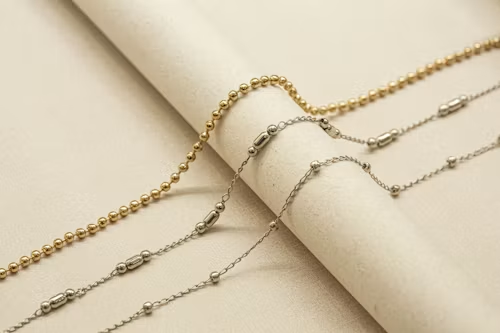
The question of platinum vs gold jewelry investment begins with a misconception: that the more precious metal must automatically be the better investment. In reality, fine jewelry sits at the intersection of metal value, craftsmanship, design, provenance, brand equity, condition and market demand. Gold brings an extraordinary combination of liquidity, recognition and centuries of cultural importance, while platinum offers exceptional purity, density, durability and a distinctive position in modern fine jewelry.
For the discerning collector, the distinction matters. An 18-karat gold Cartier bracelet, a platinum diamond ring from a historic maison and a contemporary gold jewel may all contain precious metal, yet their long-term market behavior can be dramatically different. The metal is only one layer of the equation.
That is why the serious buyer should approach platinum vs gold jewelry investment as a study of the entire object rather than a simple contest between two commodities. The broader Emmanuel Noir [Watches & Jewelry collection] places this question within the larger world of collecting, where craftsmanship, rarity, provenance and enduring desirability can matter as much as the underlying material.
The Investment Question: Metal Value vs. Jewelry Value
Gold and platinum also occupy different positions in the global precious-metals landscape. Gold has an enormous above-ground stock, deep financial markets and exceptionally broad investment demand. The World Gold Council estimates approximately 220,000 tonnes of gold exist above ground, contributing to a market with substantial liquidity and recycling potential. Platinum, by contrast, has a much smaller and more specialized market, with demand influenced not only by jewelry but also by industrial applications.
This creates an important distinction. Gold jewelry can benefit from the global recognition of gold itself, but that does not mean every gold jewel behaves like bullion. Likewise, platinum’s scarcity and high metal content can give a jewel substantial material value, but a platinum setting does not automatically make the finished piece an appreciating collectible.
The sophisticated answer, therefore, is not simply platinum or gold. It is which metal, in which jewel, from which maker, purchased at what price, and held for what purpose.
Quick Reference to Platinum vs Gold Jewelry
| Attribute | Platinum Jewelry | Gold Jewelry |
|---|---|---|
| Typical jewelry purity | Often 95% platinum or higher | Commonly 14K, 18K or 22K depending on market |
| Natural color | Naturally white | Yellow, white, rose and other alloy-dependent colors |
| Density | Higher than gold | Lower than platinum |
| Surface character | Develops a distinctive patina | Can retain polish; some white gold may require replating |
| Scratch behavior | Develops wear through metal displacement | Can lose some metal through abrasion |
| Tarnish | Highly resistant | Gold itself does not tarnish, although alloy composition affects behavior |
| Investment liquidity | Strong precious-metal identity but smaller market | Exceptionally broad global recognition and liquidity |
| Jewelry resale | Highly dependent on maker, design and condition | Highly dependent on karat, weight, maker, design and condition |
| Collector appeal | Particularly strong for fine settings and historic pieces | Extremely broad across eras, maisons and jewelry styles |
| Best understood as | A high-purity precious-metal jewelry material | A globally established precious-metal and jewelry medium |
These differences become especially important when comparing pieces with similar retail prices. A platinum jewel may contain a greater proportion of precious metal by mass, while an 18-karat gold jewel can combine substantial gold content with a broader range of colors, techniques and historic design traditions.
The comparison should therefore begin with specifications rather than assumptions.
Key Specifications: Platinum vs Gold
Platinum Purity and Composition
Platinum jewelry is rarely made from completely pure platinum because pure platinum is too soft for many practical jewelry applications. In the United States, the Federal Trade Commission’s guidance on platinum jewelry purity states that an item described simply as “platinum” should contain at least 95% pure platinum. Lower-purity platinum products must be identified with appropriate markings describing their composition.
A mark such as Pt950 therefore carries meaningful information. It indicates 950 parts platinum per thousand, or 95% platinum. Other platinum alloys may contain palladium, ruthenium, iridium or other metals, and buyers should examine the actual hallmark rather than relying solely on a retailer’s description.
This high precious-metal concentration is one reason platinum has long attracted collectors who value substance as much as appearance. It also contributes to platinum’s characteristic weight in the hand.
Gold Purity and Karat
Gold works differently. Pure gold is designated 24 karat, but its softness makes alloying necessary for many jewelry applications. An 18-karat jewel contains 75% gold, while 14-karat gold contains approximately 58.3% gold. The remaining portion consists of other metals selected to alter hardness, color and working characteristics.
That distinction matters when considering gold jewelry investment. Two pieces that both appear to be “gold jewelry” may contain very different quantities of gold.
A collector evaluating an 18-karat bracelet should therefore examine its hallmark, gross weight, construction and maker before drawing conclusions about intrinsic metal value. The same principle applies to platinum.
Weight and Density
Platinum is substantially denser than gold. A comparable platinum jewel will generally feel heavier in the hand than its gold counterpart, which can become part of the ownership experience itself.
That weight is not merely aesthetic. It affects manufacturing, handling and the amount of material required to produce a finished design. GIA’s research on platinum jewelry explains the metal’s high specific gravity and why a platinum version of the same ring can weigh more than a comparable gold version.
For collectors, however, weight should never be confused with investment quality. A heavier jewel is not automatically a better jewel.
Color and Surface
Gold offers a remarkably broad visual vocabulary. Yellow gold preserves the metal’s traditional warmth, rose gold introduces copper into the alloy, while white gold is created by alloying gold with other metals and is commonly rhodium plated to create a brighter white surface.
Platinum arrives naturally white. It does not depend on rhodium plating to achieve its characteristic color, and its surface gradually develops a patina through wear. GIA describes platinum as a naturally white, dense metal that can develop a distinctive patina over time.
That difference can influence both style and maintenance. A collector who prefers the evolving character of an heirloom surface may appreciate platinum’s patina, while another may prefer the sharper visual polish of maintained gold.
The Historical Background of Gold Jewelry
Gold’s relationship with jewelry predates the modern concept of luxury itself. Archaeological evidence demonstrates that gold was being worked into elaborate ornaments thousands of years ago, with ancient civilizations treating the metal as both decoration and a marker of status.
The Metropolitan Museum of Art records sophisticated gold jewelry from ancient Mesopotamia, including Sumerian pieces dating to approximately 2600–2500 BCE. Gold also played a central role in Minoan, Egyptian, Greek, Roman and later European jewelry traditions.
Its appeal was unusually durable because gold combines rarity, visual warmth, resistance to corrosion and the ability to be worked into exceptionally thin sheets and intricate forms. Ancient goldsmiths exploited precisely those characteristics to create objects that were simultaneously decorative, symbolic and materially valuable.
The historical continuity matters to today’s collector. Gold is not simply a raw material that happens to be fashionable; it is one of the foundational materials of the jewelry tradition itself.
The Rise of Platinum in Fine Jewelry
Platinum has a different history. Although platinum-bearing material was known in South America before European exploration, the metal presented formidable technical challenges because of its very high melting point. GIA’s historical overview of platinum jewelry notes that platinum was used by ancient peoples in the Americas and that technological advances eventually allowed European metalworkers to work with it more effectively in the 18th and 19th centuries.
Its emergence as a major jewelry metal accelerated as goldsmithing technology developed. Platinum’s strength, density, natural whiteness and resistance to tarnish made it particularly suited to intricate settings and fine gemstone work.
By the late 19th and early 20th centuries, platinum had become increasingly important to leading jewelry houses. Its ability to create slender structures while securely supporting gemstones helped establish the visual language of modern fine jewelry.
That heritage remains relevant today. Platinum is often associated with jewels where the setting is intended to serve the stone rather than compete with it.
Why the Investment Question Is More Complicated Than Metal Price
The word “investment” requires particular discipline in jewelry.
A raw ounce of gold has a transparent market price. A finished jewel does not. The retail price includes design, labor, manufacturing, distribution, branding and potentially a significant premium for the maison. Resale value then depends on a different set of factors, including condition, provenance, desirability, market timing and the reputation of the maker.
The World Gold Council distinguishes gold as both an investment asset and a consumer good, noting that gold’s investment characteristics include liquidity and a substantial above-ground stock.
Jewelry ownership introduces another layer. A buyer may acquire a bracelet because it provides personal enjoyment, cultural significance and wearable craftsmanship while also retaining some underlying precious-metal value. That is fundamentally different from purchasing bullion.
For this reason, platinum vs gold jewelry investment should be understood as a hybrid proposition: part precious-metal exposure, part luxury object, and part collectible depending on the piece.
Gold’s Investment Heritage
Gold possesses an unusual advantage: the world already understands what it is.
Its markets span central banks, institutional investors, jewelry consumers, private collectors and retail buyers. The World Gold Council’s 2026 research describes gold as a highly liquid, scarce asset with diverse sources of demand and a substantial role within long-term investment portfolios.
That does not mean gold jewelry provides the same investment characteristics as bullion. Jewelry carries fabrication costs and may trade at a substantial premium or discount to its raw-metal content. Yet gold’s underlying recognition can provide a powerful foundation for resale and recycling.
In 2026, the distinction is particularly important. The World Gold Council reported that high gold prices were weighing on jewelry volumes even as the value of global gold-jewelry demand remained elevated.
The lesson for the collector is simple: gold’s market strength does not eliminate the need for disciplined jewelry selection.
Platinum’s Investment Identity
Platinum has a more specialized investment identity. Unlike gold, its demand structure is heavily influenced by industrial applications as well as jewelry and investment demand.
That creates both opportunity and complexity. Platinum can respond to supply constraints and changes in industrial consumption in ways that differ from gold, but the smaller market can also produce a different liquidity profile.
For jewelry buyers, the more important point is that platinum’s intrinsic material characteristics can strengthen the appeal of particular types of fine jewelry. High-purity platinum is especially suited to pieces where longevity, gemstone security and substantial construction are central to the design.
The metal therefore has a compelling place within a collector’s world, but its investment case should not be reduced to rarity alone.
The First Principle for the Serious Collector
The first principle is perhaps the most important:
Do not buy jewelry simply because its metal is valuable. Buy the object because its total composition makes sense.
That composition includes metal purity, weight, craftsmanship, maker, design, gemstone quality, provenance, condition and acquisition price.
A beautifully made 18-karat gold jewel from an important maison can have stronger collector credentials than an anonymous platinum piece. Conversely, a superb platinum jewel with exceptional craftsmanship and provenance can possess qualities that far exceed its scrap-metal value.
That is the foundation on which the rest of the platinum vs gold jewelry investment analysis must be built.
Design & Craftsmanship
The most revealing difference between platinum and gold appears not on a price chart, but under the jeweler’s loupe.
Fine jewelry is an exercise in proportion, structure and restraint. The metal must support gemstones, withstand years of wear and complement the architecture of the design without becoming visually dominant. Platinum and gold approach that task differently, and those differences can materially influence the character of the finished jewel.
Platinum: Substance Beneath the Surface
Platinum’s natural whiteness gives designers a particularly neutral foundation for diamonds and other colorless gemstones. Rather than introducing a warm reflection, the metal tends to allow the stone to remain the principal visual element.
Its density also gives platinum jewelry a distinctive physical presence. A platinum ring can feel unexpectedly substantial relative to its dimensions, while the metal’s malleability and durability have historically made it valuable for detailed gemstone settings.
One of platinum’s most important technical characteristics is how it behaves when scratched. Instead of necessarily losing material in the same way as softer metals, platinum can displace material across its surface. Over time, this creates the patina associated with well-worn platinum jewelry.
For an heirloom piece, that distinction has philosophical significance. The surface records ownership without necessarily diminishing the underlying object in the same manner as repeated abrasion can affect other metals.
Gold: A Broader Design Language
Gold offers a different kind of creative freedom.
Because it can be alloyed into different karat levels and colors, gold gives jewelry houses a much wider palette. Yellow, rose and white gold can produce dramatically different relationships between metal, gemstone and skin.
That versatility has made gold one of the defining materials of fine jewelry across cultures and centuries. Contemporary designers can use its color as an architectural element rather than treating it simply as a setting material.
An 18-karat yellow-gold bracelet, for example, can project warmth and historical continuity. Rose gold can soften an otherwise architectural design. White gold can provide a visual language closer to platinum while retaining the broader design traditions associated with gold.
For the collector, this diversity matters because gold jewelry investment is not one homogeneous category. A sculptural 18-karat gold jewel from an important maison occupies a fundamentally different market position from a generic gold chain whose principal value rests in its weight.
Craftsmanship Is the First Filter
The metal should therefore be considered after craftsmanship, not before it.
Look closely at:
- the precision of gemstone settings;
- symmetry and proportion;
- hinge and clasp construction;
- finishing and polishing;
- hallmark clarity;
- engraving;
- soldering and joining;
- stone alignment;
- structural integrity;
- and evidence of previous alteration.
These details separate a serious jewel from an object that merely contains precious metal.
The collector should also distinguish between wear and damage. A naturally developed platinum patina may be desirable, while a bent shank, weakened setting or poorly executed repair may materially affect the value of a jewel. Likewise, minor surface scratches on gold are fundamentally different from deep deformation or significant metal loss.
Gemstone Setting: Where Platinum Can Become Especially Compelling
The relationship between metal and gemstone becomes particularly important in diamond jewelry.
Platinum’s strength and density have historically made it an attractive material for intricate settings, especially where a designer wants delicate-looking structures surrounding important stones. Its natural white appearance also avoids introducing the yellow reflection that can sometimes appear around diamonds when warmer metals are used.
That does not mean platinum automatically produces a superior setting. The quality of the craftsmanship remains decisive.
An expertly constructed gold setting can be extraordinarily durable and aesthetically sophisticated. The choice between the two is ultimately architectural: what visual effect does the designer want, how will the jewel be worn, and what kind of aging is desirable?
For collectors comparing diamond pieces, metal should therefore be considered alongside cut, color, clarity, carat weight, provenance and setting quality, rather than evaluated independently.
Hallmarks, Maker’s Marks and Provenance
A serious acquisition begins with identification.
Hallmarks can reveal precious-metal fineness, while maker’s marks can establish the relationship between a jewel and its manufacturer or designer. Date letters, assay marks and import marks can sometimes provide additional historical information depending on the jurisdiction.
For older jewelry, documentation can be particularly valuable. Original receipts, certificates, workshop records, signed boxes and historical photographs can help establish provenance.
This is one reason a collector should never reduce platinum vs gold jewelry investment to a comparison of spot prices.
Imagine two rings of similar weight.
One is an unsigned contemporary ring with little documentation.
The other is a historically significant jewel from a recognized maison, accompanied by documentation and an established ownership history.
Their metal content may be similar. Their collector profiles are not.
Performance & Ownership
Durability in Daily Wear
Both platinum and gold can serve exceptionally well in fine jewelry, but they age differently.
Platinum’s density and durability make it particularly attractive for pieces intended for sustained wear. Its surface develops a patina rather than requiring the same type of rhodium-plating cycle associated with many white-gold jewels.
Gold’s performance depends considerably on karat and alloy composition. Higher-karat gold contains more pure gold and is correspondingly softer, while lower-karat alloys introduce more non-gold metals and can provide greater hardness.
This is why the question platinum vs gold jewelry investment should never be separated from intended use.
A substantial platinum engagement ring worn every day presents a different ownership proposition from a delicate 22-karat gold bracelet intended primarily for formal occasions.
Maintenance and Restoration
Maintenance is part of the economics of fine jewelry.
Platinum can be polished to restore a brighter surface, although some collectors deliberately retain its patina because it records the history of ownership. Gold can also be polished, but repeated aggressive polishing may gradually alter edges, engraving and design details by removing material.
White gold introduces an additional consideration. Because white-gold alloys can retain a warmer underlying tone, many pieces receive rhodium plating for a brighter white appearance. That surface treatment can wear over time and may require renewal.
For a serious collector, the correct maintenance philosophy is therefore preservation rather than perpetual perfection.
A jewel should not be repeatedly refinished simply to make it appear new. Excessive polishing can erase precisely the details that establish authenticity and originality.
Platinum vs Gold for Everyday Jewelry
| Ownership consideration | Platinum | Gold |
|---|---|---|
| Daily wear | Particularly well suited to substantial everyday pieces | Excellent, depending on karat and construction |
| Surface aging | Develops characteristic patina | Can show scratches and polishing marks |
| White appearance | Naturally white | White gold generally requires alloying and often rhodium plating |
| Color choices | Naturally white | Yellow, rose and white varieties |
| Weight | Noticeably dense | Generally lighter at comparable dimensions |
| Maintenance philosophy | Patina can be embraced or polished | Surface can be polished; white gold may require replating |
| Long-term suitability | Strong for heirloom settings | Extremely versatile across jewelry categories |
Neither metal should be treated as maintenance-free. Fine jewelry remains a precision object, and periodic professional inspection is appropriate for pieces containing valuable gemstones.
The Hidden Economics of Metal Loss
One of the most misunderstood issues in gold jewelry investment is the difference between market value and recoverable metal.
A piece of jewelry contains labor and design value in addition to precious metal. If the jewel is later sold to a refiner, however, the buyer may primarily evaluate its recoverable metal content.
That creates a significant gap between:
retail price → secondary-market value → auction value → melt value.
These are four different concepts.
The same principle applies to platinum.
A beautifully constructed platinum jewel may contain a considerable quantity of valuable metal, but its resale price can still depend heavily on whether the market recognizes the designer, style, gemstone and provenance.
This is why purchasing at an appropriate entry price is so important.
Market Position & Competition
Gold’s Global Market Advantage
Gold occupies an unusually powerful position because it has both cultural and financial recognition.
Its global market encompasses jewelry, investment products, central-bank holdings, industrial applications and private ownership. The World Gold Council describes gold as a highly liquid market with diverse sources of demand, while its 2026 research continues to identify investment demand as an important component of the global gold market.
That depth provides an important foundation for jewelry resale.
But the collector must resist one temptation: assuming rising gold prices guarantee rising jewelry prices.
They do not.
If gold prices increase, the underlying metal value of a gold jewel may increase as well. Yet the secondary market can apply discounts based on workmanship, condition, fashion, brand recognition and transaction costs.
The result is a more nuanced equation:
Gold price strength can support intrinsic value without guaranteeing collectible appreciation.
Platinum’s Scarcity and Specialized Market
Platinum occupies a smaller and more specialized market.
Its supply is geographically concentrated, while demand extends beyond jewelry into industrial applications. The metal’s investment characteristics therefore differ from those of gold.
For the jewelry collector, platinum’s smaller market can create an interesting paradox.
Its physical rarity and high purity can enhance its appeal, yet gold’s far greater market recognition can make gold easier for ordinary buyers and sellers to understand.
This is particularly relevant when considering liquidity.
A collector purchasing a platinum jewel should therefore distinguish between metal scarcity and market liquidity. They are related concepts, but they are not interchangeable.
Platinum vs Gold Jewelry Investment: What Actually Drives Resale Value?
For a finished jewel, the following hierarchy is often more useful than simply asking which metal is more valuable:
1. Maker
The reputation of the maison or designer can dramatically influence secondary-market demand.
A signed Cartier, Van Cleef & Arpels, Bulgari, Tiffany & Co. or another recognized house may carry a collector premium that has little relationship to its scrap value.
2. Design
Timeless designs tend to have a different resale profile from pieces dependent on short-lived fashion cycles.
3. Provenance
A documented history can transform an otherwise ordinary jewel into a more significant object.
4. Gemstone Quality
Exceptional diamonds, Kashmir sapphires, Colombian emeralds, Burmese rubies and rare natural colored stones can dominate the value equation.
5. Condition
Originality and structural integrity matter. A jewel that has been heavily modified or repeatedly polished may lose some collector appeal.
6. Metal Purity and Weight
These remain important because they establish a floor of intrinsic material value, but they rarely tell the complete story.
7. Acquisition Price
Perhaps the most overlooked factor is what the collector paid.
A magnificent jewel purchased substantially above its realistic secondary-market level may remain difficult to resell profitably.
A less fashionable piece acquired intelligently can have a more favorable downside profile.
The Maison Effect
Luxury jewelry demonstrates a phenomenon familiar to watch collectors: brand equity can become part of the object itself.
A signed jewel from an important house can possess a recognizable design language, documented production history and established secondary-market audience.
That distinction is particularly relevant to platinum and gold because both metals are used by major maisons.
A platinum Cartier jewel and an unsigned platinum ring may contain similar metal but inhabit different markets.
Likewise, an 18-karat gold jewel signed by a major maison can command a significant premium over an otherwise comparable unsigned object.
This is why collectors should study the house before studying the metal alone.
For readers already building expertise across luxury collecting, the same principle appears in the watch market: understanding how luxury watch collecting works provides a useful framework for understanding why maker, provenance, condition and market recognition can matter beyond raw material value.
Platinum, Gold and the Collector’s Risk Profile
The two metals also create different psychological ownership experiences.
Gold communicates history through color, cultural recognition and extraordinary versatility. Platinum communicates substance through weight, purity and a naturally white architectural character.
For the collector, this can influence which pieces remain desirable decades later.
Gold has the advantage of enormous stylistic breadth. It can appear ancient, Art Deco, mid-century, contemporary or deliberately futuristic without losing its identity.
Platinum has a more specific visual character. Its cool neutrality works particularly well with diamonds and formal architectural jewelry, and its association with important 20th-century jewelry periods gives it strong historical credentials.
Neither characteristic establishes investment performance on its own.
Instead, they create different territories within the broader fine-jewelry market.
Competitive Alternatives: Beyond Platinum and Gold
A sophisticated platinum vs gold jewelry investment strategy should also acknowledge that collectors have other choices.
Silver occupies a much lower precious-metal price tier but can be important in historical and design jewelry.
Palladium has also been used in jewelry and shares some characteristics with platinum, although its market identity is considerably less established among luxury-jewelry consumers.
More importantly, gemstones can sometimes dominate the investment equation.
A rare natural Kashmir sapphire, an exceptional Colombian emerald or a highly sought-after natural colored diamond may command a premium that overwhelms differences in the underlying setting metal.
This is why the metal question should always remain subordinate to the complete jewel.
Where Platinum Has the Strongest Case
Platinum becomes particularly compelling when the collector values:
- high precious-metal purity;
- substantial physical weight;
- naturally white metal;
- long-term wear;
- sophisticated diamond settings;
- heirloom construction;
- and a distinctive patina that develops through ownership.
It is particularly logical for collectors seeking a jewel in which the metal’s technical properties are central to the design.
Where Gold Has the Strongest Case
Gold becomes particularly compelling when the collector values:
- broad historical relevance;
- multiple color options;
- extensive design variety;
- global recognition;
- strong underlying precious-metal markets;
- established secondary-market familiarity;
- and versatility across formal and everyday jewelry.
Its greatest strength may ultimately be its breadth.
Gold can occupy almost every corner of the jewelry spectrum, from ancient objects and ceremonial pieces to contemporary sculptural jewelry and signed maison creations.
The Critical Distinction: Jewelry Investment vs Precious-Metal Investment
The distinction deserves its own emphasis.
If the primary objective is exposure to the price of the metal, bullion may provide a cleaner instrument than jewelry because fabrication and retail premiums are not embedded in the same way.
If the objective is ownership of an exceptional object that combines precious metal, craftsmanship, design and cultural significance, jewelry becomes much more interesting.
This is where platinum vs gold jewelry investment becomes a collector’s question rather than a commodities question.
A serious buyer should ask:
Am I buying metal, jewelry, or a collectible?
The answer can be all three, but the proportions matter.
A generic 14-karat gold chain is primarily a wearable precious-metal product.
A signed platinum Art Deco jewel with documented provenance and exceptional stones can be a collectible whose metal is only one component of its value.
Between those extremes lies the enormous world of fine jewelry.
The 2026 Market Perspective
The current market reinforces the importance of separating metal economics from jewelry economics.
Gold has entered 2026 with significant investor attention and elevated prices, while the jewelry sector has had to contend with the affordability consequences of those prices. The World Gold Council’s 2026 gold-jewelry market research highlights the tension between strong gold value and weaker jewelry volumes in several markets.
Platinum operates under a different demand structure, with industrial consumption playing a much larger role in the overall market.
For collectors, the implication is not to chase whichever metal has recently performed better.
Instead, the disciplined approach is to evaluate the jewel at three levels:
Material value.
What is the metal worth?
Object value.
What are the craftsmanship, design and gemstones worth?
Collector value.
What makes this particular object desirable to someone else five, ten or twenty years from now?
That third question is where sophisticated jewelry collecting begins.
Buying Considerations
The decision between platinum and gold should begin long before the point of purchase.
For a collector, the metal is only the opening question. The more consequential questions concern the jewel itself: who made it, when it was made, how it has been maintained, whether the stones are documented, how much precious metal it contains, and whether the asking price makes sense against comparable pieces.
A sophisticated approach to platinum vs gold jewelry investment therefore requires two separate valuations: the value of the material and the value of the finished object.
1. Establish the Metal Purity
Begin with the hallmark.
For platinum, look for marks such as Pt950 or other legally recognized fineness indications appropriate to the jurisdiction. In the United States, jewelry described simply as platinum must generally contain at least 95% platinum under Federal Trade Commission guidance.
For gold, determine whether the piece is 14K, 18K, 22K or another recognized fineness. An 18K jewel contains approximately 75% gold, while 14K contains approximately 58.3%.
Never allow a retailer’s description to substitute for examination of the actual hallmark.
A piece described as “gold” tells you very little without knowing its karat, weight and construction.
2. Calculate the Approximate Intrinsic Metal Value
A useful collector discipline is to establish a rough material-value floor before considering design premiums.
For gold:
Approximate gold content = gross weight × gold purity
For an 18K piece weighing 40 grams:
40g × 75% = approximately 30g of pure gold
The calculation becomes more complicated when gemstones, mechanical components, hollow construction or non-gold elements are present. Gross weight should therefore never be treated as pure metal weight.
The same principle applies to platinum.
A Pt950 jewel weighing 40 grams does not contain 40 grams of pure platinum; approximately 38 grams would correspond to 95% platinum content before accounting for stones or other components.
These calculations are not appraisals. They are simply a disciplined starting point.
3. Separate Retail Price From Collector Value
The price displayed in a boutique is not necessarily the price the secondary market will recognize.
Retail pricing can incorporate:
- design;
- craftsmanship;
- brand equity;
- distribution;
- marketing;
- gemstones;
- labor;
- taxes and duties;
- and the commercial positioning of the maison.
Secondary-market buyers may evaluate the same object through a very different lens.
For that reason, the collector should research comparable sales rather than relying exclusively on the original retail price.
Auction houses can be particularly useful for studying market evidence because their published results provide historical reference points for specific categories of jewelry.
The important word is comparable.
A platinum diamond ring from a celebrated maison should not be compared with a generic platinum ring simply because both are platinum.
4. Evaluate the Maker Before the Metal
When two pieces have similar precious-metal content, the maker can become decisive.
The collector should investigate:
- signature;
- hallmark;
- production period;
- model or collection;
- known design language;
- documented auction history;
- provenance;
- and comparable examples.
Recognized maisons can create a market identity that survives beyond the intrinsic material value.
That is one of the reasons an intelligently purchased signed jewel can have a very different long-term profile from an anonymous piece containing the same quantity of metal.
The same principle applies across luxury collecting: identity can become part of value.
5. Inspect Condition With Restraint
Condition is more complicated than “new versus used.”
A vintage jewel may possess a surface that reflects decades of ownership without being materially compromised.
Conversely, a seemingly pristine jewel may have undergone extensive restoration.
Look for:
- thinning around edges;
- weakened prongs;
- replaced stones;
- repaired fractures;
- altered dimensions;
- excessive polishing;
- worn hallmarks;
- solder marks;
- modified clasps;
- missing original components;
- and evidence of resizing.
For important pieces, professional examination is appropriate before committing significant capital.
The objective is not merely to determine whether the jewel looks beautiful.
It is to determine whether the jewel remains substantially original.
6. Examine Gemstones Independently
A precious-metal analysis becomes almost irrelevant if the jewel contains a gemstone whose value dominates the object.
This is particularly important with diamonds and rare colored stones.
For diamonds, examine the grading report, proportions, fluorescence where relevant and whether the stone matches the documentation.
For colored gemstones, provenance can become particularly significant. A natural Kashmir sapphire, for example, occupies a very different market from an ordinary blue sapphire regardless of whether both are set in platinum.
Readers exploring the wider gemstone hierarchy can continue into Emmanuel Noir’s most valuable precious gemstones guide for a broader examination of rarity, provenance and collector demand.
7. Consider the Jewel’s Intended Use
A collector purchasing an engagement ring, an heirloom bracelet and an investment-oriented signed jewel may make three completely different decisions.
Daily Wear
Platinum can be compelling for substantial pieces intended for frequent use, while gold offers enormous flexibility across karat and color.
Formal Jewelry
Either metal can perform exceptionally well, depending on the design and stones.
Heirloom Jewelry
The strongest candidate is generally the piece whose construction, provenance and design are most likely to remain meaningful across generations.
Collector Jewelry
Maker, rarity, provenance, originality and market history become increasingly important.
The metal remains relevant, but it moves down the hierarchy.
8. Consider Liquidity
Liquidity is one of the most important distinctions in any discussion of platinum vs gold jewelry investment.
Gold has an exceptionally deep global market. Buyers, refiners, jewelers and investors understand its underlying material value.
Platinum also has an established global market, but it is smaller and more specialized.
Jewelry introduces another layer of complexity because the finished object is not simply traded at the spot price of its metal.
A collector may therefore encounter four different exit routes:
- private sale;
- specialist dealer;
- auction;
- metal recovery.
Each route can produce a different outcome.
The most important point is that liquidity of the metal does not equal liquidity of the jewel.
9. Study the Acquisition Premium
A sophisticated buyer should calculate the premium being paid over estimated intrinsic metal value.
Suppose two jewels each contain a similar quantity of precious metal.
One sells for $8,000 and the other for $25,000.
The difference requires explanation.
Perhaps the second is signed by a major maison. Perhaps it contains exceptional diamonds. Perhaps it is a historically important design. Perhaps its provenance is unusually strong.
If none of those explanations exist, the buyer should question the premium.
This is where disciplined research protects collectors from paying primarily for marketing.
10. Consider Insurance and Documentation
Significant jewelry should be documented.
Keep:
- original receipts;
- certificates;
- independent appraisals;
- gemstone reports;
- photographs;
- hallmark photographs;
- service records;
- provenance documentation;
- and, where applicable, auction records.
Documentation can simplify insurance, future resale and inheritance.
It can also protect the story of the object.
For a luxury collector, that story can become part of the asset. When researching a new acquisition, exploring Blue Nile’s fine-jewelry collection can provide a useful reference point for comparing gemstone, setting and metal combinations before making a purchase.
11. Buy the Jewel, Not the Headline
Precious-metal markets generate headlines.
Gold rises. Platinum falls. Platinum supply tightens. Jewelry demand changes. Investor flows move.
Those developments matter.
But a collector purchasing a jewel should not allow a single market headline to determine a multi-year acquisition.
The better question is:
Does this particular object deserve to be owned?
If the answer depends entirely on what the metal price does next month, the buyer may be approaching the purchase as a commodity transaction rather than a luxury-jewelry acquisition.
Platinum vs Gold Jewelry Investment: Comparison Table
| Factor | Platinum | Gold |
|---|---|---|
| Typical high-purity jewelry standard | Pt950 is common | 18K is common in fine jewelry |
| Pure-metal content in common luxury jewelry | Very high | Varies substantially by karat |
| Natural color | White | Naturally yellow; can be alloyed into other colors |
| Density | Very high | High, but lower than platinum |
| Surface character | Develops patina | Scratches and can be polished |
| White-metal maintenance | No rhodium plating required for color | White gold may require rhodium replating |
| Global market familiarity | Strong but specialized | Extremely broad |
| Jewelry design range | Strong, particularly for white-metal settings | Exceptionally broad |
| Intrinsic metal recognition | High | Very high |
| Collector value | Strong when maker, design and provenance align | Strong across a particularly broad range of styles |
| Gemstone setting | Particularly associated with diamond and fine gemstone settings | Highly versatile |
| Color versatility | Limited compared with gold | Yellow, rose and white varieties |
| Weight | Heavier at comparable dimensions | Generally lighter |
| Resale determinants | Maker, condition, stones, provenance, weight and market | Maker, karat, condition, stones, provenance, weight and market |
| Best suited to | Collectors valuing purity, density and white-metal construction | Collectors valuing versatility, heritage and broad market recognition |
Pros & Cons
Platinum Jewelry — Advantages
High Precious-Metal Purity
Pt950 jewelry contains a very high proportion of platinum, making the distinction between the finished jewel and its underlying material particularly meaningful.
Distinctive Weight
Platinum’s density gives substantial pieces an unmistakable physical presence.
Naturally White
Its natural white color makes platinum especially effective with diamonds and colorless gemstones.
Strong Heirloom Appeal
Its durability and long history in important fine jewelry make it a compelling material for pieces intended to pass between generations.
Characteristic Patina
For collectors who appreciate objects that reveal their history, platinum’s evolving surface can be part of its charm.
Platinum Jewelry — Disadvantages
Higher Material Cost
The quantity and purity of platinum can contribute significantly to the price of a finished jewel.
Smaller Market
Platinum does not have gold’s enormous global consumer and investment ecosystem.
Limited Color Range
Collectors seeking yellow or rose-metal aesthetics will naturally find gold more versatile.
Heavy Construction
The same density that makes platinum feel substantial can make larger pieces noticeably heavy.
Metal Alone Does Not Guarantee Appreciation
A platinum jewel without strong design, craftsmanship, provenance or market recognition can still depreciate.
Gold Jewelry — Advantages
Exceptional Versatility
Few jewelry materials can move as naturally between ancient symbolism, Art Deco geometry, contemporary sculpture and everyday luxury.
Multiple Colors
Yellow, rose and white gold allow designers to create radically different visual identities.
Deep Global Recognition
Gold has extraordinary cultural and financial recognition across markets.
Broad Collector Landscape
The sheer number of historic gold jewels, maisons, designers and styles creates an enormous field for collecting.
Strong Intrinsic Recognition
Even an unsigned gold jewel retains an identifiable precious-metal component, provided its purity and weight are established.
Gold Jewelry — Disadvantages
Purity Varies
“Gold jewelry” can describe pieces with dramatically different gold content.
White Gold May Require Replating
Many white-gold pieces depend on rhodium plating to maintain their brightest white appearance.
Softer High-Karat Alloys
Higher-karat gold can be more susceptible to deformation and surface wear.
Retail Premiums Can Be Significant
A designer jewel may sell for many times the recoverable metal value.
Metal Price Does Not Guarantee Resale Price
Rising gold prices can strengthen intrinsic metal value without ensuring equivalent appreciation in the finished jewel.
Who Should Buy Platinum Jewelry?
Platinum is particularly suited to the collector who values:
- high purity;
- substantial weight;
- naturally white metal;
- diamond-centric design;
- heirloom construction;
- understated sophistication;
- and the evolving character of a patinated surface.
It can be especially compelling when the jewel is signed by an important maison and accompanied by strong documentation.
For such a buyer, platinum’s appeal is not merely financial.
It is tactile.
It is architectural.
It is permanent in character.
Who Should Buy Gold Jewelry?
Gold is particularly suited to the collector who values:
- historical continuity;
- design diversity;
- yellow, rose or white-metal aesthetics;
- global market familiarity;
- signed maison jewelry;
- exceptional craftsmanship;
- and a broad collecting universe.
Gold can also be attractive to buyers who want their jewelry collection to span radically different eras and styles.
Its versatility is difficult to match.
Who Should Skip Platinum?
A buyer may wish to look beyond platinum when:
- color versatility is a primary requirement;
- the jewel is being purchased mainly for its precious-metal investment characteristics;
- the additional weight is undesirable;
- or a comparable gold piece offers substantially stronger design, provenance or maker credentials.
There is little reason to pay a platinum premium simply because platinum sounds more exclusive.
The object still has to justify itself.
Who Should Skip Gold?
Gold may be less appropriate when:
- the buyer specifically wants naturally white metal;
- the piece will be worn intensively and platinum’s characteristics are preferred;
- the design relies heavily on the neutral appearance of the setting;
- or the collector wants a high-purity platinum construction for a specific heirloom jewel.
Again, the decision should follow the object rather than the headline.
The Collector’s Decision Framework
For a significant acquisition, Emmanuel Noir recommends evaluating the jewel through seven questions:
1. What is the metal?
Confirm purity, hallmark and approximate precious-metal content.
2. Who made it?
Establish the maison, designer, workshop and production period.
3. What makes the design important?
Determine whether the piece represents a recognizable design language, historic period or collectible collection.
4. What stones are present?
Verify identity, quality, treatment and documentation.
5. What is the provenance?
Establish ownership history and supporting records where possible.
6. What condition is it in?
Distinguish honest age from structural deterioration or excessive restoration.
7. What am I paying?
Compare the asking price with metal value, comparable secondary-market examples and the qualitative attributes of the specific jewel.
Only after answering all seven should the collector decide whether the acquisition makes sense.
A Final Buying Principle
The most intelligent answer to platinum vs gold jewelry investment is rarely found in a metal-price chart.
It is found in the object.
An exceptional gold jewel can outperform the collector expectations of an ordinary platinum jewel because its design, maker, provenance and desirability are stronger.
Likewise, an exceptional platinum jewel can transcend its material value because its craftsmanship and historical importance make it desirable independently of the platinum market.
The collector’s objective is therefore not to identify the universally superior metal.
It is to identify the superior acquisition for the intended purpose.
That distinction separates informed collecting from speculation.
Frequently Asked Questions
Is platinum better than gold for jewelry investment?
Neither metal is universally better. Platinum offers high purity, substantial density, naturally white color and strong suitability for certain fine-jewelry settings. Gold offers broader market recognition, greater color versatility and an exceptionally deep history in jewelry and precious-metals markets.
For platinum vs gold jewelry investment, the more important question is whether the individual jewel has qualities that can sustain demand beyond its raw-metal value.
Does platinum jewelry hold its value better than gold?
Not automatically.
Platinum’s high purity and intrinsic material value can provide an important foundation, but resale value depends on far more than metal content. Maker, design, gemstones, provenance, condition, rarity and acquisition price can all materially affect the secondary market.
Likewise, rising gold prices do not guarantee that a finished gold jewel will appreciate by the same percentage.
Is gold jewelry a good investment?
Gold jewelry can combine precious-metal exposure with craftsmanship, design and personal utility, but it should not be treated as equivalent to bullion.
A significant portion of a retail jewelry price may represent design, labor, branding and distribution rather than recoverable gold.
For buyers primarily seeking exposure to the gold price, bullion and other financial instruments can provide a different investment proposition. For collectors seeking a wearable luxury object, exceptional gold jewelry can offer a broader ownership experience.
Is platinum more valuable than gold?
The answer depends on what “valuable” means.
Platinum can command a high value per unit of weight and is commonly used in very high-purity jewelry. Gold, however, has a much larger global market and a deeply established investment ecosystem.
Market prices also change over time, so a static statement that one metal is permanently more valuable than the other would be misleading.
The relevant question for a jewelry buyer is not simply which metal has the higher spot price, but how the metal contributes to the value of the specific finished jewel.
Why is platinum jewelry often heavier than gold jewelry?
Platinum is denser than gold. A platinum version of a comparable design can therefore feel noticeably heavier in the hand.
That weight can contribute to the distinctive ownership experience of platinum jewelry, although weight itself should never be interpreted as proof of superior investment value.
Does platinum scratch more easily than gold?
Platinum can develop visible surface marks with wear, but its behavior differs from gold.
Platinum tends to displace metal at the surface rather than losing the same quantity of material through every scratch. This contributes to the characteristic patina associated with older platinum jewelry.
Gold alloys behave differently depending on their karat and composition.
Does platinum tarnish?
Platinum is highly resistant to tarnishing and corrosion under ordinary jewelry-wearing conditions. Its surface can develop a grayish patina through normal wear, which many collectors regard as part of platinum’s character.
The choice between maintaining a bright polish and allowing a natural patina is ultimately aesthetic.
Does white gold need more maintenance than platinum?
Often, yes.
Many white-gold jewels are rhodium plated to achieve a bright white finish. That surface can wear and may eventually require replating.
Platinum is naturally white and does not require rhodium plating to create its characteristic color.
Maintenance requirements still depend on the individual jewel, its construction and how frequently it is worn.
Is 18K gold better than 14K gold for investment?
Higher karat means a greater proportion of gold, but that alone does not determine the investment quality of the finished jewel.
An 18K jewel contains approximately 75% gold, while 14K contains approximately 58.3%. However, a well-designed, signed 14K jewel with strong collector demand can have greater market value than an ordinary 18K piece.
For collectors, maker + design + provenance + condition + gemstone quality + acquisition price should be considered alongside karat.
Which is better for diamond jewelry: platinum or gold?
Both can be excellent.
Platinum’s naturally white appearance and high purity make it particularly attractive for diamond settings, while white gold can create a similar visual effect and yellow or rose gold can deliberately introduce contrast.
The quality of the setting is ultimately more important than choosing a metal based solely on reputation.
Does platinum jewelry appreciate?
Some platinum jewelry can appreciate, particularly when it combines important design, recognized authorship, rarity, exceptional gemstones, provenance and strong collector demand.
But platinum content alone does not create appreciation.
The same principle applies to gold.
What makes gold jewelry collectible?
Collectibility can emerge from several factors:
- important maker;
- distinctive design;
- historical period;
- rarity;
- craftsmanship;
- gemstone quality;
- provenance;
- originality;
- condition;
- and demonstrated secondary-market demand.
The metal provides the foundation, but the object creates the story.
Should I buy platinum or gold for an heirloom?
The answer should depend on the design and the person who will inherit it.
Platinum can be compelling for a substantial white-metal heirloom, particularly when diamonds or other colorless stones are central to the design.
Gold may be preferable when the heirloom requires warmth, color versatility or a design language rooted in traditional goldsmithing.
An heirloom should ultimately be chosen for its ability to remain meaningful, not merely for the metal from which it was made.
Conclusion: The Real Meaning of Platinum vs Gold Jewelry Investment
The debate between platinum and gold becomes much clearer once the collector stops treating jewelry as a commodity.
Gold possesses extraordinary advantages: global recognition, immense historical depth, remarkable design versatility and a deeply established precious-metals market.
Platinum answers with a different set of qualities: high purity, density, naturally white color, durability and a distinctive relationship with diamonds and fine gemstone settings.
But neither metal can carry an ordinary jewel into the realm of exceptional collecting by itself.
The true value of a significant jewel is layered.
Metal provides substance.
Craftsmanship provides quality.
Design provides identity.
Provenance provides context.
Rarity provides scarcity.
Demand provides the market.
And acquisition discipline provides the margin of safety.
This is why the most intelligent approach to platinum vs gold jewelry investment is not to predict which metal will rise more dramatically.
It is to identify which individual jewel possesses enough enduring qualities to remain desirable when fashion changes, markets fluctuate and the original retail presentation has long disappeared.
For readers developing a broader precious-metals strategy, Emmanuel Noir’s gold jewelry investment guide provides a complementary examination of gold as a jewelry and collecting category.
Emmanuel Noir Verdict
There is no universal winner in platinum vs gold jewelry investment.
There is, however, a clear hierarchy of thinking.
Choose platinum when its purity, density, naturally white character, construction and gemstone-setting qualities genuinely improve the jewel — particularly when the piece has strong maison credentials, provenance and long-term design relevance.
Choose gold when its historical character, color, craftsmanship, design versatility and market recognition make it the more compelling object — particularly when the jewel comes from a respected maker and carries meaningful collector attributes.
And when the question becomes purely about investment exposure to the underlying metal, step outside the jewelry category altogether and evaluate bullion or other investment instruments separately.
The collector who understands that distinction has already moved beyond the simplest version of the platinum-versus-gold debate.
The goal is not to own the “winning” metal.
The goal is to own the right object.
That is the more durable principle.
“The finest jewel is not defined by the metal beneath the stone, but by everything that makes the object worth preserving after the metal price has been forgotten.”
— Emmanuel Noir
Affiliate Disclosure
Some links in this article may be affiliate links, meaning Emmanuel Noir may earn a commission if you make a qualifying purchase, at no additional cost to you. Our editorial analysis, comparisons and recommendations remain independent, and we only reference partners when they are genuinely relevant to the buying decision.