
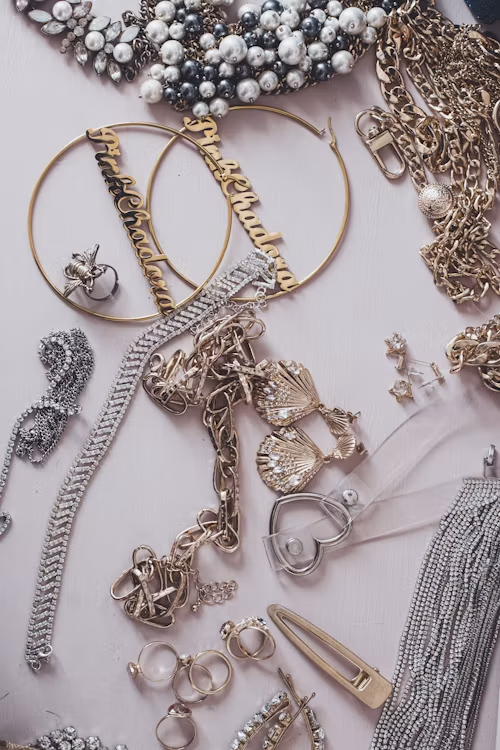
How to build a fine jewelry collection is not simply a matter of acquiring beautiful pieces. The strongest collections emerge from intention: a coherent point of view, disciplined buying, respect for craftsmanship, and an understanding of how materials, provenance, design and wearability interact over time. For readers exploring the wider world of Watches & Jewelry, the same principle applies here: the objective is not accumulation, but curation.
A thoughtfully assembled collection can contain a sculptural gold bracelet, a restrained diamond ring, an heirloom-worthy necklace, an important signed jewel and perhaps a rare coloured gemstone piece. These objects may serve entirely different purposes, yet together they can express a consistent aesthetic and a personal relationship with design. The finest collections feel edited rather than accumulated.
That distinction matters because fine jewelry occupies an unusual position among luxury acquisitions. Unlike many collectible objects, jewelry can be worn, lived with and eventually passed between generations. Its value may therefore sit at the intersection of intrinsic material worth, artistic execution, cultural recognition, rarity and emotional significance.
This how to build a fine jewelry collection guide approaches the subject from that collector’s perspective. It examines where to begin, which categories deserve early attention, how to establish a sensible acquisition strategy, how to judge craftsmanship and provenance, when branded jewelry deserves a premium, and how to avoid building a collection around pieces that merely happen to be expensive.
How to Build a Fine Jewelry Collection: The Collector’s Framework
The first principle is simple: do not begin with individual pieces. Begin with the collection you want those pieces to create.
A collection becomes meaningful when its components have relationships with one another. Those relationships might come from metal, colour, period, maison, gemstone, design language or historical significance. A collector drawn to architectural forms, for example, might build around sculptural gold and geometric diamonds. Another may prefer the romance of antique jewelry, natural pearls and old-cut stones. Neither approach is inherently superior. What matters is coherence.
The second principle is to separate fine jewelry ownership from speculative investing. Jewelry can preserve wealth and, in selected cases, appreciate significantly, but no piece should be purchased on the assumption that appreciation is guaranteed. Retail pricing, craftsmanship, brand premiums, auction demand, condition, provenance and market liquidity can all affect eventual resale.
The third principle is patience. A collection built slowly has an advantage: every acquisition can be judged against what already exists. That creates selectivity. It also reduces the temptation to purchase a piece simply because it is available today.
The Difference Between Jewelry Ownership and Collecting
Owning fine jewelry and collecting fine jewelry are related but distinct activities.
Ownership begins with personal attraction. A ring may appeal because of its proportions, a necklace because of its movement, or a pair of earrings because they transform an evening wardrobe. Collecting introduces another layer of thought. The buyer begins asking why the piece matters, where it sits within a broader design history, how difficult it is to replace and whether it contributes something distinctive to the collection.
That does not mean every acquisition must become an investment. In fact, forcing every jewel into an investment framework can strip away much of what makes jewelry compelling. The most intelligent collections often contain a mixture of personal pieces, historically significant works, everyday staples and more ambitious acquisitions.
Build Around a Point of View
Before spending heavily, define the visual language you want the collection to communicate.
Consider whether your taste leans toward yellow gold or platinum; diamonds or coloured stones; modern minimalism or historical ornament; signed maisons or independent designers; understated pieces or dramatic statement jewelry. You do not need to answer every question immediately, but the exercise exposes patterns in your taste.
This is where restraint becomes powerful. If five pieces already occupy the same visual territory, the sixth should have a reason to exist. Perhaps it introduces an exceptional stone, an important maker or a different period. Otherwise, the collection risks becoming repetitive rather than sophisticated.
Quick Reference: Building a Fine Jewelry Collection
| Element | Collector Question |
|---|---|
| Purpose | Is the piece for daily wear, formal occasions, collecting or legacy? |
| Metal | What purity, alloy and construction does it have? |
| Gemstones | Are stones natural, laboratory-grown, treated or imitation? |
| Craftsmanship | How well executed are the setting, finishing and construction? |
| Provenance | Is there credible documentation or ownership history? |
| Design | Does the piece possess a distinctive and enduring aesthetic? |
| Maker | Is the designer, maison or workshop recognised in the relevant market? |
| Condition | Has the piece been preserved, repaired, altered or heavily worn? |
| Rarity | How difficult is an equivalent example to find? |
| Price | Does the asking price make sense relative to comparable pieces? |
| Wearability | Will the jewel actually be worn and appreciated? |
| Collection Fit | Does it add something the existing collection lacks? |
Key Specifications Every Collector Should Record
A serious collection should eventually have its own private catalogue. This need not be elaborate. The objective is to create a reliable record of what was acquired, why it was acquired and what makes each piece significant.
At minimum, record the maker or maison, model or design name where applicable, approximate or exact date, metal and fineness, gemstone details, dimensions, weight where relevant, hallmarks, signatures, condition, provenance, purchase date, purchase price and accompanying documentation.
For important pieces, photograph the front, reverse, hallmarks, signatures, clasps, settings and any identifying construction details. Keep invoices, certificates, appraisal documents and correspondence together with the acquisition record.
This documentation becomes increasingly valuable as a collection matures. It can support insurance, future appraisal, estate planning, resale and authentication. It also preserves the story of the collection itself.
Understanding Gold Purity Before Your First Major Acquisition
Gold purity is one of the first technical details a collector should understand. 24K gold is essentially pure gold, while 22K contains approximately 91.7% gold, 18K contains 75%, and 14K contains approximately 58.5%. Higher-karat gold carries more precious-metal content, while lower-karat alloys introduce greater proportions of other metals for additional hardness and durability. For buyers comparing pieces across markets, understanding these distinctions helps separate genuine material value from the language used to market a jewel. The FTC Jewelry Guides provide useful consumer guidance on how precious-metal content and other jewelry characteristics should be represented. CIBJO standards provide another useful industry reference when researching precious-metal fineness and terminology.
| Gold Standard | Approx. Gold Content | Typical Collector Consideration |
|---|---|---|
| 24K | 99.9% | Exceptional purity, but softer and less common for intricate everyday jewelry |
| 22K | 91.7% | Rich gold content with a strong presence; common in certain cultural and traditional jewelry |
| 18K | 75.0% | A major fine-jewelry standard balancing gold content, durability and craftsmanship |
| 14K | 58.3% | More alloy content and generally greater hardness; common in some markets |
Purity, however, is only the beginning. A higher-karat jewel is not automatically the more important collectible. A beautifully executed 18K jewel from an important maison, with exceptional provenance and a scarce design, can occupy a very different position from a heavier but otherwise ordinary 22K piece.
Collectors should also distinguish karat marks from independent hallmarking systems. CIBJO explains that precious-metal jewelry should carry meaningful indications of metal content and responsibility, while in countries with independent assay offices, official hallmarks can provide third-party confirmation of fineness.
For particularly important acquisitions, documentation and independent verification deserve as much attention as the visual impression. The Federal Trade Commission likewise advises consumers to understand karat markings and associated maker or trademark information when purchasing gold jewelry.
Historical Background: From Adornment to Collectible Object
Fine jewelry has never existed solely as decoration. Across centuries, jewelry has communicated wealth, rank, identity, affiliation, ceremony and artistic taste. Gold, gemstones and pearls have moved through royal courts, religious institutions, merchant families and private collections, often carrying stories that outlast their original owners.
The twentieth century accelerated the transformation of jewelry into a recognised design discipline. Houses such as Cartier, Van Cleef & Arpels and Bulgari developed visual signatures that could be identified almost as readily as those of major fashion houses. Alongside them, independent designers and specialist workshops created pieces whose significance came from technique, material and originality rather than corporate scale.
That history explains why provenance matters so much today. A jewel connected to a notable designer, historic collection, important exhibition or documented previous owner can possess a layer of meaning that cannot be calculated from metal weight alone.
The Rise of the Modern Jewelry Collector
The contemporary collector operates in a market where jewelry can cross several categories simultaneously. A jewel may be an object of personal adornment, a work of design, a precious-metal asset, a gemstone carrier and a historical artefact.
That convergence makes disciplined research essential.
A signed jewel from a recognised maison may attract attention because its design is instantly identifiable. An unsigned antique jewel may instead derive its importance from craftsmanship, age, rarity and provenance. A spectacular coloured gemstone piece may be driven primarily by the exceptional stone. In each case, the collector must understand what actually creates the value.
The objective is therefore not to chase the most recognisable name. It is to understand the hierarchy of value within each acquisition.
Why the First Five Pieces Matter
The beginning of a collection deserves unusual care because early purchases establish its direction.
A sensible first group might include one versatile everyday piece, one formal or evening jewel, one significant gold piece, one gemstone-led acquisition and one design-led object. The exact composition will depend on the collector’s taste and budget, but the principle is consistent: create breadth before depth.
Once the collection has a foundation, later acquisitions can become more specialised. That is when rare stones, vintage references, important signed pieces and unusual craftsmanship begin to make greater sense.
The result should feel less like a jewellery box and more like a private gallery in miniature—personal, considered and increasingly difficult to replicate.
Design & Craftsmanship: Where a Fine Jewelry Collection Gains Character
A fine jewelry collection becomes compelling when material and execution begin to speak the same language. Gold, platinum, diamonds and coloured gemstones provide the raw vocabulary; proportion, setting, finishing and design create the grammar. For collectors considering the relative role of gold and platinum in a serious jewelry acquisition, the platinum vs gold jewelry investment guide provides a deeper examination of their material characteristics, durability, craftsmanship and investment considerations.
For the collector, craftsmanship should never be treated as a decorative afterthought. It can determine comfort, durability, visual balance and, in important pieces, much of the distinction that separates a memorable jewel from an expensive commodity.
Metalwork, Construction and Finishing
Examine the jewel beyond its first impression.
Edges should feel deliberate rather than crude. Articulated sections should move with purpose. Clasps should close securely. Settings should protect stones without overwhelming them, while polished and satin surfaces should show clear control.
On substantial gold pieces, construction can reveal how much of the price represents genuine workmanship. Hollow construction, concealed supports, articulated links and complex finishing can produce a very different object from a simple cast form of similar weight.
This is particularly important when comparing modern jewelry with vintage or antique pieces. Age alone does not establish importance. A jewel that has survived decades with its original construction, crisp details and convincing patina may tell a far more compelling story than a later piece deliberately made to appear old.
Gemstones, Settings and Visual Balance
Gemstones introduce another layer of complexity. Colour, clarity, cut, size, origin where documented, treatment and provenance can all influence desirability.
The setting matters just as much. A remarkable stone can lose visual authority when surrounded by an insensitive mounting, while a beautifully proportioned setting can make a less spectacular stone feel exceptionally refined.
Collectors should therefore evaluate the stone and the jewel as separate components before considering them together. A rare sapphire may carry significant independent importance, while a signed jewel may derive much of its value from design and craftsmanship. The two forms of value can coexist, but they should not be confused.
For readers examining exceptional gemstones in greater depth, our most valuable precious gemstones guide provides a broader framework for understanding rarity, gemstone quality and collector significance.
The Signature of a Great Maison
Maison recognition can provide an important layer of context, but the collector should understand precisely what the name contributes.
Cartier, Van Cleef & Arpels and Bulgari, for example, have developed distinctive design languages that allow experienced collectors to recognise certain forms, motifs and construction approaches. Those signatures can influence demand in the secondary market because buyers are not purchasing material alone; they are purchasing association with a design heritage.
That does not mean every signed jewel deserves a premium simply because of its name. Condition, reference, production period, rarity and market demand remain essential.
A relatively obscure jewel with exceptional craftsmanship and provenance can sometimes be more compelling than a heavily traded piece from a famous house. The sophisticated collector learns to separate brand recognition from genuine rarity.
Provenance as Part of the Design Story
Provenance can transform the way a jewel is understood.
An invoice, original box, workshop documentation, previous ownership record, exhibition history or reputable auction provenance can establish a chain of identity. For historically significant pieces, that documentation may become part of the collectible itself.
However, provenance should be documented rather than merely narrated. A seller’s statement that a jewel once belonged to an important individual is not equivalent to verifiable ownership history.
The more valuable the acquisition, the more important this distinction becomes.
Performance & Ownership: Living With Fine Jewelry
Fine jewelry is unusual because its ownership experience extends beyond financial considerations. It must survive contact with the real world while retaining the qualities that made it desirable in the first place.
A collector who never wears a jewel may preserve it perfectly, but a collection built solely for display can lose some of jewelry’s essential character. Conversely, excessive wear can create damage that materially affects condition.
The objective is controlled enjoyment.
Everyday Wear Versus Collection Pieces
Not every jewel belongs in the same category.
Everyday pieces should generally favour robust construction, practical settings and designs that tolerate regular use. More delicate antique jewels, intricate pavé work, fragile links and exceptional stones may deserve a more controlled environment.
Creating these distinctions early makes a collection easier to manage. It also prevents the common mistake of treating every acquisition as though it has identical practical requirements.
A collector might therefore maintain three broad groups:
- Daily jewelry — pieces designed for frequent wear.
- Occasion jewelry — pieces reserved for formal settings or special events.
- Collection pieces — historically significant, rare or particularly delicate jewels whose preservation takes priority.
This simple classification can influence insurance, storage, cleaning and handling decisions.
Storage, Insurance and Documentation
A fine jewelry collection should be treated as a portfolio of physical objects requiring proper stewardship.
Pieces should be stored separately where surfaces could scratch against one another. Gemstone hardness varies, and diamonds can damage softer materials when stored carelessly. Delicate chains should also avoid tangling, while pieces with complex clasps deserve individual protection.
Insurance should reflect realistic replacement or agreed values rather than an arbitrary estimate. Important pieces should be professionally appraised when appropriate, with documentation retained alongside photographs and purchase records.
The collection’s private catalogue should also be updated whenever a piece is serviced, repaired, resized or altered. A seemingly minor intervention can become relevant to future valuation.
Maintenance Without Erasing Character
Cleaning should be appropriate to the jewel rather than automatically aggressive.
Modern robust pieces may tolerate professional ultrasonic or steam cleaning in circumstances where the stones and settings are suitable. Antique jewelry, fragile settings, fracture-filled stones, porous gems and certain treatments require greater caution.
The central principle is preservation, not perfection.
Collectors should be particularly careful with antique surfaces. Removing every trace of age can eliminate part of the object’s visual and historical character. A knowledgeable jeweller should distinguish between harmful deterioration and desirable evidence of age before recommending restoration.
Market Position & Competition: Building a Collection With Depth
A sophisticated collection does not need to compete with every category of luxury. It needs to occupy its own territory.
Fine jewelry overlaps with watches, gemstones, precious metals, art and other collectible objects, but each category has different valuation mechanics.
Understanding those differences helps a collector decide where jewelry belongs within a broader acquisition strategy.
Fine Jewelry Versus Loose Gemstones
Loose gemstones provide a more concentrated exposure to the underlying stone. The buyer can evaluate colour, clarity, cut, carat weight, treatment and, where reliably documented, origin without the additional variables of a finished jewel.
Finished jewelry introduces craftsmanship and design into the equation.
A jewel can therefore be worth considerably more than the aggregate value of its raw materials when the design, maker, rarity and provenance command a premium. The reverse can also occur: an expensive-looking jewel may have limited secondary-market appeal if its materials and design do not justify the retail premium.
Fine Jewelry Versus Gold Bullion
Gold bullion offers comparatively direct exposure to the metal itself. Jewelry adds craftsmanship, design and wearability, but those benefits also create additional pricing layers.
A collector considering both should understand that a gold bracelet is not simply a quantity of gold in wearable form. Labour, finishing, brand positioning, retail margin and secondary-market demand all influence its price.
That distinction is central to intelligent collecting. Someone seeking pure precious-metal exposure may evaluate bullion differently from someone building a collection of historically or aesthetically significant jewelry.
Fine Jewelry Versus Luxury Watches
Luxury watches share several characteristics with fine jewelry: brand heritage, craftsmanship, scarcity, condition, provenance and secondary-market recognition can all influence value.
Yet watches introduce mechanical complexity, reference-specific demand and a highly developed collector ecosystem. Readers beginning to build a broader luxury collection may find our luxury watch collecting guide useful for understanding how watch collecting approaches authentication, acquisition strategy and long-term collection building.
The comparison is useful because jewelry and watches often occupy the same collector’s wardrobe, yet they should not be assessed through identical criteria.
Fine Jewelry Versus Investment Diamonds
Diamonds deserve their own category because the gemstone can represent a substantial portion of a jewel’s underlying value.
A diamond-set necklace, ring or bracelet should therefore be assessed on at least two levels: the quality and market position of its stones, and the quality and desirability of the finished jewel.
Collectors researching diamonds as a separate asset can also consult our diamond investment guide, which examines the distinction between gemstone characteristics, rarity, market considerations and the broader investment narrative surrounding diamonds.
This distinction becomes especially important with exceptional coloured diamonds and rare natural stones, where scarcity can dramatically alter the economics of an acquisition.
Signed Jewelry Versus Independent Design
Signed jewelry often benefits from recognisable design language and an established collector audience. Independent pieces can offer greater originality, but their market may depend more heavily on the individual maker, provenance and the quality of the work itself.
Neither category should automatically dominate a collection.
A balanced approach can be more revealing. Maison pieces provide historical and design anchors, while independent or lesser-known works can introduce individuality and discovery.
The Architecture of a Strong Collection
The most resilient collections usually develop around several complementary pillars.
| Collection Pillar | What It Adds |
|---|---|
| Signature Maison | Heritage, recognisable design language and market identity |
| Exceptional Gemstone | Rarity, colour and intrinsic material interest |
| Gold Statement Piece | Sculptural presence and precious-metal depth |
| Everyday Fine Jewelry | Practicality and regular enjoyment |
| Vintage or Antique Jewel | Historical character and provenance |
| Independent Design | Originality and discovery |
| Personal Acquisition | Emotional significance and individual narrative |
This framework prevents the collection from becoming dependent on one dimension of value.
A collector who owns only famous maisons may build recognition without much discovery. Someone who buys only gemstones may miss the artistic possibilities of finished jewelry. Someone focused solely on investment potential may end up with pieces that rarely inspire them.
The strongest collections create tension between these categories without becoming incoherent.
Market Position: Retail Price Is Not Secondary-Market Value
One of the most important lessons for a new collector is that retail price and market value are different concepts.
A jewel can command a substantial boutique price because it incorporates design, labour, brand infrastructure, presentation, retail overhead and commercial positioning. That does not mean the secondary market will reproduce every component of that price.
Auction results, specialist dealers and established resale channels can provide useful evidence, but comparisons must be made carefully. Similar-looking pieces may differ substantially in period, condition, gemstone quality, provenance and construction.
For serious acquisitions, the question should therefore shift from:
“Is this expensive?”
to:
“What exactly am I paying for?”
That question is the beginning of sophisticated collecting.
Buying Considerations: How to Build a Fine Jewelry Collection With Discipline
Once the aesthetic direction is established, the collection enters its most consequential phase: acquisition.
This is where how to build a fine jewelry collection becomes less about taste and more about discipline. A beautiful jewel can still be a poor acquisition if its condition is compromised, its provenance is unclear, its asking price is difficult to justify or its design adds nothing distinctive to the collection.
The answer is not to remove emotion from collecting. It is to give emotion a framework.
Start With a Collection Strategy, Not a Shopping List
Before making a major purchase, divide potential acquisitions into three categories:
- Foundation pieces — versatile jewels that establish the collection’s character.
- Signature pieces — exceptional acquisitions that become defining objects within the collection.
- Specialist pieces — rare, historical or highly specific jewels acquired when the right opportunity appears.
This approach creates patience.
A collector does not need to fill every category immediately. In fact, leaving deliberate gaps can be advantageous. If the perfect antique bracelet appears three years into the collection, there should still be room for it.
Establish a Budget for the Collection
The budget should reflect both financial capacity and collecting ambition.
A first-time collector might allocate more toward one exceptional piece rather than spreading the same capital across numerous ordinary purchases. The reason is straightforward: memorable jewelry tends to be defined by distinction, not quantity.
At the same time, concentration carries its own risks. A collection consisting almost entirely of one maison, one gemstone or one period can become vulnerable to shifts in taste and market demand.
A sensible structure might therefore divide acquisition capital between:
- dependable foundation pieces;
- higher-conviction collector acquisitions;
- opportunistic purchases when rarity and price align.
The exact proportions should remain personal. The principle is simply to avoid allowing one acquisition to dictate the entire collection.
Evaluate the Jewel Before the Name
A famous maison can provide heritage, recognisability and a degree of market confidence, but the name should never replace independent evaluation. Examine the construction, gemstone quality, proportions, condition, provenance and originality before allowing the signature on the piece to influence your judgment. For collectors comparing major maisons, our Cartier vs Bulgari fine jewelry investment guide examines how heritage, design identity, craftsmanship, rarity and collector appeal can shape the long-term character of a signed jewel. A strong collection can include celebrated maisons, independent designers and exceptional unsigned pieces when each acquisition earns its place on its own merits.
Study the jewel itself.
Look at the proportions, construction, condition, stone quality, signatures, hallmarks, clasp or fastening mechanism, setting work and evidence of previous repairs. Compare the piece with documented examples from the same period where possible.
Only then should the brand premium be considered.
This process protects the collector from paying primarily for recognition when a less celebrated piece offers stronger craftsmanship or rarity.
Understand Gold Content and Construction
For gold jewelry, determine the fineness and understand how the piece is constructed.
An 18K jewel contains 75% gold, but two 18K pieces can have dramatically different levels of craftsmanship and market desirability. Weight alone does not reveal whether a bracelet is expertly articulated, hollow, reinforced, hand-finished or mechanically produced.
Hallmarks, maker’s marks and signatures can provide important clues. However, marks should not be accepted without context. On valuable vintage or antique jewelry, professional examination may be appropriate.
Evaluate Gemstones Independently
When a jewel contains diamonds or coloured gemstones, assess the stones separately from the mounting.
For diamonds, examine the traditional quality characteristics alongside the broader context of the stone. For coloured gemstones, colour can be especially influential, while treatment, origin documentation and rarity may materially affect collector interest.
The more significant the gemstone, the more important independent documentation becomes.
For exceptional stones, a laboratory report from a respected gemological institution can provide useful evidence. The report should be examined for exactly what it establishes rather than treated as a blanket guarantee of value.
Provenance, Condition and Originality
Three questions should remain central:
Where did the jewel come from?
What has happened to it since it was made?
How much of the original object remains intact?
These questions become particularly important with vintage and antique jewelry.
A documented ownership history can enhance confidence and, in selected cases, collectibility. Condition should be assessed in context rather than through a simplistic “mint or damaged” distinction. A century-old jewel may naturally show traces of use while retaining exceptional structural integrity.
Repairs and alterations deserve careful scrutiny. Resizing a ring, replacing a clasp or restoring a damaged setting may be entirely reasonable, but significant alterations can affect historical integrity and future desirability.
How to Assess the Price of a Fine Jewel
Price should be decomposed rather than accepted as a single figure.
A useful conceptual model is:
Material value + craftsmanship + design + brand + provenance + rarity + market demand = potential collectible value
This is not a mathematical valuation formula. It is a framework for asking better questions.
Material value establishes a foundation. Craftsmanship explains some of the premium above raw materials. Design creates aesthetic and cultural desirability. Brand recognition can influence demand. Provenance can strengthen authenticity and historical significance. Rarity can create scarcity. Market demand determines whether those attributes are actually rewarded by buyers.
The crucial word is potential.
No combination guarantees future appreciation.
Compare Comparable Pieces
Never evaluate an expensive jewel in isolation when meaningful comparables exist.
Look for pieces with similar:
- maker or maison;
- period;
- model or design family;
- metal;
- gemstone characteristics;
- condition;
- provenance;
- size;
- completeness;
- market channel.
Auction archives can be particularly informative because they show what buyers actually paid rather than simply what sellers requested.
Retail prices remain useful, but they should not be confused with realised secondary-market prices.
Buying From Boutiques, Dealers and Auctions
Each channel presents a different experience.
Maison Boutiques
Buying directly from a maison offers provenance clarity, presentation and access to current collections. It can also provide after-sales support and servicing infrastructure.
The trade-off is that the retail price incorporates the complete commercial environment surrounding the brand.
Specialist Dealers
A reputable specialist dealer can offer access to vintage, signed and unusual pieces that are not readily available through contemporary boutiques.
The quality of the dealer’s expertise matters enormously. Ask about guarantees, documentation, return policies, restoration history and independent verification where appropriate.
Auction Houses
Auctions can reveal unusual provenance and pieces that rarely appear in conventional retail channels.
However, auction buying demands preparation. Buyers should understand the estimate, buyer’s premium, taxes, shipping, condition report and any restoration or alteration disclosed in the catalogue.
Private Sales
Private transactions can occasionally uncover exceptional opportunities, particularly through established collector networks. They also require greater diligence.
The absence of a conventional retail intermediary places more responsibility on the buyer to verify authenticity, ownership, condition and payment arrangements.
Where to Buy Fine Jewelry
For contemporary pieces, an established online jeweller can provide a useful research environment when product specifications, gemstone information, return policies and company identity are clearly presented.
For readers researching contemporary diamond and gemstone jewelry, James Allen fine jewelry offers an extensive online selection that can be useful for comparing styles, settings and specifications before making a purchase.
For coloured diamonds and gemstone-led pieces, Leibish & Co fine jewelry provides another specialist buying environment worth examining when comparing stone characteristics, design and pricing.
These resources should be treated as research and purchasing options rather than substitutes for independent due diligence. For significant acquisitions, the collector should still examine documentation, return terms, gemstone reports, condition and seller credentials.
Fine Jewelry Collection Comparison Table
| Collection Approach | Primary Strength | Main Risk | Best Use |
|---|---|---|---|
| Contemporary Maison Jewelry | Brand recognition and current design | Retail premium | Building modern foundation pieces |
| Vintage Signed Jewelry | Heritage and established collector interest | Condition and restoration | Developing historical depth |
| Antique Jewelry | Age, craftsmanship and provenance | Authentication and preservation | Advanced collecting |
| Gemstone-Led Jewelry | Exceptional material rarity | Stone valuation complexity | Signature acquisitions |
| Independent Designers | Originality and discovery | Narrower resale market | Adding individuality |
| Gold-Focused Collection | Material depth and sculptural design | Metal value alone may not justify premium | Collectors drawn to gold |
| Diamond-Focused Collection | Familiar global demand | Quality and market differentiation | Classic fine jewelry |
| Mixed Collection | Diversity and personal expression | Requires greater research | Long-term collectors |
Pros and Cons of Building a Fine Jewelry Collection
Advantages
Personal expression: Jewelry can become one of the most intimate forms of collecting because it is worn rather than merely displayed.
Intergenerational value: Exceptional pieces can remain within a family for decades and acquire additional meaning through ownership history.
Material durability: Gold, platinum and many gemstones can survive generations when properly maintained.
Design diversity: A collection can span contemporary, vintage, antique, minimalist and highly ornamental work.
Potential secondary-market relevance: Certain maisons, designs, gemstones and historically significant pieces can attract strong collector interest.
Limitations
Retail premiums: The purchase price of a new jewel can materially exceed its underlying material value.
Illiquidity: Selling an important jewel can require time, specialist knowledge and appropriate market access.
Authentication risk: High-value jewelry attracts sophisticated counterfeiting and misrepresentation.
Condition sensitivity: Repairs, alterations, missing stones and damaged settings can affect value.
Subjective demand: Beauty and desirability are not entirely objective, and market tastes can change.
No guaranteed appreciation: A jewel should never be purchased solely on the expectation that its resale price will rise.
Who Should Build a Fine Jewelry Collection?
The Collector Who Values Craftsmanship
If you enjoy design, materials, historical context and the physical quality of objects, fine jewelry can provide an unusually rich collecting experience.
The pleasure comes not only from ownership but from learning to distinguish exceptional work from ordinary production.
The Collector Building a Legacy
Jewelry can work particularly well for someone interested in objects that can move between generations.
The strongest candidates tend to combine durability with a clear story: a documented vintage jewel, an important design, an exceptional gemstone or a piece connected to a meaningful personal event.
The Style-Conscious Buyer
Jewelry can also form part of a highly considered personal wardrobe.
In this context, the collection does not need to be financially optimised. It needs to be versatile, distinctive and consistent with the wearer’s aesthetic.
The Experienced Luxury Collector
Collectors already familiar with watches, art, automobiles or gemstones may find jewelry particularly compelling because it brings together several disciplines at once.
The skills transfer, but the valuation framework does not.
Who Should Skip It?
Fine jewelry collecting may not suit someone who expects immediate liquidity or predictable financial returns.
It is also poorly suited to buyers who dislike research, documentation and maintenance. Significant jewelry requires stewardship.
A collector who wants direct exposure to gold prices may prefer bullion. Someone seeking mechanical engineering and reference-specific scarcity may find watches more appropriate. Someone focused primarily on gemstone rarity may prefer loose stones.
The right collection is therefore not the one that looks most impressive from the outside. It is the one whose acquisition logic remains convincing to its owner.
The Five-Piece Foundation
For someone beginning completely from scratch, a five-piece framework can provide structure without turning collecting into a checklist.
1. The Everyday Signature
Choose one piece that can become part of your personal uniform: a refined gold bracelet, understated chain, elegant ring or distinctive pair of earrings.
2. The Evening Jewel
Introduce something with greater presence. This might be a necklace, statement earrings or a more elaborate bracelet.
3. The Gemstone Acquisition
Choose a piece where the gemstone itself provides the central point of interest.
4. The Heritage Piece
Consider a vintage or antique acquisition with a compelling design history, maker or provenance.
5. The Defining Acquisition
Leave room for the piece that changes the collection’s trajectory.
This might be an important signed jewel, an exceptional natural gemstone or a historically significant work. There is no need to rush toward it.
The defining acquisition should arrive when the collector has developed enough knowledge to recognise why the piece deserves the space.
The Collector’s Acquisition Checklist
Before purchasing a significant jewel, ask:
- Do I understand exactly what I am buying?
- Is the metal purity documented?
- Are gemstones natural, treated or laboratory-grown where relevant?
- Is the condition accurately described?
- Are repairs or alterations disclosed?
- Is the provenance credible?
- Is the maker or maison correctly identified?
- Does the design add something distinctive to my collection?
- Have I examined comparable pieces?
- Does the price make sense relative to those comparables?
- Are certificates and original documents included?
- Is there a clear return or authenticity policy?
- Can I insure the piece appropriately?
- Would I still want the jewel if future appreciation were impossible?
That final question is especially revealing.
If the answer is yes, the acquisition is being driven by genuine collecting conviction rather than speculation.
Building a Fine Jewelry Collection Over Ten Years
A sophisticated collection should evolve.
Years 1–2: Establish taste, learn terminology, acquire versatile foundation pieces and study the secondary market.
Years 3–5: Introduce vintage jewelry, stronger gemstones and more distinctive maison pieces. Begin developing relationships with specialist dealers and auction houses.
Years 6–8: Concentrate on rarer acquisitions. Refine the collection by selling or gifting pieces that no longer fit the original thesis.
Years 9–10: Consider major signature acquisitions, provenance-rich pieces and opportunities that would have been difficult to recognise at the beginning.
The timeline is deliberately slow. Fine jewelry rewards knowledge accumulated over years more than purchasing velocity.
The Final Discipline: Buy Less, Understand More
The most important lesson in how to build a fine jewelry collection is also the simplest.
Do not confuse a full jewelry box with a serious collection.
A serious collection has memory, intention and hierarchy. Its pieces can be explained. Their differences matter. Their stories connect. Some may be worn constantly; others may appear only on exceptional occasions. A few may eventually become the objects future generations remember.
The collector’s advantage is not unlimited purchasing power. It is discernment.
Frequently Asked Questions About How to Build a Fine Jewelry Collection
How much money do I need to start a fine jewelry collection?
There is no universal entry point. A meaningful collection can begin with carefully chosen pieces at different price levels and become more ambitious as knowledge develops.
The important distinction is between spending more and buying better. A collector with a defined aesthetic and disciplined acquisition process can build a stronger foundation than someone spending substantially more without a clear strategy.
What should I buy first when building a fine jewelry collection?
From there, introduce variety rather than duplication. A gemstone-led piece, a vintage jewel and eventually a more significant signature acquisition can create greater depth. For collectors considering vintage pieces as a more deliberate part of that strategy, Emmanuel Noir’s Estate Jewelry Investment Guide explores authentication, provenance, condition, craftsmanship and the factors that can distinguish an ordinary pre-owned jewel from a serious collectible.
Is fine jewelry a good investment?
Fine jewelry can have collectible and secondary-market value, and certain pieces have historically achieved strong prices. However, jewelry should not be treated as a guaranteed investment.
The strongest candidates typically combine several attributes: desirable materials, exceptional craftsmanship, recognisable design, rarity, provenance, condition and established market demand.
Is 18K gold good for a fine jewelry collection?
Yes. 18K gold contains approximately 75% pure gold and is widely used in fine jewelry because it combines substantial gold content with an alloy structure suitable for detailed construction and regular wear.
However, karat alone does not determine collectible importance. The design, craftsmanship, maker, condition and provenance can matter considerably more than a difference in gold purity.
Should I buy signed jewelry or unsigned jewelry?
Signed jewelry can provide recognisable design language, documented maison heritage and an established collector market. That can be advantageous, particularly when the specific design is desirable and the piece is authentic and well preserved.
Unsigned jewelry should not automatically be dismissed. Exceptional craftsmanship, age, rarity and provenance can make an unsigned jewel highly compelling.
The correct question is not simply whether a jewel carries a famous signature. It is what the signature—and the object itself—actually contributes.
Should my collection focus on one jewelry maison?
It can, but concentration should be deliberate.
A single-maison collection can become highly coherent and historically interesting, particularly when it follows a specific design period or motif. A broader collection, however, can provide greater stylistic range and allow comparisons between different approaches to craftsmanship.
Many collectors eventually find a balance: a few maisons form the collection’s pillars while independent or less familiar designers provide contrast.
Are vintage and antique jewelry better than modern jewelry?
Not automatically.
Vintage and antique pieces can offer age, provenance, historical context and craftsmanship that is difficult to reproduce. Modern jewelry can provide exceptional construction, contemporary design and access to current maison expertise.
The better acquisition is the one whose qualities are genuinely understood and whose price is supported by the object.
How important is provenance?
Provenance can be extremely important, particularly for historically significant or high-value jewelry.
A documented chain of ownership, original invoice, exhibition history, auction record or other credible documentation can strengthen confidence in authenticity and historical context.
A story without evidence should not be treated as equivalent to documented provenance.
How should I store a fine jewelry collection?
Store pieces individually where possible, particularly when harder materials could scratch softer metals or gemstones.
Keep important documentation separately but securely, photograph pieces and maintain records of servicing, repairs and alterations. Valuable collections should also be reviewed periodically with an insurance professional or qualified appraiser to ensure coverage remains appropriate.
Should I buy diamonds separately from jewelry?
That depends on the collecting objective.
A loose diamond allows the collector to focus more directly on the characteristics and market position of the stone. A finished jewel adds design, craftsmanship, provenance and wearability.
Neither structure is inherently preferable. They represent different forms of collecting.
How do I avoid overpaying?
Research comparable pieces before committing to a significant acquisition.
Compare the same or similar design across reputable dealers, auction results and established marketplaces where meaningful evidence exists. Adjust for condition, provenance, gemstone quality, completeness, period and current market demand.
Most importantly, understand what the asking price actually represents.
Should I buy jewelry because I think the price will rise?
That should not be the primary reason.
Future demand is uncertain. A piece can be aesthetically exceptional and historically important without appreciating financially. Conversely, a jewel that performs strongly in a secondary market may not provide the personal satisfaction that makes collecting worthwhile.
Buy first for quality, relevance and conviction. Treat future market performance as uncertain rather than promised.
Conclusion: How to Build a Fine Jewelry Collection That Lasts
The finest jewelry collections are not created by purchasing the greatest number of impressive objects. They emerge through selection.
A collector learns to distinguish material value from craftsmanship, craftsmanship from design, design from brand recognition and brand recognition from genuine rarity. Over time, these distinctions become instinctive.
The process begins with a point of view.
Choose the aesthetic language. Establish a budget. Learn the materials. Study makers and maisons. Understand gemstones. Examine provenance. Compare prices. Build relationships with reputable specialists. Then wait for the pieces that deserve a place in the collection.
That patience is not passive.
It is one of the collector’s greatest advantages.
A fine jewelry collection should ultimately reflect more than purchasing power. It should reveal knowledge, restraint and an appreciation for objects that can survive changing fashions.
Emmanuel Noir Verdict
If the question is how to build a fine jewelry collection, the answer is not to chase the most recognisable names or the most expensive stones.
Build from quality outward.
Begin with pieces you understand and genuinely want to wear. Add craftsmanship, then provenance, then rarity. Let maison heritage contribute where it deserves to, but never allow a famous name to replace independent judgment.
The strongest collections develop slowly because discernment develops slowly.
A collection worthy of being inherited should possess something more enduring than monetary value. It should possess a point of view.
“A fine jewelry collection should never look assembled. It should look discovered — piece by piece, year by year, until every jewel has a reason to belong.”
— Emmanuel Noir
Affiliate Disclosure
Emmanuel Noir may earn a commission when readers purchase through certain affiliate links included in our editorial content. These commissions do not increase the price paid by the reader and do not determine our editorial conclusions. Every product or retailer mentioned should be independently evaluated for authenticity, pricing, documentation, condition, return terms and suitability before purchase.