
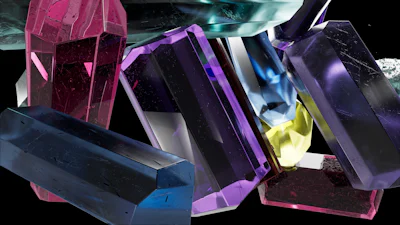
Some gemstones are beautiful. A rare few become cultural objects, auction trophies and portable expressions of wealth. The distinction matters. When collectors ask about the most valuable precious gemstones, they are not simply asking which stones command the highest retail prices. They are asking which combinations of rarity, color, provenance, treatment status, size, craftsmanship and documented demand can create exceptional long-term desirability.
The modern market is led by a small group of extraordinary natural stones, with ruby, sapphire and emerald forming the traditional “Big Three” of colored jewelry gemstones. Yet the upper reaches of the market extend further: alexandrite, exceptional spinel, Paraíba tourmaline and other unusually rare stones can achieve remarkable prices when nature, provenance and collector demand converge.
For readers exploring the wider world of fine jewelry, Emmanuel Noir’s Watches & Jewelry collection offers a broader view of the craftsmanship, collecting culture and enduring objects that define the category.
This guide approaches precious gemstones through a collector’s lens rather than a simple price ranking. Auction records provide useful evidence, but they do not constitute a universal price list. A gemstone’s value can change dramatically according to quality, origin, treatment, certification, fashion, provenance and the circumstances of a particular sale.
Quick Reference: The Most Valuable Precious Gemstones
| Gemstone | Why collectors prize it | Principal value drivers | Investment character |
|---|---|---|---|
| Ruby | Exceptional red color, rarity and historic prestige | Color, origin, treatment, size, clarity | Elite collector market |
| Sapphire | Exceptional blue color and celebrated origins | Color, Kashmir/Burmese/Sri Lankan origin, treatment, size | Strong collector demand |
| Emerald | Saturated green color and historic provenance | Color, transparency, origin, treatment, clarity | High-value connoisseur market |
| Alexandrite | Extraordinary natural color-change phenomenon | Strength of color change, origin, clarity, size | Scarce specialist market |
| Spinel | Rare vivid reds and cobalt blues | Color, clarity, origin, size | Rising collector interest |
| Paraíba tourmaline | Electric neon blue-green color and scarcity | Color, copper content, origin, clarity, size | High-end niche collectible |
| Exceptional coloured stones | Unusual combinations of rarity and visual character | Species, color, provenance, treatment, size | Highly selective |
This table should be read as a hierarchy of collecting importance rather than a fixed ranking. A magnificent untreated sapphire can be worth more than an ordinary ruby, while an exceptional alexandrite or Paraíba tourmaline can dramatically outperform more common examples of traditionally prestigious stones.
What Makes a Precious Gemstone Valuable?
The phrase “most valuable” can be misleading because colored gemstones do not follow the standardized pricing structure familiar from commercial diamonds. There is no single universal price per carat for ruby, sapphire or emerald.
Instead, value emerges from a layered assessment of color, uniformity, origin, size, clarity, shape and cutting quality, with treatment status acting as another critical consideration. GIA research identifies color as the most influential factor for colored gemstones, while geographic origin can create substantial premiums for exceptional material from historically important sources.
Color Comes Before Carat Weight
For the finest colored gemstones, color often matters more than sheer size. A smaller stone with exceptional saturation, tone and hue can command considerably more than a much larger gem with weak or unattractive color.
This is particularly important when considering the most valuable precious gemstones because elite collectors are not purchasing weight alone. They are purchasing a visual phenomenon. The ideal ruby possesses a vibrant red character; the finest blue sapphires can display intense, velvety blue; and exceptional emeralds are prized for vivid green color with strong transparency.
The principle is simple but profound: rarity becomes economically powerful when it is combined with beauty.
Origin Can Transform the Equation
Geographic origin is another powerful layer of gemstone value. A laboratory report identifying a prestigious origin does not automatically make a stone exceptional, but when origin is paired with superior color and quality, the market can assign a significant premium.
Kashmir sapphires provide one of the clearest examples. In May 2025, Christie’s reported that a 35.09-carat Kashmir sapphire known as “The Regent Kashmir” sold in Hong Kong for $9.5 million, establishing a then-record auction price of $271,515 per carat for a sapphire.
For collectors researching provenance, Emmanuel Noir’s guide to the most valuable rough gemstones ever discovered provides a useful companion perspective on how extraordinary natural material can acquire significance before it is transformed into finished jewelry.
The Big Three: Ruby, Sapphire and Emerald
The traditional hierarchy of fine colored gemstones begins with ruby, sapphire and emerald. Their importance is not merely historical. They remain central to the international high-jewelry market because they combine recognizable beauty, geological rarity, established collecting traditions and decades of auction visibility.
Ruby: The Benchmark for Extreme Value
Among colored gemstones, ruby occupies an extraordinary position. GIA describes ruby as the most valuable variety of corundum and notes that exceptional rubies can command the highest per-carat prices of any colored stone.
The current auction record illustrates the scale of the very top market. Sotheby’s reported that the 10.57-carat Eternal Pink sold for $34.8 million in New York in 2023, establishing a world auction record for ruby and, at the time, for any colored gemstone.
That figure should not be interpreted as a typical ruby valuation. It represents an exceptionally rare convergence of color, size, transparency, provenance, cutting and collector demand.
The distinction between an exceptional ruby and an ordinary ruby is therefore enormous. GIA notes that fine rubies with strong color and no evidence of heat treatment are particularly rare, while glass-filled or diffusion-treated material occupies a very different value category.
For readers considering ruby as a collectible rather than simply as jewelry, Emmanuel Noir’s diamond investment guide provides useful context for comparing gemstone rarity, documentation and the difference between owning a beautiful jewel and acquiring an asset with serious collector characteristics.
Sapphire: Where Provenance Becomes Power
Sapphire occupies a particularly sophisticated position in the collector market because its range extends far beyond conventional blue stones. Blue sapphire remains the best-known variety, but pink, yellow, green and the exceptionally rare padparadscha sapphire can all command substantial premiums. For readers interested specifically in the collector economics of historic Kashmir material, our Kashmir sapphire investment guide examines how origin, colour, treatment, provenance, size and documentation interact within this exceptionally specialized market.
Among blue sapphires, Kashmir remains one of the most coveted origins. Fine Kashmir material is associated with a distinctive velvety blue appearance, and the scarcity of exceptional stones from the historic source has created a powerful provenance premium.
The 2025 Christie’s result for The Regent Kashmir demonstrates how that premium can manifest at auction. The stone achieved $9.5 million, or $271,515 per carat, demonstrating the extraordinary prices that can emerge when origin, color, size and rarity align.
Sapphire also illustrates why collectors should resist simplistic “price per carat” comparisons. Treatment status, origin and the precise character of the color can radically alter desirability. GIA notes that fine untreated sapphire is particularly rare and that confirmation of no evidence of heat can add significantly to its rarity and value.
Emerald: Imperfection as Character
Emerald follows a different aesthetic logic. Unlike diamond, where extreme clarity is often prized, emeralds commonly contain visible inclusions. The finest examples are judged primarily through the quality and distribution of their green color, transparency and overall visual character.
GIA identifies emerald as the green variety of beryl and notes that color is the dominant consideration in evaluating the stone. Exceptional eye-clean emeralds are particularly rare because natural emerald commonly contains inclusions.
Historic provenance can further elevate an emerald. The Rockefeller Emerald, for example, achieved $5.511 million at Christie’s New York in 2018, representing approximately $305,000 per carat and demonstrating the premium that exceptional emeralds can command in the right market setting.
For collectors, this is one of emerald’s greatest attractions. The stone’s character does not depend on clinical perfection. Instead, the finest examples possess a visual depth that connects geology, history and craftsmanship.
Beyond the Big Three
The hierarchy becomes more intriguing once collectors move beyond ruby, sapphire and emerald. Several rarer gemstone species and varieties can enter the upper tier when exceptional examples appear.
Alexandrite: A Gemstone of Dual Identity
Alexandrite is one of the most fascinating stones in the collector universe because of its natural color-change phenomenon. In daylight, fine examples can display green to bluish-green hues; under incandescent or candle-like lighting, they can shift toward red or purplish-red.
GIA describes alexandrite as one of the most valuable gemstones in the trade because of its rarity and distinctive color-change behavior.
The strongest specimens combine a dramatic color change with attractive body color, transparency, size and documented provenance. Large natural alexandrites of exceptional quality are particularly scarce, making them less of a conventional jewelry purchase and more of a specialist collector pursuit.
Spinel: The Quiet Ascent of a Connoisseur Gem
Spinel spent centuries in the shadow of ruby and sapphire. Historic red spinels were sometimes mistaken for rubies, including famous stones associated with royal collections. Modern gemology has given spinel its own identity, and collector interest has grown accordingly.
GIA notes that vivid red and cobalt-blue spinels are among the most valued colors, while demand for fine material has increased as supply remains limited.
The appeal is partly aesthetic and partly intellectual. A collector who chooses a superb red spinel over a more obvious ruby is making a quieter statement: knowledge matters more than recognition.
For a deeper exploration of this collector mindset, Emmanuel Noir’s tanzanite investment guide examines another gemstone whose scarcity, origin and market perception require considerably more nuance than a simple retail price suggests.
Paraíba Tourmaline: Electric Rarity
Paraíba tourmaline occupies a distinctive place in the modern colored-stone market. Its vivid blue to green hues can appear almost electrically illuminated, particularly in stones with exceptional saturation and transparency.
Its appeal demonstrates another important investment principle: rarity is not enough. A gemstone needs an aesthetic signature that collectors can immediately recognize.
The strongest Paraíba examples can command extraordinary prices relative to their size, particularly when copper-bearing chemistry, exceptional color and documented provenance combine. Yet the market remains considerably more specialized than the market for ruby, sapphire or emerald.
A Note on “Investment” and Precious Gemstones
Calling a gemstone an investment requires discipline. Precious gemstones can preserve wealth and, in exceptional cases, appreciate substantially, but they do not behave like publicly traded securities, bonds or income-producing real estate.
There is no guaranteed annual return. There is no continuously quoted global market price. Transaction costs can be substantial, and selling an important stone may require access to specialist dealers, auction houses or established collectors.
The more accurate concept is collectible wealth.
At the highest level, the strongest stones combine rarity with enduring aesthetic appeal, independent documentation, credible provenance and an established collector market. Auction history can support this thesis, but a spectacular auction result should never be extrapolated into a guaranteed future valuation.
This distinction is essential for anyone researching the most valuable precious gemstones as part of a broader wealth strategy.
Historical Background: From Royal Treasuries to Global Collecting
The fascination with precious gemstones is ancient. Rubies, sapphires and emeralds have appeared in royal regalia, religious objects, ceremonial jewels and aristocratic collections for centuries.
Their modern investment appeal, however, developed through the interaction of geology, international trade, gemological science and the global auction market.
As laboratories became capable of identifying treatments and, in certain cases, geographic origin, buyers gained more sophisticated tools for distinguishing exceptional natural material from treated or laboratory-created stones. GIA’s colored-stone services can identify gemstone material, detect treatments and, for qualifying stones, provide geographic-origin opinions.
This development changed the language of collecting. “Ruby” was no longer enough. Serious buyers began asking: natural or laboratory-grown? Heated or unheated? Filled or untreated? Which origin? What evidence supports the conclusion? What is the provenance?
For a collector, those questions are not bureaucratic details. They are part of the object’s identity.
Why Treatment Status Matters
Treatment is one of the most consequential variables in the valuation of colored gemstones. Heat treatment is accepted and widespread for many stones, but the market distinguishes between different treatments and their effects.
GIA notes that many rubies have been heated, while other rubies may undergo diffusion or lead-glass filling. Sapphire can also be heat-treated or subjected to lattice diffusion. Emerald commonly receives clarity enhancement using oils, resins or other materials.
This does not mean every treated gemstone is undesirable. A beautiful heated sapphire can be an excellent jewelry purchase. The issue is whether the treatment is accurately disclosed and correctly priced.
For serious collectors, documentation should therefore be treated as part of the gemstone rather than an accessory to it.
Those beginning a broader colored-stone collection may also find Emmanuel Noir’s guide to natural and lab-grown diamonds useful for understanding how origin, disclosure and material identity can influence luxury-gemstone purchasing decisions.
For independent gemological verification, collectors should consult the GIA colored stone identification and origin services when appropriate.
The crucial point is that a report does not make an ordinary stone extraordinary. It establishes facts about the stone so that its rarity, treatment and provenance can be evaluated with greater confidence.
The First Principle of Gemstone Investing
The most valuable precious gemstones are ultimately defined by scarcity that the market can understand.
A rare color with no transparency may have limited appeal. A large stone with weak color may be less desirable than a smaller exceptional example. A famous origin without supporting laboratory evidence may not justify its premium. A celebrated provenance without exceptional gem quality may become more valuable as history than as a gemstone.
The strongest acquisitions sit where several forms of rarity intersect:
natural origin + exceptional color + desirable size + attractive clarity + superior cutting + credible provenance + favorable treatment status + established collector demand.
That combination is extraordinarily difficult to assemble. It is also why the finest gemstones can command prices that appear almost detached from the underlying mineral.
The stone is no longer merely mineral.
It becomes a piece of geological history, human craftsmanship and cultural memory — compressed into a form small enough to rest in the palm of a hand.
Design & Craftsmanship: Where Nature Meets the Cutter
A gemstone may spend millions of years forming beneath the earth, yet its final character emerges only after another act of transformation: cutting.
For the collector considering the most valuable precious gemstones, cutting is not simply a matter of maximizing carat weight. The cutter must decide how to reveal color, brilliance, saturation and symmetry while preserving as much of the rare material as possible. In exceptional stones, those decisions can influence both immediate beauty and long-term desirability.
The finest cutting achieves something almost paradoxical. It makes the gemstone appear effortless while concealing the extraordinary amount of judgment required to achieve that result.
Cut Is Not the Same as Shape
Colored gemstones require a different approach from diamonds. A cutter may select an oval, cushion, emerald cut, pear or another form according to the rough crystal, inclusions, color zoning and the optical behavior of the material.
A ruby with exceptional red color may warrant a cut designed to retain weight while preserving its strongest visual character. A sapphire may benefit from proportions that intensify its blue. An emerald may require careful orientation to protect the stone from inclusions and reveal its green saturation.
The result is why two stones with identical carat weights can possess radically different market values.
In collector terms, carat weight is a measurement.
Beauty is the multiplier.
Color, Tone and Saturation
Colored gemstone evaluation begins with color, but color itself has several dimensions.
Hue describes the basic color family. Tone describes how light or dark the color appears. Saturation describes the strength or intensity of the color.
The most valuable stones often occupy a highly desirable combination of all three.
This explains why “largest” rarely means “most valuable.” A giant gemstone with grayish or overly dark color may attract attention without attracting the highest price. Conversely, a smaller stone with exceptional saturation and an aesthetically compelling hue can become the centerpiece of a serious collection.
For ruby, a vivid and desirable red remains central. For sapphire, rich blue can be particularly coveted. For emerald, a saturated green with attractive transparency can command substantial premiums.
The collector’s eye therefore needs to move beyond the scale.
Clarity Has a Different Meaning in Colored Stones
Clarity also requires nuance.
Natural rubies, sapphires and emeralds frequently contain inclusions. Some inclusions can reduce transparency or durability, while others can provide useful evidence of natural formation or contribute to the visual character of the stone.
Emerald offers the clearest example. Because inclusions are common, the market does not apply the same expectation of flawless clarity found in the finest diamonds. Instead, collectors assess how inclusions affect transparency, appearance and overall beauty.
A completely clean colored gemstone may be extraordinarily rare — but rarity without beauty does not automatically create desirability.
The best stones create balance.
Craftsmanship, Setting and the Finished Jewel
A gemstone rarely enters a collection as a loose mineral. More often, it becomes part of a ring, necklace, bracelet, brooch or pair of earrings.
That setting introduces another layer of craftsmanship.
The finest jewelry houses understand that the mount should frame the gemstone rather than compete with it. Metal choice, prong architecture, proportions, symmetry and surrounding diamonds or colored stones can change how the central gem appears under natural and artificial light. For collectors weighing the role of the setting itself, the platinum vs gold jewelry investment guide offers a broader comparison of how these two metals influence durability, craftsmanship, material value and the character of a finished jewel.
For a major acquisition, the distinction between gemstone value and jewelry value should remain clear.
A celebrated gemstone set in an important historic jewel can command a substantial premium because provenance, design, craftsmanship and cultural significance become part of the object. A loose stone, by contrast, is valued primarily through its gemological characteristics and market comparables.
This distinction becomes especially important at auction.
Optical Performance: The Moment the Stone Comes Alive
The strongest precious gemstones possess an optical presence that cannot be fully captured by a laboratory report.
Light enters the stone, travels through its crystalline structure, interacts with inclusions and facets, and returns to the observer as color, brilliance or visual depth.
This is where technical quality becomes emotional.
Ruby Under Light
A fine ruby should maintain a compelling red presence rather than appearing brownish, overly dark or washed out. Strong saturation can create remarkable visual intensity, particularly when the stone has sufficient transparency to allow light to move through it.
The celebrated “pigeon blood” terminology is often used commercially, but collectors should avoid treating the phrase as a universal guarantee of quality. Laboratory reports and direct examination remain more meaningful than a marketing label.
The exceptional ruby is not simply red.
It has presence.
Sapphire and the Velvet Effect
Some exceptional blue sapphires display a soft, almost velvety appearance associated with their internal structure and inclusions. This character has long contributed to the mystique surrounding fine Kashmir material.
Yet collectors should distinguish visual quality from origin mythology. A Kashmir designation can be important, but origin does not override the actual appearance of the stone.
An unattractive sapphire from a celebrated locality remains an unattractive sapphire.
That principle protects collectors from one of the most dangerous mistakes in the upper market: buying the story while neglecting the object.
Emerald and Inner Depth
Emerald behaves differently again. The combination of saturated green, transparency and natural inclusions can produce a depth that feels almost liquid.
Because emerald is relatively included and commonly receives clarity enhancement, the collector should examine both the stone itself and the treatment disclosure. GIA explains that emeralds are frequently clarity enhanced and that the extent and nature of enhancement can influence value.
In other words, the finest emerald is not necessarily the cleanest.
It is the one in which color, transparency, inclusions, cutting and provenance form a convincing whole.
Performance & Ownership: What Serious Collectors Need to Know
Gemstones are portable wealth, but they are not frictionless wealth.
Ownership involves authentication, insurance, secure storage, maintenance, documentation and eventually a credible exit strategy.
The acquisition phase therefore represents only the beginning.
Certification Is Part of the Acquisition
For significant gemstones, an independent laboratory report should be regarded as foundational documentation.
The report can establish the gemstone species and variety, identify detectable treatments and, where the laboratory offers the service and the stone qualifies, provide an opinion concerning geographic origin.
That information becomes particularly important as values rise.
A collector purchasing an important ruby without reliable documentation may face difficulty establishing its quality and provenance when attempting to sell it years later.
The more valuable the gemstone, the less room there is for ambiguity.
Provenance Creates a Second Layer of Value
Provenance can range from a laboratory-confirmed geographic origin to documented ownership by a notable collector, royal family or historic jewelry house.
These categories should not be conflated.
A laboratory’s geographic-origin opinion concerns the geological source. Historical provenance concerns the human history of the object.
When both converge in an exceptional gemstone, the result can be extraordinarily powerful.
The collector should therefore preserve every document associated with the acquisition: laboratory reports, invoices, auction records, correspondence, photographs, previous appraisals and, where available, historical documentation.
Over time, this archive can become part of the asset.
Durability and Practical Wear
Not every precious gemstone should be treated as an everyday jewel.
Ruby and sapphire are both varieties of corundum and rank 9 on the Mohs scale, giving them excellent hardness for jewelry use. Emerald is considerably more vulnerable because its typical inclusions and treatment can increase sensitivity to impact and certain cleaning methods.
Alexandrite, spinel and tourmaline also require individual consideration rather than a generic “precious stone” approach.
For collectors, the question is not merely:
Can I wear it?
It is:
How should I wear it without compromising the object I have acquired?
A rare, untreated gemstone may deserve a more conservative ownership philosophy than a commercially produced jewel designed for regular use.
Insurance, Storage and Documentation
A major gemstone collection should be managed with the same seriousness applied to other valuable portable assets.
Insurance should reflect the actual nature and current replacement value of the piece rather than relying indefinitely on the original purchase price.
Secure storage matters as well. A collection of significant gemstones should have documented inventories, current photographs and easily retrievable laboratory reports.
For exceptionally valuable pieces, collectors may also consider professional vaulting and specialist insurance arrangements.
This is where the investment thesis becomes practical. A gemstone can appreciate significantly and still produce a poor financial outcome if insurance, security, transaction costs and eventual selling expenses consume an excessive portion of the gain.
Liquidity: The Hidden Variable
Liquidity separates gemstone collecting from many mainstream investments.
A stock can be sold almost instantly during market hours. A major gemstone requires a buyer who understands what it is and why it matters.
That buyer may be a specialist dealer, an auction house, a private collector or an international jewelry house.
The most liquid-colored gemstones tend to possess recognizable species, exceptional quality, credible documentation and established demand. Lesser-known stones can be magnificent yet much harder to sell.
This creates an important hierarchy:
Beauty creates desire.
Rarity creates scarcity.
Documentation creates confidence.
Market recognition creates liquidity.
The strongest collectible gemstones possess all four.
Market Position: How the Elite Stones Compete
The market for valuable gemstones is not one homogeneous marketplace.
It contains several overlapping ecosystems: commercial fine jewelry, specialist colored-stone dealers, international auction houses, private collectors and ultra-high-value jewelry houses.
Each ecosystem values different characteristics.
Retail Fine Jewelry
Retail jewelry emphasizes design, wearability, brand recognition and presentation. A gemstone’s importance is often inseparable from the finished jewel.
This market is accessible to a broad luxury audience, but retail pricing can include substantial design, branding, distribution and operating margins.
Specialist Colored-Stone Market
Specialist dealers operate closer to the gem itself.
Here, treatment, origin, color quality, cutting and rarity become central. The buyer is more likely to encounter stones that have not been absorbed into finished jewelry and therefore can make decisions based more directly on gemological characteristics.
This is often where an experienced collector gains an advantage.
Knowledge creates access.
Auction Market
Auction houses occupy a different position.
They can bring extraordinary gemstones to an international audience and create competitive tension among collectors. Exceptional stones may establish headline prices that subsequently influence perceptions across the broader market.
But auction results should be interpreted carefully.
A record price is evidence of what one particular market moment produced under one particular set of circumstances. It is not a guaranteed valuation formula for the next stone.
The Auction Benchmark
Auction records nevertheless provide an invaluable window into the upper end of gemstone collecting.
Ruby provides the clearest illustration. The 10.57-carat Eternal Pink reached $34.8 million at Sotheby’s in 2023. The sale demonstrated how an exceptional stone can transcend conventional retail pricing when rarity, color, size, provenance and collector competition converge.
Sapphire offers another benchmark. Christie’s reported the sale of The Regent Kashmir for $9.5 million in 2025, reinforcing the extraordinary premiums available for exceptional Kashmir material.
These results help establish the ceiling of the market.
They do not establish the floor.
That distinction should remain visible whenever an investment case is being constructed.
Ruby vs Sapphire vs Emerald: Three Different Investment Personalities
| Factor | Ruby | Sapphire | Emerald |
|---|---|---|---|
| Core appeal | Saturated red and rarity | Blue color and prestigious origins | Saturated green and character |
| Hardness | 9 Mohs | 9 Mohs | 7.5–8 Mohs |
| Treatment concern | Heat and glass filling | Heat and diffusion | Oil/resin clarity enhancement |
| Provenance premium | Very strong | Exceptionally strong for Kashmir | Strong for notable origins |
| Collector profile | Trophy-gem collector | Provenance and color specialist | Connoisseur of historic character |
| Liquidity | Strongest for exceptional stones | Strong for recognized quality | Strong but highly quality-sensitive |
| Key risk | Treatment and inflated rarity claims | Origin assumptions | Treatment, inclusions and fragility |
The table reinforces a central conclusion: there is no single “best” gemstone investment.
There is only the stone whose qualities most convincingly match the collector’s objectives.
The Competition From Diamonds
Diamonds remain the most recognizable gemstone asset class, but colored gemstones operate according to a different logic.
Diamond markets benefit from standardized grading language and broad consumer recognition. Colored gemstones depend more heavily on subjective assessment of color, provenance, rarity and treatment.
That creates both an advantage and a disadvantage.
The disadvantage is lower price transparency.
The advantage is that genuinely exceptional stones can become deeply differentiated objects rather than interchangeable commodities.
For collectors who want to understand how rarity and market perception differ between traditional diamonds and colored stones, Emmanuel Noir’s most valuable coloured diamonds guide offers a useful parallel.
The comparison becomes especially revealing at the top of the market. A spectacular colored diamond can command extraordinary sums because of its rarity and global recognition, while an exceptional ruby, sapphire or emerald may derive greater differentiation from provenance, origin and treatment history.
Market Outlook: What Could Drive Future Value?
Predicting gemstone prices decades into the future requires humility.
Supply is naturally constrained because geological formation cannot be accelerated. New discoveries can alter availability, while exhausted deposits can increase scarcity. Consumer tastes can also shift.
Yet several forces appear structurally important for the upper end of the market.
Scarcity of Exceptional Natural Material
The investment thesis is strongest where exceptional material is genuinely difficult to replace.
An ordinary gemstone can be substituted.
A remarkable gemstone often cannot.
Increasing Importance of Provenance
As the market becomes more sophisticated, documented origin and treatment status can become increasingly important.
Collectors want to know what they are buying, where it came from and what has happened to it.
That favors stones supported by credible laboratory documentation.
The Rise of Connoisseur Collecting
Luxury collecting continues to move beyond brand recognition toward expertise.
This benefits unusual gemstones that reward knowledge: exceptional spinel, alexandrite, Paraíba tourmaline and rare varieties that have historically received less mainstream attention.
The collector who understands these stones before they become fashionable may have an informational advantage.
But this should never be confused with a promise of appreciation.
The Most Valuable Precious Gemstones Are Not Always the Most Expensive
Perhaps the most important distinction in this entire guide is the difference between price and value.
A gemstone can sell for a spectacular sum because of an extraordinary auction environment. Another can possess exceptional geological rarity but attract relatively little competition.
For the collector, enduring value lies at the intersection of rarity, beauty, authenticity, provenance, craftsmanship and demand.
That is why the best acquisition is rarely the gemstone with the loudest price tag.
It is the gemstone whose qualities remain compelling when the excitement surrounding the purchase has disappeared.
The truly sophisticated collector does not ask only:
“What is this worth today?”
The better question is:
“Why should someone still want this twenty years from now?”
That is the question that separates gemstone ownership from gemstone speculation.
Buying the Most Valuable Precious Gemstones: A Collector’s Framework
Buying one of the most valuable precious gemstones is fundamentally different from purchasing a beautiful piece of jewelry.
The objective is not to find the largest stone, the most famous origin or the most impressive certificate in isolation. It is to identify an unusually strong combination of attributes and determine whether the asking price properly reflects that combination.
For a serious acquisition, the order of operations matters.
Identify the stone. Verify the stone. Understand the stone. Establish its market position. Then negotiate the price.
That sequence protects the collector from one of the oldest problems in the colored-stone market: paying a premium for a story that the gemstone itself does not justify.
Buying Considerations
1. Establish Exactly What You Are Buying
Begin with the fundamentals.
Confirm the gemstone species and variety, whether it is natural or laboratory-created, its weight, dimensions, treatment status and any available origin opinion.
The distinction between natural and laboratory-created material is particularly important. Laboratory-created gemstones can possess essentially the same chemical and physical composition as their natural counterparts, but their market identity and rarity are fundamentally different.
The same principle applies to treatments.
A heated sapphire is not inherently a poor purchase. A heat-treated ruby is not automatically undesirable. The question is whether the treatment has been accurately disclosed and whether the price reflects it.
The collector should therefore avoid vague descriptions such as “rare,” “investment grade” or “museum quality” unless those claims can be substantiated.
2. Demand Independent Documentation
For a significant purchase, independent laboratory documentation should be treated as part of the acquisition process rather than an optional extra.
A report from a respected gemological laboratory can establish material identity and disclose detectable treatments. For qualifying gemstones, origin analysis can provide another important layer of information.
When comparing reports, examine the actual wording rather than relying on a seller’s summary.
“Origin: Kashmir” is materially different from “origin opinion: Kashmir” only in context of the laboratory and report terminology; collectors should understand precisely what the laboratory is stating and what limitations apply.
For exceptional gemstones, the report should be reviewed alongside the physical stone.
A certificate cannot tell you everything your eye needs to know.
3. Evaluate Color Before Carat Weight
This is one of the most important rules in colored gemstone collecting.
Do not begin with:
“How many carats?”
Begin with:
“How good is the color?”
A three-carat sapphire with exceptional saturation can be more desirable than a ten-carat stone with weak color. A beautifully balanced ruby can command a major premium over a larger but less compelling example.
For collectors comparing several stones, examine them under consistent lighting and, when possible, natural daylight. Observe whether the color remains attractive as the viewing angle changes.
A gemstone that looks extraordinary under carefully selected showroom lighting but loses its presence elsewhere deserves caution.
The best stones do not depend on theatrical lighting.
4. Understand Origin Premiums
Origin can be one of the most valuable — and most misunderstood — attributes in the market.
Kashmir sapphire, Burmese ruby and Colombian emerald can carry powerful provenance associations. Yet geographic origin should never become a substitute for quality assessment.
Two stones from the same locality can possess dramatically different color, clarity, treatment histories and market appeal.
The sophisticated approach is therefore:
quality first, origin second — unless the origin itself forms an unusually important part of the stone’s documented identity.
This principle is particularly useful when comparing stones offered at substantial premiums.
5. Examine Treatment With Particular Care
Treatment can change both rarity and market positioning.
For ruby and sapphire, determine whether the stone has evidence of heat treatment and whether more invasive processes have been applied. For emerald, understand whether oil or resin has been used to improve apparent clarity.
Collectors should also ask whether treatment is standard industry practice, whether it is stable, whether it affects durability and whether the report clearly discloses it.
The objective is not to eliminate every treated stone from consideration.
It is to eliminate undisclosed uncertainty.
A beautiful treated gemstone with excellent documentation can be a rational jewelry acquisition. An expensive gemstone with unclear treatment history is a very different proposition.
6. Study the Stone in Person Whenever Possible
Photography is useful for screening.
It is not a substitute for inspection.
Color rendering varies between cameras, displays and lighting conditions. Compression can conceal inclusions. Digital enhancement can make saturation appear stronger than it is.
If the acquisition is significant, arrange an in-person inspection or use a highly reputable specialist who can provide detailed video and documentation before funds change hands.
Look for:
- consistency of color
- transparency
- brilliance
- extinction
- visible inclusions
- surface-reaching fractures
- symmetry
- polish
- facet alignment
- signs of treatment
- overall visual presence
The question is not whether the stone is technically impressive.
It is whether the stone remains compelling after scrutiny.
7. Price the Gemstone Against the Right Comparables
One of the easiest ways to misprice a gemstone is to compare it with the wrong market.
A collector considering a Kashmir sapphire should not benchmark it against ordinary commercial blue sapphires.
A fine unheated Burmese ruby should not be evaluated against heated commercial ruby.
An exceptional Colombian emerald should not be treated as equivalent to a heavily included commercial emerald simply because both are the same species.
Comparable selection should consider:
species → color → quality → treatment → origin → size → provenance → cutting → market venue.
Only then does a price comparison become meaningful.
8. Consider Buying Through Established Specialists
For collectors entering the upper market, the seller matters almost as much as the gemstone.
Established specialist dealers, major auction houses and reputable jewelry houses can provide documentation, provenance and a transaction history that anonymous marketplace listings may not.
For those seeking a broader view of significant jewelry acquisitions, Emmanuel Noir’s Cartier vs Bulgari fine jewelry investment analysis explores how craftsmanship, house identity, rarity and market perception interact in major jewelry purchases.
When the purchase involves a particularly important colored stone, an auction house can also provide access to specialist estimates, catalogued provenance and a global collector audience. That does not eliminate due diligence, but it can improve the quality of the information available to the buyer.
9. Use Specialist Retailers for Jewelry, Not Blind Investment Claims
There is a place for reputable online fine-jewelry retailers in the buying journey.
They can be useful for studying available styles, comparing gemstone specifications and understanding contemporary retail pricing. They should not, however, be treated as substitutes for independent gemological expertise when purchasing an exceptional stone.
For readers researching fine jewelry online, James Allen’s colored gemstone jewelry selection can serve as a useful retail reference point for comparing contemporary designs and gemstone presentations.
The role here is practical: use retail platforms to understand what the market offers, then apply independent gemological judgment before treating a purchase as a serious collectible acquisition.
10. Compare Loose Stones With Finished Jewelry
Collectors should decide whether they are buying:
- a gemstone,
- a finished jewel,
- a historic object, or
- a combination of all three.
For collectors choosing the finished-jewel route, our gold jewelry investment guide examines how the underlying metal interacts with gemstone quality, craftsmanship, provenance, design and secondary-market demand.
A loose sapphire provides greater visibility into the stone itself.
A signed jewel from an important house can introduce design, craftsmanship and brand provenance.
A historic jewel may add documented ownership and cultural significance.
The highest-value acquisitions often become powerful precisely because several layers overlap.
Comparison Table: Most Valuable Precious Gemstones
| Gemstone | Signature quality | Major premium drivers | Treatment sensitivity | Typical collector appeal | Investment caution |
|---|---|---|---|---|---|
| Ruby | Exceptional saturated red | Color, no-heat status, origin, size, provenance | Very high | Trophy gemstones | Extreme price dispersion |
| Blue Sapphire | Rich, vivid blue | Kashmir/Burmese origin, no heat, color, size | High | Provenance-led collecting | Origin must be credible |
| Emerald | Saturated vivid green | Colombian/Zambian origin, transparency, size, provenance | High | Historic and connoisseur jewelry | Inclusions and clarity enhancement |
| Alexandrite | Strong natural color change | Strength of change, size, clarity, origin | High | Specialist collectors | Small supply and thin market |
| Spinel | Vivid red or cobalt blue | Color, origin, clarity, size | Moderate | Connoisseur collecting | Less liquid than Big Three |
| Paraíba Tourmaline | Neon blue-green | Copper-bearing color, origin, size | Moderate | Modern rarity collectors | Highly specialized market |
The table reveals an important pattern.
Ruby, sapphire and emerald have the deepest established collector ecosystems. Alexandrite, spinel and Paraíba tourmaline can offer remarkable rarity, but their markets require more specialized knowledge.
That does not make the latter inferior.
It makes them different.
What Should You Pay Attention to at Different Budget Levels?
Below the Trophy-Gemstone Market
At lower acquisition levels, prioritize beauty, documentation and durability over investment narratives.
A superbly colored, well-cut gemstone with clear treatment disclosure can be an excellent purchase even if it has no realistic prospect of becoming an auction record.
The mistake is expecting a retail jewelry purchase to behave like a trophy gemstone.
The Serious Collector Range
Once the budget rises materially, provenance, treatment and laboratory documentation become increasingly important.
At this level, collectors should compare multiple stones rather than falling in love with the first impressive example.
Patience becomes an asset.
The Trophy-Gemstone Level
At the highest level, the acquisition should be treated almost like the purchase of a rare work of art.
Independent specialists, laboratory documentation, provenance research, comparable auction results and legal ownership documentation all become important.
The buyer should understand not only the gemstone but also the likely exit market.
At this level, paying a premium can be entirely rational when the stone possesses attributes that are exceptionally difficult to reproduce.
Paying a premium for marketing language is not.
When an Affiliate Retailer Can Add Practical Value
A collector does not always need to buy the centerpiece of a collection through an auction house.
A reputable jewelry retailer can be useful for acquiring complementary pieces, comparing settings or exploring colored-gemstone jewelry at a lower level of financial exposure.
For example, Blue Nile’s fine jewelry selection can help readers compare contemporary gemstone jewelry, settings and retail presentation before deciding how they want a future acquisition to be structured.
The distinction is important: retail discovery and investment-grade acquisition are separate decisions.
Pros & Cons of Precious Gemstone Investing
Pros
Exceptional scarcity
The finest natural gemstones can be extraordinarily difficult to replace, particularly when color, origin, treatment status and size converge.
Portability
A major gemstone can represent substantial value in an exceptionally compact physical form.
Aesthetic utility
Unlike many financial assets, gemstones can be worn, displayed and enjoyed while owned.
Long collecting history
Ruby, sapphire and emerald have centuries of association with royalty, museums, aristocratic collections and major jewelry houses.
Potential for exceptional appreciation
The strongest historical auction results demonstrate that genuinely extraordinary stones can command extraordinary premiums.
Portfolio diversification
For a collector already exposed to conventional assets, important gemstones can represent a different form of tangible collectible ownership.
Cons
No guaranteed return
A gemstone can remain flat in value or decline.
Low liquidity compared with financial securities
Selling an important stone can take time and requires specialist buyers.
Wide valuation ranges
Two apparently similar stones can possess dramatically different values.
High transaction costs
Dealer margins, auction commissions, insurance and other expenses can materially affect returns.
Authentication risk
Treatment, synthetic material, undisclosed enhancements and inaccurate provenance can create substantial financial risk.
Subjective valuation
Color and overall beauty require expert judgment, making price discovery less standardized than in many conventional markets.
Storage and insurance costs
Significant collections require appropriate security and insurance arrangements.
Who Should Buy the Most Valuable Precious Gemstones?
The strongest candidate is not necessarily the person with the largest budget.
It is the buyer who understands what they are acquiring.
The Knowledge-Driven Collector
If you enjoy gemology, provenance, craftsmanship and the history of luxury objects, precious gemstones can offer an unusually rich collecting experience.
The research is part of the pleasure.
The Long-Term Collector
Those willing to hold exceptional stones for years or decades are better positioned than buyers seeking a quick resale.
The market rewards patience more naturally than urgency.
The Luxury Buyer Seeking Rarity
A collector who already owns conventional luxury watches, jewelry or art may find colored gemstones compelling because the best examples can offer a level of geological scarcity that mass-produced luxury objects cannot replicate.
The Connoisseur
Perhaps the strongest fit is the connoisseur who can distinguish between a merely expensive stone and an exceptional one.
That distinction becomes increasingly valuable as acquisition budgets rise.
Who Should Skip It?
Precious gemstone collecting is probably unsuitable for buyers who:
- need predictable income;
- require immediate liquidity;
- cannot tolerate uncertain valuations;
- are relying entirely on seller descriptions;
- expect every rare gemstone to appreciate;
- have no interest in learning about treatments and provenance;
- are purchasing solely because a stone is described as an “investment.”
The market is unforgiving toward impatience.
If the primary objective is predictable financial return, conventional financial assets may be more appropriate.
If the objective combines wealth preservation, rarity, beauty and collecting pleasure, the equation becomes much more interesting.
The Collector’s Acquisition Checklist
Before committing significant capital, ask:
Identity
- Is the stone natural?
- What species and variety is it?
- Is the weight independently verified?
Quality
- Is the color genuinely exceptional?
- How are tone and saturation balanced?
- How strong is the transparency?
- Is the cutting appropriate for the material?
Treatment
- Has the stone been heated?
- Has it received diffusion, filling or other enhancement?
- Is emerald clarity enhancement disclosed?
- Does the laboratory report clearly state the treatment?
Provenance
- Is geographic origin documented?
- Is ownership history credible?
- Does the stone have auction or historical provenance?
Market
- Are there meaningful comparable sales?
- Is the asking price supported by those comparables?
- How liquid is the particular gemstone?
- Who would realistically buy it from you later?
Ownership
- Is insurance adequate?
- Is storage secure?
- Are all documents preserved?
- Is the stone suitable for regular wear?
A “yes” across most of these questions does not guarantee appreciation.
It does, however, dramatically improve the quality of the decision.
The Final Buying Principle
The most valuable precious gemstones should be acquired because they are exceptional first and potentially valuable second.
That ordering matters.
When collectors reverse it, they become vulnerable to inflated “investment grade” claims, fashionable stones purchased at peak sentiment and rare-looking material whose scarcity does not translate into meaningful demand.
When they keep the order correct, the acquisition becomes more durable.
Buy the beauty.
Verify the rarity.
Document the provenance.
Understand the market.
Then decide whether the price deserves your capital.
That is the foundation of sophisticated gemstone collecting.
Frequently Asked Questions About the Most Valuable Precious Gemstones
What are the most valuable precious gemstones?
The traditional leaders are exceptional ruby, sapphire and emerald, particularly stones with extraordinary color, rarity, size, favorable treatment status and documented provenance. Exceptional alexandrite, spinel and Paraíba tourmaline can also command significant prices when their defining qualities are unusually strong.
There is no permanent ranking because gemstone value depends on the individual stone rather than species alone. A magnificent ruby can command more than an ordinary sapphire, while an exceptional sapphire can surpass a lesser ruby by a considerable margin.
Which gemstone has the highest value per carat?
Exceptional ruby has demonstrated some of the highest per-carat prices in the colored-gemstone market. The 10.57-carat Eternal Pink sold for $34.8 million at Sotheby’s in 2023, equivalent to approximately $3.29 million per carat.
However, this is an auction record for an extraordinary stone, not a representative market price for ruby generally.
Is ruby a better investment than sapphire?
Not automatically.
An exceptional untreated ruby with superb color and strong provenance can be an extraordinary collectible. A fine Kashmir sapphire with exceptional color and documentation can be equally compelling.
The better acquisition is the stone whose rarity, beauty, provenance and asking price create the strongest overall proposition.
Are untreated gemstones always more valuable?
No.
Untreated status can create a substantial rarity premium for certain gemstones, particularly when the stone already possesses exceptional color and quality. But treatment status does not override beauty.
A superbly colored treated stone may be more desirable than a mediocre untreated example.
The important principle is transparency: the treatment should be accurately identified and reflected in the price.
Is emerald a good investment gemstone?
Exceptional emerald can be an important collector acquisition, particularly when color, transparency, size, provenance and treatment history are compelling.
But emerald requires additional care because natural inclusions are common and clarity enhancement is widespread. The collector should understand the treatment before assigning an investment premium.
Historic provenance can also materially strengthen the appeal of exceptional emerald jewelry.
What makes Kashmir sapphire so valuable?
Kashmir sapphire has become one of the most prestigious gemstone categories because exceptional material from the historic Kashmir deposits is exceptionally scarce and can display a distinctive velvety blue appearance.
The important qualification is that origin alone does not make a sapphire exceptional. Color, clarity, cutting, size, treatment status and laboratory documentation remain critical.
Is alexandrite a good collectible?
Alexandrite can be highly compelling for specialist collectors because its natural color-change phenomenon is exceptionally distinctive and fine material is scarce.
The strongest examples combine an attractive daylight color, a dramatic change under incandescent illumination, good transparency and meaningful size.
Because the market is more specialized than the markets for ruby, sapphire and emerald, buyers should have realistic expectations about liquidity.
Which gemstone is best for a first serious collection?
For many collectors, sapphire offers an attractive entry point because it combines durability, color variety, established provenance categories and a deep international market.
Ruby can represent a more demanding pursuit because exceptional material becomes extraordinarily expensive. Emerald offers tremendous character but requires greater care in handling.
The ideal starting point is therefore determined by budget, taste and willingness to learn rather than by a universal ranking.
How important is gemstone provenance?
For exceptional stones, provenance can be extremely important.
Geographic origin can establish a geological story, while historical provenance can connect a gemstone or jewel to previous owners, collections, designers or important events.
Neither should be accepted solely on verbal assurance. Documentation matters.
Can gemstones replace stocks or bonds?
No.
Precious gemstones are tangible collectibles, not substitutes for diversified financial assets. They generally produce no income, have less transparent pricing and can require substantial time and expense to sell.
Their potential role is better understood as collectible wealth diversification for buyers who understand the risks.
Should I buy a gemstone for investment or enjoyment?
Ideally, a serious collector should be comfortable with both.
If a gemstone never appreciates, it should still be an object you are proud to own. That mindset protects against speculative decisions driven entirely by market headlines.
The strongest acquisitions often combine emotional conviction with disciplined financial analysis.
Building a Precious Gemstone Collection With Intention
A sophisticated collection does not need dozens of stones.
It needs coherence.
One collector may build around origin: Kashmir sapphire, Burmese ruby, Colombian emerald. Another may collect color-change phenomena, focusing on exceptional alexandrite and related rarities. Another may pursue historically important jewels where gemstone, craftsmanship and provenance become inseparable. For collectors who want to extend that thinking beyond individual stones into finished jewels, our how to build a fine jewelry collection guide examines how gemstones, craftsmanship, provenance and design can work together within a coherent collection.
The strategy should reflect the collector’s own eye.
This is where the difference between collecting and accumulating becomes apparent.
Accumulation asks:
“What else should I buy?”
Collecting asks:
“What is missing from the story I am building?”
That second question produces better collections.
Conclusion: Rarity Must Be Earned
The fascination surrounding the most valuable precious gemstones is easy to understand. Few luxury objects combine geological antiquity, natural scarcity, human craftsmanship and concentrated financial value so completely.
Yet the headline prices tell only part of the story.
The extraordinary ruby is valuable because extraordinary rubies are exceptionally difficult to replace.
The finest sapphire commands attention because color, provenance and scarcity converge in a tiny natural object.
The exceptional emerald possesses a character that cannot be reproduced simply by increasing carat weight.
Alexandrite, spinel and Paraíba tourmaline demonstrate another truth: collector markets can reward rarity when beauty gives that rarity meaning.
For the serious buyer, the lesson is straightforward.
Do not buy the most expensive stone you can afford.
Buy the most compelling stone you can understand.
Emmanuel Noir Verdict
The most valuable precious gemstones are not commodities. They are connoisseur assets whose worth emerges from the intersection of nature, rarity, craftsmanship, provenance and human desire.
Ruby remains the benchmark for extraordinary colored-gemstone value, particularly when exceptional red color, size, provenance and favorable treatment status converge.
Sapphire offers perhaps the broadest landscape for the sophisticated collector, from extraordinary blue stones to rare padparadscha and important origin material.
Emerald occupies a more nuanced territory, where color, transparency, natural character and treatment must be judged together.
Alexandrite, spinel and Paraíba tourmaline belong to the more specialized end of the spectrum, where knowledge can become particularly valuable.
But there is no gemstone that deserves to be called a guaranteed investment.
The Emmanuel Noir position is therefore deliberately selective:
Acquire rarity only when beauty validates it. Acquire provenance only when it is documented. Pay a premium only when the stone itself earns that premium.
The greatest gemstone collections are not built by chasing records.
They are built by recognizing exceptional objects before the room has finished noticing them.
A Final Word for the Collector
There is something unusual about holding a remarkable gemstone.
A watch tells time. A work of art occupies a wall. A rare automobile fills a garage.
A gemstone can contain an extraordinary amount of history in an object small enough to disappear inside a closed hand.
Its geological history may precede human civilization by millions or billions of years. Its cutting may represent hours of deliberate craftsmanship. Its provenance may connect it to another era. Its future may depend upon the judgment of a collector who understands what is actually in front of them.
That combination gives precious gemstones their enduring fascination.
They are not merely valuable because they are rare.
They become valuable when rarity and beauty meet in a form that people are unwilling to forget.
“The rarest gemstone is not the one with the largest price tag. It is the one whose beauty, provenance and scarcity remain undeniable when the market falls silent.”
— Emmanuel Noir
Affiliate Disclosure
Emmanuel Noir may earn a commission when readers purchase through selected affiliate links. Affiliate relationships do not determine our editorial judgments, gemstone assessments or recommendations. Every acquisition discussed in this guide should be evaluated independently, with appropriate attention to gemological documentation, treatment disclosure, provenance, pricing and personal circumstances.